Details
Artist
Styles
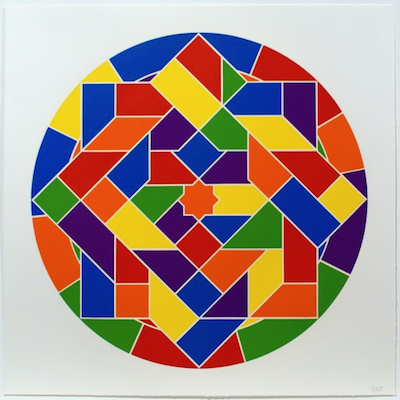
Color silkscreen, collage/card Numbered and signed "Alighiero e Boetti" by the artist on the front Limited edition of 50 ex. Perspex case. Printer: Studio 3. Published by TxT - 1983 // Ammazzare il Tempo by Alighiero Boetti is a serigraph created in 1983, representing the artist's interest in language and visual structure. This limited edition print, part of a series of only 50, features a vibrant collage of bold, block letters arranged in a grid format. Each letter and background block is filled with contrasting colors, creating a dynamic interplay between form and hue. The work's title, which translates to Killing Time, aligns with Boetti’s conceptual approach, emphasizing the passage of time and the repetitive nature of patterns. Signed by the artist, it is housed in a perspex case, highlighting its collectability and artistic significance.
Ammazzare il tempo, 1983
form
Medium
Size
100 x 100 cm
- Inches
- Centimeters
Edition
Price
Details
Artist
Styles
Color silkscreen, collage/card Numbered and signed "Alighiero e Boetti" by the artist on the front Limited edition of 50 ex. Perspex case. Printer: Studio 3. Published by TxT - 1983 // Ammazzare il Tempo by Alighiero Boetti is a serigraph created in 1983, representing the artist's interest in language and visual structure. This limited edition print, part of a series of only 50, features a vibrant collage of bold, block letters arranged in a grid format. Each letter and background block is filled with contrasting colors, creating a dynamic interplay between form and hue. The work's title, which translates to Killing Time, aligns with Boetti’s conceptual approach, emphasizing the passage of time and the repetitive nature of patterns. Signed by the artist, it is housed in a perspex case, highlighting its collectability and artistic significance.
- Recently Added
- Price (low-high )
- Price (high-low )
- Year (low-high )
- Year (high-low )

Alighiero Boetti
Non Parto Non Resto (Nove Quadrati), 1979
Drawing / Watercolor
Watercolor
Inquire For Price

Alighiero Boetti
Ammazzare Il Tempo, 1983
Limited Edition Print
Serigraph
Currently Not Available

Alighiero Boetti
Da Uno A Dieci, 1980
Limited Edition Print
Offset Print
Currently Not Available
Related Artists


Related Articles

Popular, Art Movements - August 07, 2024
Art and Social Change: How Contemporary Artists Address Global Issues
Discover how contemporary artists drive social change! Explore impactful works addressing global issues like inequality, climate change, and human rights. Read More

What is Generative Art?
Generative art refers to art that is wholly or partly created through an autonomous system. This system can be independent or non-human, capable of determining features that would otherwise be decided by the artist. The generative system can act as the creator or as a collaborator with the artist. Generative art often refers to works generated algorithmically by computers, where the system plays a significant role in the creation process.