
Mario Merz
Mario Merz (Italy, 1925–2003) was a central figure in the Arte Povera movement, known for his use of everyday materials like glass, neon, and organic elements. His iconic igloos and Fibonacci sequences explore themes of nature, time, and space. Merz's work redefined contemporary art by blending conceptual ideas with tactile forms.
© Mario Merz. All rights reserved.
- Recently Added
- Price (Low-High)
- Price (High-Low)
- Year (Low-High)
- Year (High-Low)

Mario Merz
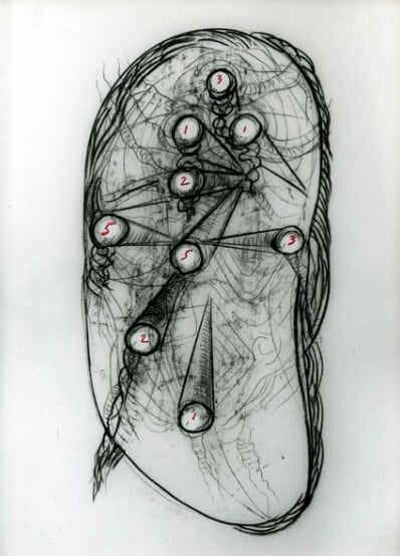
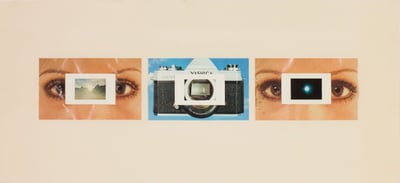
Senza titolo, 1991
Limited Edition Print
Mixed Media
EUR 1,600
Mario Merz
Ohne Titel
Limited Edition Print
Lithograph
Currently Not Available
No sold works to show.
Conceptual Art is a sounding instrument between printed words, luminous writings, and letters scrawled in a hasty nervous instinctive calligraphy.
- Mario Merz
- Mario Merz
Mario Merz was an Italian artist who began drawing during the Second World War. He and his wife, Marisa Merz, were connected with the growth of Arte Povera. He cast aside the subjectivity of abstract expressionism and pursued instead the opportunities associated with the outdoors. As with many artists of the time, Mario Merz used mixed media in a variety of ways. For example, starting in the mid 1960s, he began exploring the ways in which life could transmit energy to inorganic material, and so he produced a number of works showing neon lights moving through such mundane objects as a raincoat or an umbrella. Starting in 1969, he started incorporating the Fibonacci sequence in many of his works as a symbol of the basic principles of growth and creation. One of Merz's most famous works is an installation of the Fibonacci numbers (a series in which any number is the sum of the two previous numbers: 1, 1, 2, 3, 5 and so on) at the Centre for International Light, located in Unna, Germany.
Related Artists
Related Articles

News, Art Movements - July 28, 2023
The Conundrum of Technology's Experiment with Contemporary Art: A Mercurial Maiden Voyage
Discover how technology transforms contemporary art, blending innovation with creativity. Explore challenges of authenticity, access, and digital expression.Read More
 Artwork by Marcel Duchamp
What is Found Object?
A found object is a term used to describe a man-made or natural object, or a fragment of one, that an artist discovers or purchases and keeps for inspiration or as a work of art. The artist may also modify the object or incorporate it into a collage or assemblage, transforming it into a new piece of art.
Explore »

