

Neo-Pop Art in the 21st Century: From Takashi Murakami to KAWS
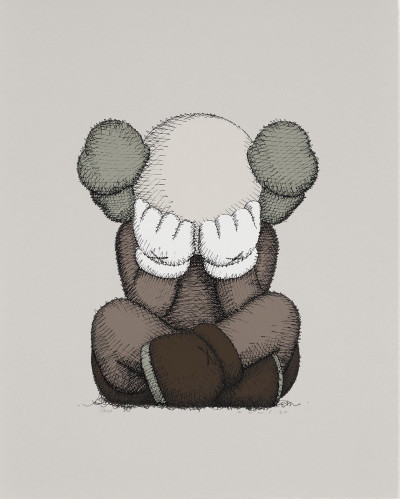
By Emilia Novak
In the 1960s, Pop Art pioneers like Andy Warhol and Roy Lichtenstein shook the art world by turning soup cans, comic strips, and celebrity portraits into fine art. Their work blurred the line between everyday life and high culture, making art both accessible and provocative.
Fast forward to the 21st century, and a new generation—often called Neo-Pop artists—has picked up that legacy. They work in a global landscape shaped by mass media, luxury branding, street culture, and social media.
Names like Takashi Murakami, KAWS, Yayoi Kusama, Damien Hirst, Jeff Koons, and Banksy now command attention both inside museums and on Instagram feeds. Their work fuses fine art with pop culture, often with humor, irony, or spectacle, creating art that feels unmistakably “now.”
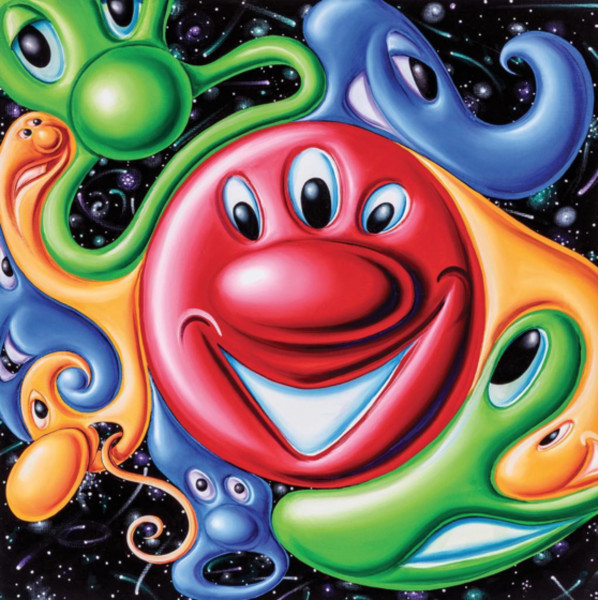
Neo-Pop Art still celebrates mass imagery, but these artists remix it for a hyperconnected, image-saturated age. Cartoon figures, fashion logos, luxury products, and advertising symbols appear in their work—sometimes as critique, sometimes as joyful embrace. The result is art that is playful, visually striking, and culturally sharp.
Let’s look at some of the key figures shaping Neo-Pop Art today.
Takashi Murakami: Superflat Universes
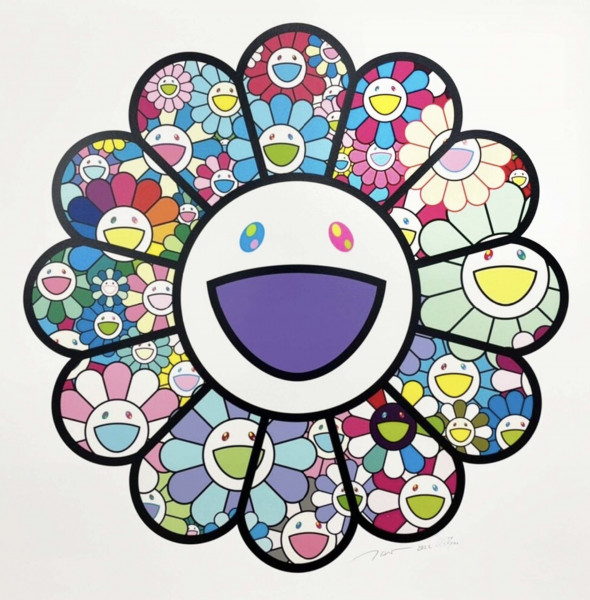
Takashi Murakami is often called the “Warhol of Japan.” He coined the term Superflat to describe both his flat, anime-inspired aesthetic and his merging of high and low culture.
His paintings and sculptures overflow with beaming flowers, mischievous cartoon figures like Mr. DOB, and even luxury motifs like Louis Vuitton monograms. On the surface, they’re cheerful and cute, but Murakami often embeds spiritual and historical references—from Zen Buddhism to postwar trauma—beneath the candy-colored layers.
What truly sets him apart is how he built a global brand. Murakami seamlessly moves between museum exhibitions, fashion collaborations, and commercial projects. His partnership with Louis Vuitton in the early 2000s brought his smiling flowers to handbags worldwide, while recent collaborations with Billie Eilish and other pop icons keep him at the cultural forefront.
Museums have embraced him too. Recent exhibitions in Los Angeles and Cleveland have presented immersive environments of murals, monumental sculptures, and temple-like spaces. Murakami’s work appeals to serious collectors and young fans alike, embodying the wide reach of Neo-Pop.
KAWS: Cartoons, Toys, and Global Hype
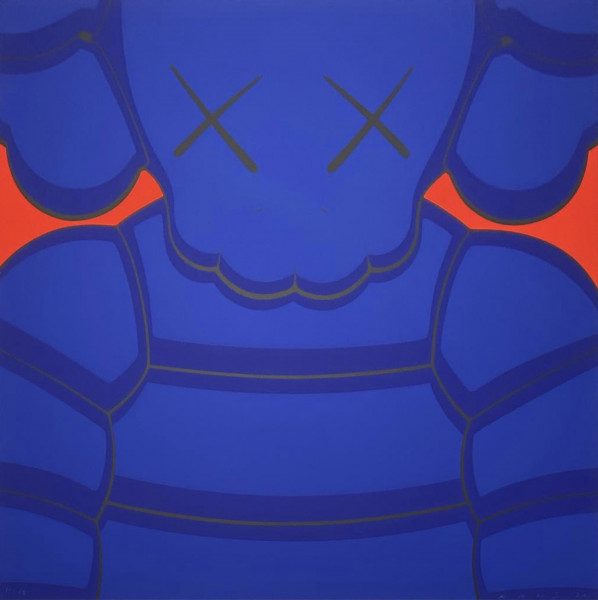
Where Murakami connects East and West, KAWS represents a distinctly American evolution of Neo-Pop Art rooted in street culture. Born Brian Donnelly, he began in the 1990s by subverting urban billboards with cartoon skull-and-crossbones imagery, transforming everyday ads into mischievous interventions. From those graffiti beginnings emerged a global art career defined by clean, graphic lines and pop culture references. His “Companion” figure—with its X-ed out eyes and slumped, melancholy posture—has become instantly recognizable, as have his reimagined versions of SpongeBob and The Simpsons. KAWS moves fluidly between worlds: monumental sculptures in museums, limited-edition toys that sell out in minutes, and public artworks that tower over cityscapes. This ability to exist simultaneously in high art, street culture, and consumer markets has made him a true crossover phenomenon.
His rise is also a story of clever branding and collaboration. By partnering with Nike, Dior, and Uniqlo, he’s brought his signature motifs to sneakers, T-shirts, and global fashion collections, reinforcing his presence far beyond galleries. Exhibitions like the Brooklyn Museum’s KAWS: WHAT PARTY have confirmed his art-world stature, while his ventures into augmented reality show a keen sense of the contemporary moment. For collectors, the appeal is clear: KAWS blends cultural sharpness with broad accessibility, offering works that can be playful collectibles or major blue-chip investments. By channeling street art energy into polished, editioned works, he’s made Neo-Pop feel both approachable and aspirational for a new generation.
Yayoi Kusama: Dots, Infinity, and Pop Icon Status
Although Yayoi Kusama began her career in the 1960s, she has become one of the 21st century’s biggest pop phenomena. Her polka dots and Infinity Mirror Rooms have captured imaginations worldwide, making her exhibitions some of the most visited (and Instagrammed) ever.
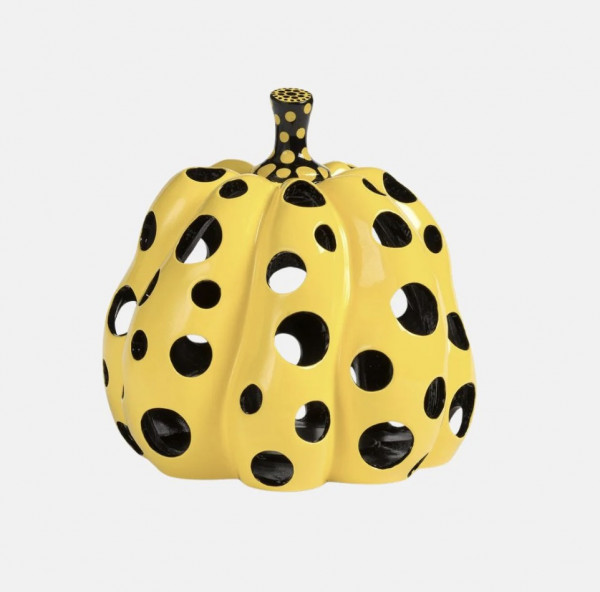
Kusama’s work is visually joyful—pumpkin sculptures, mirrored chambers filled with twinkling lights—but it also explores psychological and cosmic themes: infinity, self-obliteration, the blending of self and environment.
Her collaborations with Louis Vuitton, first in 2012 and again in 2023, turned boutiques into immersive dot-filled experiences, complete with giant inflatable Kusama figures. At age 93, she remains both a respected elder of contemporary art and a global pop icon.
For collectors, Kusama’s work offers both joy and depth, combining instantly recognizable motifs with decades of conceptual rigor.
Damien Hirst: Commerce, Spectacle, and the Power of the Brand
Damien Hirst became famous in the 1990s for shocking works like a shark suspended in formaldehyde and a diamond-encrusted skull. While his imagery differs from cartoonish Neo-Pop, his embrace of commercialism, mass production, and spectacle makes him a central figure.
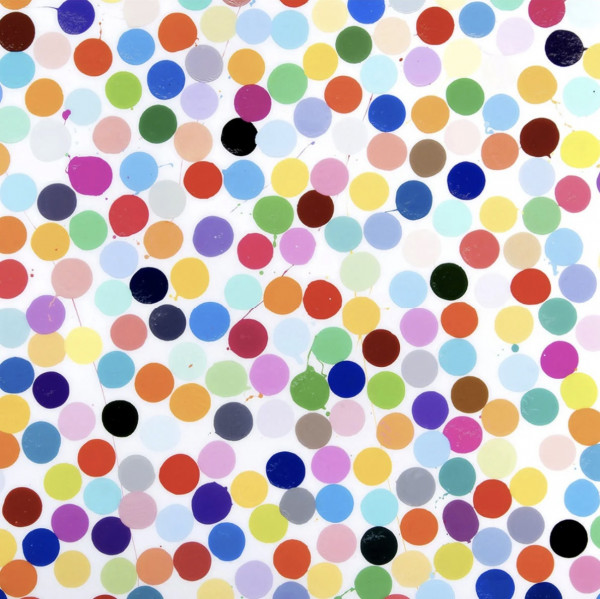
Hirst’s Spot Paintings, spin paintings, and medicine cabinet works are produced in series by his studio, functioning like luxury branded objects—instantly recognizable and widely collected. His 2012 global Gagosian show displayed hundreds of Spot Paintings simultaneously, emphasizing their ubiquity.
More recently, his NFT project The Currency turned collecting into a performance, forcing buyers to choose between physical paintings and digital tokens. Controversial yet wildly successful, Hirst shows how art, branding, and market strategy can merge powerfully in Neo-Pop.
Jeff Koons: Kitsch Meets Luxury
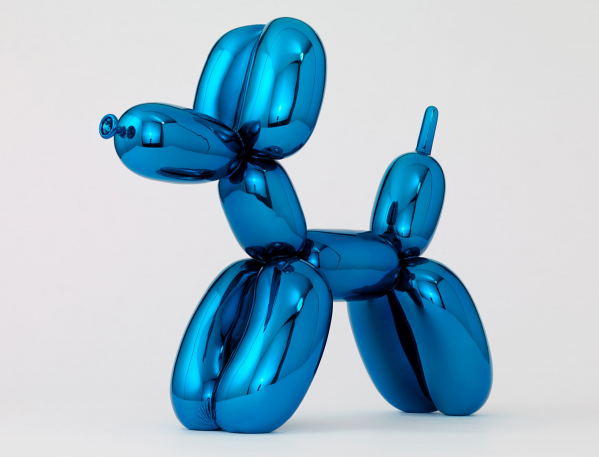
Jeff Koons might be the ultimate heir to Warhol’s pop legacy. His monumental Balloon Dog sculptures and shiny porcelain works transform everyday kitsch into luxury icons. By using high craftsmanship, mirror finishes, and gigantic scale, Koons elevates toys, rabbits, and trinkets into multi-million-dollar artworks.
Koons embraces commercial collaborations wholeheartedly—partnering with Louis Vuitton, porcelain makers, and even announcing plans to send sculptures to the Moon. His limited-edition porcelain diamonds and handbag collections allow collectors to buy into his brand at different levels.
Koons’s works thrive on spectacle, whether in museums, public spaces, or luxury boutiques. Their joyful absurdity and visual impact make them irresistible conversation pieces in contemporary collections.
Banksy: The Rebel Becomes a Legend
At the opposite end of the spectrum from Koons’s polish stands Banksy, the anonymous British street artist whose stenciled images have become global symbols of rebellion. His works—like the girl with the heart balloon or the bouquet-throwing protester—use the visual language of advertising to deliver biting social commentary.
Banksy’s 2018 Sotheby’s shredding stunt, when Girl with Balloon self-destructed just after selling, perfectly captured his paradoxical position: criticizing the art market while simultaneously boosting his market fame. The shredded piece, retitled Love is in the Bin, ultimately became even more valuable.
His 2023 Glasgow show Cut & Run drew record crowds, proving his enduring mass appeal despite his anonymity. Banksy’s prints and originals are highly sought after, symbolizing both cultural critique and collectible cool.
He embodies Neo-Pop’s ability to merge accessibility, political commentary, and market magnetism into one compelling package.
Why Neo-Pop Art Thrives Today
From Murakami’s smiling flowers to Banksy’s elusive stencils, Neo-Pop Art has become one of the most dynamic forces in today’s art market, and its appeal to collectors is easy to understand. These works are immediately engaging: bold colors, playful imagery, and familiar cultural references create an instant visual connection that doesn’t require specialized knowledge. A giant polka-dotted pumpkin or a cartoon figure slumped in thought can resonate just as strongly with a casual viewer as with a seasoned collector. This accessibility, paired with universal themes like consumer culture and nostalgia, gives Neo-Pop Art a rare ability to captivate audiences across generations and geographies.
Equally important is the way Neo-Pop artists have turned their signatures into powerful brands. Kusama’s dots, Koons’s reflective surfaces, KAWS’s X-eyed figures—each is as recognizable as a corporate logo. This clear visual identity gives collectors confidence and a sense of cultural belonging, while strategic collaborations with fashion houses, pop stars, and global brands keep the work plugged into mainstream culture. In the age of Instagram and global art fairs, Neo-Pop’s high-impact visuals thrive; these are artworks designed to be shared, photographed, and discussed, amplifying their presence far beyond gallery walls. Add to this the availability of editioned works—prints, toys, small sculptures—which allow new collectors to enter the market and build loyalty over time, and you have a movement that is both elite and democratic. Ultimately, Neo-Pop Art reflects contemporary life with both irony and delight, offering collectors works that are intellectually stimulating, culturally current, and irresistibly fun to live with.
A Movement That Reflects Our Time
Neo-Pop Art mirrors contemporary society: a mix of consumerism, nostalgia, branding, and global connectivity. It’s art that can be both critical and celebratory, intellectual and fun.
For collectors, owning a Murakami print, a Banksy stencil, or a Koons sculpture is more than decorating a wall—it’s participating in a cultural moment. These works speak the visual language of our era with clarity and flair.
Artists like Murakami, KAWS, Kusama, Hirst, Koons, and Banksy have transformed contemporary art into something vibrant, shareable, and culturally plugged-in. Whether encountered in a museum, on a luxury handbag, or on a city wall, Neo-Pop Art bridges the gap between high culture and everyday life—just as Pop Art did half a century ago, but in ways uniquely suited to today’s world.
By Emilia Novak
In the 1960s, Pop Art pioneers like Andy Warhol and Roy Lichtenstein shook the art world by turning soup cans, comic strips, and celebrity portraits into fine art. Their work blurred the line between everyday life and high culture, making art both accessible and provocative.
Fast forward to the 21st century, and a new generation—often called Neo-Pop artists—has picked up that legacy. They work in a global landscape shaped by mass media, luxury branding, street culture, and social media.
Names like Takashi Murakami, KAWS, Yayoi Kusama, Damien Hirst, Jeff Koons, and Banksy now command attention both inside museums and on Instagram feeds. Their work fuses fine art with pop culture, often with humor, irony, or spectacle, creating art that feels unmistakably “now.”
Neo-Pop Art still celebrates mass imagery, but these artists remix it for a hyperconnected, image-saturated age. Cartoon figures, fashion logos, luxury products, and advertising symbols appear in their work—sometimes as critique, sometimes as joyful embrace. The result is art that is playful, visually striking, and culturally sharp.
Let’s look at some of the key figures shaping Neo-Pop Art today.
Takashi Murakami: Superflat Universes
Takashi Murakami is often called the “Warhol of Japan.” He coined the term Superflat to describe both his flat, anime-inspired aesthetic and his merging of high and low culture.
His paintings and sculptures overflow with beaming flowers, mischievous cartoon figures like Mr. DOB, and even luxury motifs like Louis Vuitton monograms. On the surface, they’re cheerful and cute, but Murakami often embeds spiritual and historical references—from Zen Buddhism to postwar trauma—beneath the candy-colored layers.
What truly sets him apart is how he built a global brand. Murakami seamlessly moves between museum exhibitions, fashion collaborations, and commercial projects. His partnership with Louis Vuitton in the early 2000s brought his smiling flowers to handbags worldwide, while recent collaborations with Billie Eilish and other pop icons keep him at the cultural forefront.
Museums have embraced him too. Recent exhibitions in Los Angeles and Cleveland have presented immersive environments of murals, monumental sculptures, and temple-like spaces. Murakami’s work appeals to serious collectors and young fans alike, embodying the wide reach of Neo-Pop.
KAWS: Cartoons, Toys, and Global Hype
Where Murakami connects East and West, KAWS represents a distinctly American evolution of Neo-Pop Art rooted in street culture. Born Brian Donnelly, he began in the 1990s by subverting urban billboards with cartoon skull-and-crossbones imagery, transforming everyday ads into mischievous interventions. From those graffiti beginnings emerged a global art career defined by clean, graphic lines and pop culture references. His “Companion” figure—with its X-ed out eyes and slumped, melancholy posture—has become instantly recognizable, as have his reimagined versions of SpongeBob and The Simpsons. KAWS moves fluidly between worlds: monumental sculptures in museums, limited-edition toys that sell out in minutes, and public artworks that tower over cityscapes. This ability to exist simultaneously in high art, street culture, and consumer markets has made him a true crossover phenomenon.
His rise is also a story of clever branding and collaboration. By partnering with Nike, Dior, and Uniqlo, he’s brought his signature motifs to sneakers, T-shirts, and global fashion collections, reinforcing his presence far beyond galleries. Exhibitions like the Brooklyn Museum’s KAWS: WHAT PARTY have confirmed his art-world stature, while his ventures into augmented reality show a keen sense of the contemporary moment. For collectors, the appeal is clear: KAWS blends cultural sharpness with broad accessibility, offering works that can be playful collectibles or major blue-chip investments. By channeling street art energy into polished, editioned works, he’s made Neo-Pop feel both approachable and aspirational for a new generation.
Yayoi Kusama: Dots, Infinity, and Pop Icon Status
Although Yayoi Kusama began her career in the 1960s, she has become one of the 21st century’s biggest pop phenomena. Her polka dots and Infinity Mirror Rooms have captured imaginations worldwide, making her exhibitions some of the most visited (and Instagrammed) ever.
Kusama’s work is visually joyful—pumpkin sculptures, mirrored chambers filled with twinkling lights—but it also explores psychological and cosmic themes: infinity, self-obliteration, the blending of self and environment.
Her collaborations with Louis Vuitton, first in 2012 and again in 2023, turned boutiques into immersive dot-filled experiences, complete with giant inflatable Kusama figures. At age 93, she remains both a respected elder of contemporary art and a global pop icon.
For collectors, Kusama’s work offers both joy and depth, combining instantly recognizable motifs with decades of conceptual rigor.
Damien Hirst: Commerce, Spectacle, and the Power of the Brand
Damien Hirst became famous in the 1990s for shocking works like a shark suspended in formaldehyde and a diamond-encrusted skull. While his imagery differs from cartoonish Neo-Pop, his embrace of commercialism, mass production, and spectacle makes him a central figure.
Hirst’s Spot Paintings, spin paintings, and medicine cabinet works are produced in series by his studio, functioning like luxury branded objects—instantly recognizable and widely collected. His 2012 global Gagosian show displayed hundreds of Spot Paintings simultaneously, emphasizing their ubiquity.
More recently, his NFT project The Currency turned collecting into a performance, forcing buyers to choose between physical paintings and digital tokens. Controversial yet wildly successful, Hirst shows how art, branding, and market strategy can merge powerfully in Neo-Pop.
Jeff Koons: Kitsch Meets Luxury
Jeff Koons might be the ultimate heir to Warhol’s pop legacy. His monumental Balloon Dog sculptures and shiny porcelain works transform everyday kitsch into luxury icons. By using high craftsmanship, mirror finishes, and gigantic scale, Koons elevates toys, rabbits, and trinkets into multi-million-dollar artworks.
Koons embraces commercial collaborations wholeheartedly—partnering with Louis Vuitton, porcelain makers, and even announcing plans to send sculptures to the Moon. His limited-edition porcelain diamonds and handbag collections allow collectors to buy into his brand at different levels.
Koons’s works thrive on spectacle, whether in museums, public spaces, or luxury boutiques. Their joyful absurdity and visual impact make them irresistible conversation pieces in contemporary collections.
Banksy: The Rebel Becomes a Legend
At the opposite end of the spectrum from Koons’s polish stands Banksy, the anonymous British street artist whose stenciled images have become global symbols of rebellion. His works—like the girl with the heart balloon or the bouquet-throwing protester—use the visual language of advertising to deliver biting social commentary.
Banksy’s 2018 Sotheby’s shredding stunt, when Girl with Balloon self-destructed just after selling, perfectly captured his paradoxical position: criticizing the art market while simultaneously boosting his market fame. The shredded piece, retitled Love is in the Bin, ultimately became even more valuable.
His 2023 Glasgow show Cut & Run drew record crowds, proving his enduring mass appeal despite his anonymity. Banksy’s prints and originals are highly sought after, symbolizing both cultural critique and collectible cool.
He embodies Neo-Pop’s ability to merge accessibility, political commentary, and market magnetism into one compelling package.
Why Neo-Pop Art Thrives Today
From Murakami’s smiling flowers to Banksy’s elusive stencils, Neo-Pop Art has become one of the most dynamic forces in today’s art market, and its appeal to collectors is easy to understand. These works are immediately engaging: bold colors, playful imagery, and familiar cultural references create an instant visual connection that doesn’t require specialized knowledge. A giant polka-dotted pumpkin or a cartoon figure slumped in thought can resonate just as strongly with a casual viewer as with a seasoned collector. This accessibility, paired with universal themes like consumer culture and nostalgia, gives Neo-Pop Art a rare ability to captivate audiences across generations and geographies.
Equally important is the way Neo-Pop artists have turned their signatures into powerful brands. Kusama’s dots, Koons’s reflective surfaces, KAWS’s X-eyed figures—each is as recognizable as a corporate logo. This clear visual identity gives collectors confidence and a sense of cultural belonging, while strategic collaborations with fashion houses, pop stars, and global brands keep the work plugged into mainstream culture. In the age of Instagram and global art fairs, Neo-Pop’s high-impact visuals thrive; these are artworks designed to be shared, photographed, and discussed, amplifying their presence far beyond gallery walls. Add to this the availability of editioned works—prints, toys, small sculptures—which allow new collectors to enter the market and build loyalty over time, and you have a movement that is both elite and democratic. Ultimately, Neo-Pop Art reflects contemporary life with both irony and delight, offering collectors works that are intellectually stimulating, culturally current, and irresistibly fun to live with.
A Movement That Reflects Our Time
Neo-Pop Art mirrors contemporary society: a mix of consumerism, nostalgia, branding, and global connectivity. It’s art that can be both critical and celebratory, intellectual and fun.
For collectors, owning a Murakami print, a Banksy stencil, or a Koons sculpture is more than decorating a wall—it’s participating in a cultural moment. These works speak the visual language of our era with clarity and flair.
Artists like Murakami, KAWS, Kusama, Hirst, Koons, and Banksy have transformed contemporary art into something vibrant, shareable, and culturally plugged-in. Whether encountered in a museum, on a luxury handbag, or on a city wall, Neo-Pop Art bridges the gap between high culture and everyday life—just as Pop Art did half a century ago, but in ways uniquely suited to today’s world.


Related Articles

Artists, Art Movements - October 05, 2023
Superflat: A Modern Mirror to Traditional Japanese Art
Explore the Superflat art movement and its blend of traditional Japanese aesthetics with modern culture. Discover Murakami’s iconic works and their impact. Read More

Related Artworks You Might Like

Julian Opie
Imagine You Are Driving (fast)/Rio/helmet, 2002
Limited Edition Print
Lambda print
USD 8,990

Julian Opie
View Of Loop Bridge Seen From Route 41, 2009
Limited Edition Print
Mixed Media
EUR 5,500

Takashi Murakami
Untitled II From We Are The Square Jocular Clan, 2018
Limited Edition Print
Lithograph
USD 1,550