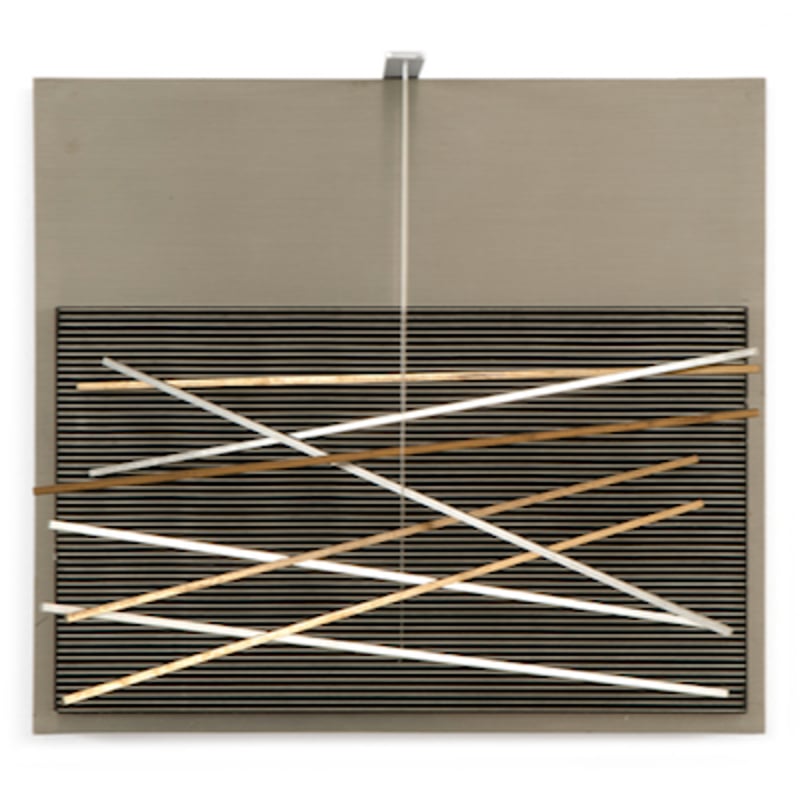
What is kinetic art?
- Show All
- Established
- Discoveries
- Show All
Artworks Related to Kinetic art
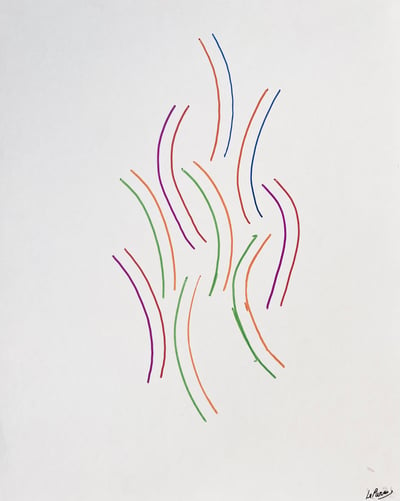
Julio Le Parc
Dessin Infinie 21, 2022
Drawing / Watercolor
Marker
EUR 2,000
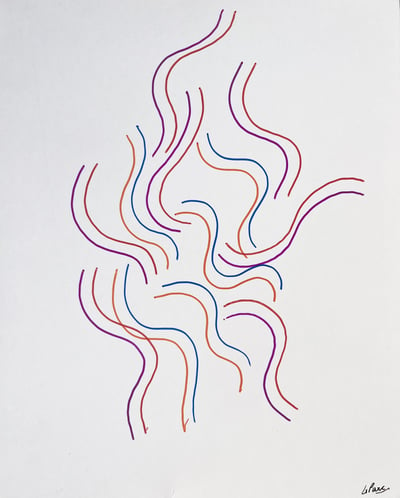
Julio Le Parc
Dessin Infinie 18, 2022
Drawing / Watercolor
Marker
EUR 2,000
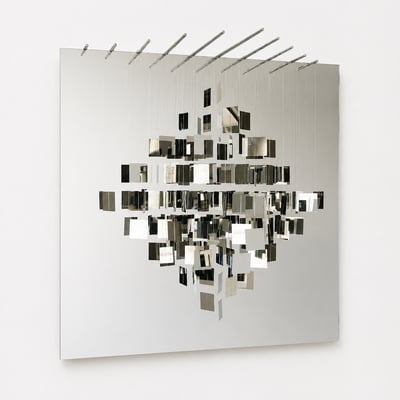
Julio Le Parc
Poyedre Virtuel sur mirroir, 2021
Sculpture / Object
Mixed Media
EUR 20,000

Julio Le Parc
Losange Virtuel sur noir, 2021
Sculpture / Object
Mixed Media
EUR 20,000
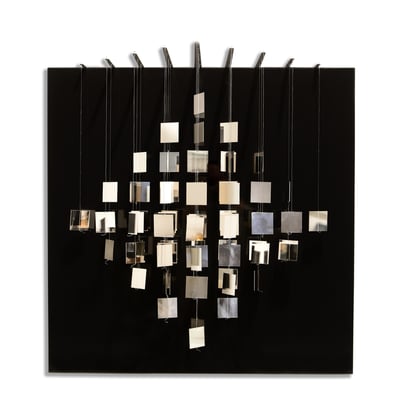
Julio Le Parc
Poyedre Virtuel sur noir, 2021
Sculpture / Object
Mixed Media
EUR 20,000

Felipe Pantone
Subtractive Variability Manipulable 6, 2023
Sculpture / Object
Acrylic sculpture
EUR 4,000
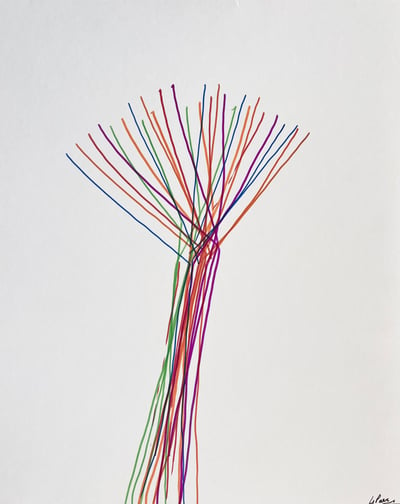
Julio Le Parc
Dessin Infinie 20, 2022
Drawing / Watercolor
Marker
EUR 2,000
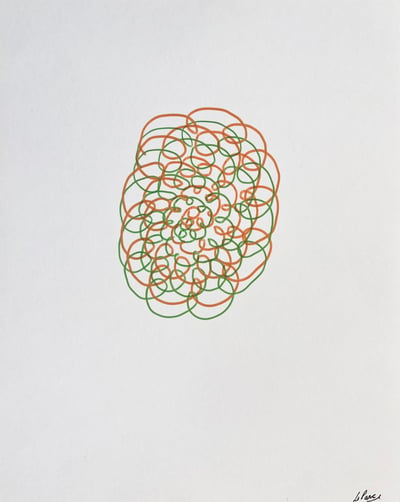
Julio Le Parc
Dessin Infinie 17, 2022
Drawing / Watercolor
Marker
EUR 2,000
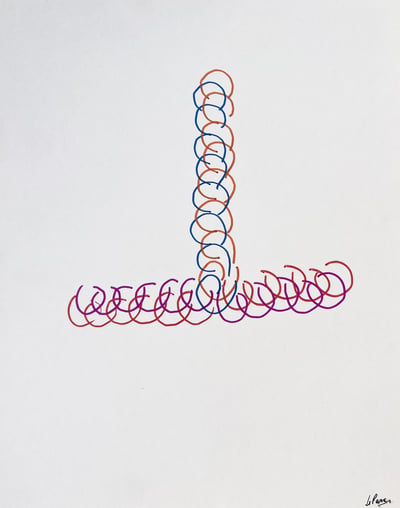
Julio Le Parc
Dessin Infinie 15, 2022
Drawing / Watercolor
Marker
EUR 2,000

Julio Le Parc
Dessin Infinie 10, 2022
Drawing / Watercolor
Marker
EUR 2,000

Julio Le Parc
Dessin Infinie 9, 2022
Drawing / Watercolor
Marker
EUR 2,000

Julio Le Parc
Dessin Infinie 8, 2022
Drawing / Watercolor
Marker
EUR 2,000
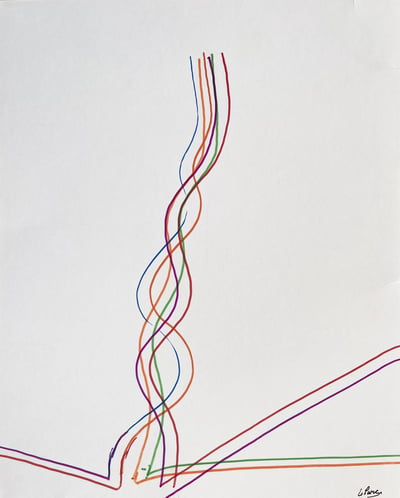
Julio Le Parc
Dessin Infinie 6, 2022
Drawing / Watercolor
Marker
EUR 2,000
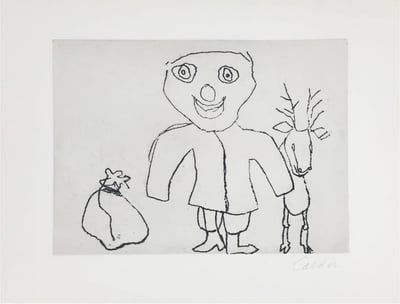
Alexander Calder
Santa Claus X, 1974
Limited Edition Print
Etching
USD 1,700
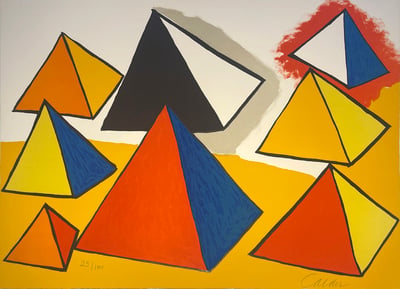
Alexander Calder
Hommage á Euclide / Hommage to Euclid from La Memoire Elementaire, 1976
Limited Edition Print
Lithograph
USD 9,600
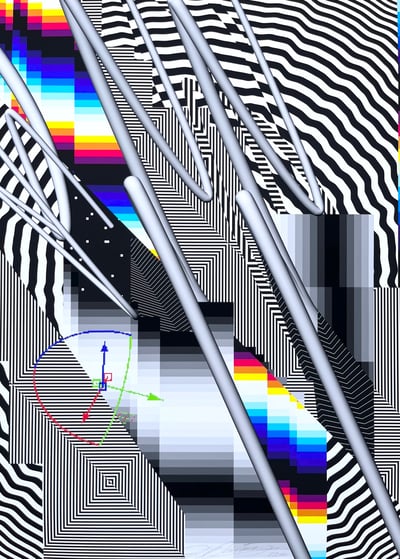
Felipe Pantone
Optichromie 116P, 2023
Limited Edition Print
Digital Print on paper
EUR 900
Related Articles


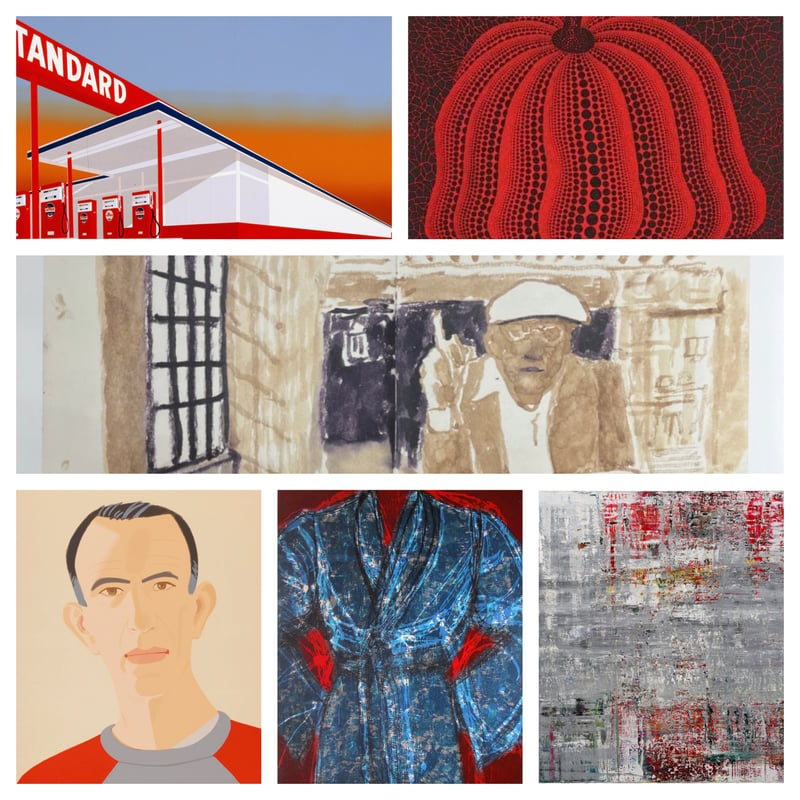

Art Informel is a French term referring to the gestural and improvisational techniques common in abstract painting during the 1940s and 50s. It encompasses various styles that dominated these decades, characterized by informal, spontaneous methods. Artists used this term to describe approaches that moved away from traditional structures and embraced more expressive, unstructured techniques.

Resin can be derived from both natural sources, such as pine sap, and synthetic processes. Natural resin comes from tree sap, while synthetic resin is a type of dense, easily molded plastic. Resin is commonly used in sculpture, and it can also enhance the vibrancy of paint colors.

Feminist art refers to the art that emerged from the feminist art movement during the 1960s and 1970s. It developed with the intention of critiquing 20th-century gender ideals and challenging the traditional canon of art history. Feminist art seeks to create a dialogue between the artwork and the viewer through a feminist lens, often addressing issues of gender, identity, and social justic
Can't find your Answer?
Thank you! Your question has been sent — we'll get back to you shortly.
