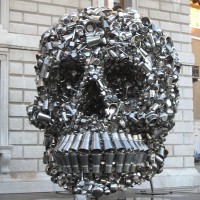
China
China's dynamic contemporary art landscape, steeped in profound cultural heritage, showcases the nation's vibrant artistic evolution. Noteworthy spaces like the Ullens Center for Contemporary Art and the Power Station of Art in Shanghai are key cultural hubs. Renowned artists like Ai Weiwei, with his politically-charged works, and Cai Guo-Qiang, known for his gunpowder art, epitomize China's artistic vitality. Visit Composition Gallery's website to delve into the pulsating world of Chinese contemporary art.
- Show All
- Established
- Discoveries
ARTWORKS RELATED TO CHINA

Weiwei Ai
Hanging Man in Porcelain, 2009
Sculpture / Object
Mixed Media
Inquire For Price

Zao Wou-Ki
Untitled (A. 246A), 1974
Limited Edition Print
Etching and Aquatint
EUR 4,500 - 6,000

Zao Wou-Ki
sonnets de Shakespeare II, 1994
Limited Edition Print
Etching
EUR 2,800

Zao Wou-Ki
Sonnets de Shakespeare I, 1994
Limited Edition Print
Etching
EUR 2,800

Weiwei Ai
Year of the Ox, 2021
Limited Edition Print
Screen-print
Inquire For Price
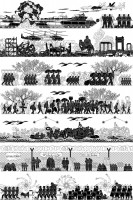
Weiwei Ai
The Odyssey, 2017
Limited Edition Print
Offset Print
EUR 1,550
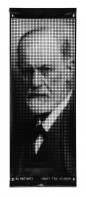
Weiwei Ai
Freud Banner, 2018
Limited Edition Print
Mixed Media
EUR 1,350
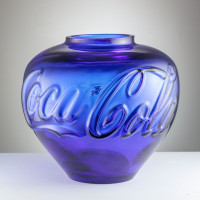
Weiwei Ai
Vase (Blue), 2024
Sculpture / Object
Glass
EUR 4,500
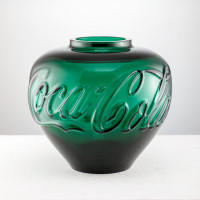
Weiwei Ai
Vase (Green), 2024
Sculpture / Object
Glass
EUR 4,500
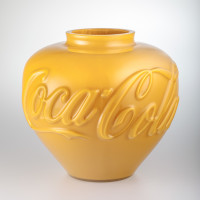
Weiwei Ai
Vase (Mustard), 2024
Sculpture / Object
Glass
EUR 4,500

Weiwei Ai
Private Listing
Limited Edition Print
Relief printing
Request Info
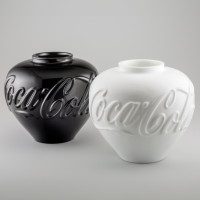
Weiwei Ai
Vases in Black and White (Set of 2), 2024
Sculpture / Object
Glass
EUR 9,000
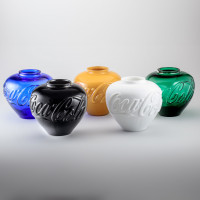
Weiwei Ai
Vases in Five Colours (Set of 5), 2024
Sculpture / Object
Glass
EUR 17,000 - 22,000

Weiwei Ai
To Be Looked At..., 2024
Sculpture / Object
Metal
USD 6,600

Weiwei Ai
Study of Perspective in Glass (set of 6), 2020
Sculpture / Object
Glass
EUR 60,000

Zhang Xiaogang
The Storyteller's Enchantments (Portfolio of 20), 2009
Limited Edition Print
Lithograph
Inquire For Price
Related Articles

Collecting - December 12, 2024
The Art of Printmaking: From Woodcuts to Lithographs
Explore the rich history of printmaking, from ancient woodcuts to modern lithography. Discover how artists have pushed this versatile medium's boundaries. Read More


Meaning School of Things, Mono-ha originated in Tokyo in the mid-1960s. Instead of creating traditional artwork, the artists of Mono-ha used different materials and their natural properties to express dismay at the industrialization taking place in Japan at the time. The movement gained international attention and is now a widely respected form of art, known for its emphasis on the relationship between materials and their environment.

Stuckism is an art movement that promotes figurative painting over conceptual art. It was founded in 1999 by Charles Thomson and Billy Childish with an initial group of 13 artists in Britain. The movement has since expanded to 52 countries with 233 groups worldwide. Several manifestos, issued by Thomson and Childish, advocate for the spirit of modernism and the creation of spiritual art, regardless of medium, subject matter, or style. Stuckism emphasizes the importance of genuine expression and rejects the dominance of conceptual art in the contemporary art scene.