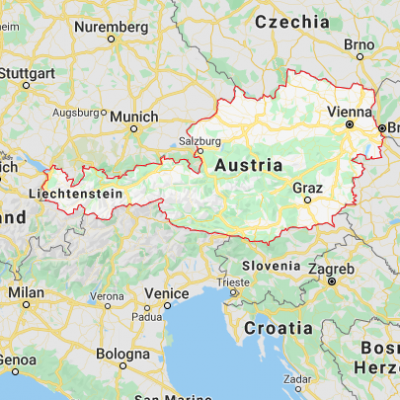
Austria
Contemporary art in Austria is a vibrant and dynamic field, with a rich history and a thriving present. The country is home to world-class museums like the Albertina and the Mumok in Vienna, which regularly host exhibitions of contemporary art. These institutions not only showcase the works of Austrian artists but also promote international artists, making Austria a significant player in the global contemporary art scene. Two of the most renowned contemporary artists from Austria are Hermann Nitsch and Valie Export, who have made significant contributions to performance and media art. The contemporary art scene in Austria is not just confined to museums; it is also very much alive in public spaces and alternative art venues. This diversity and dynamism make contemporary art in Austria a fascinating field to explore.
Show All
- Show All
- Established
- Discoveries
Show All
ARTWORKS RELATED TO AUSTRIA

Arnulf Rainer
En Face (schwarz), 1971 - 1972
Limited Edition Print
Drypoint
Currently Not Available

Arnulf Rainer
Body Pose III, 1971 - 1975
Limited Edition Print
Mixed Media
EUR 3,800

Arnulf Rainer
Body Pose II, 1971 - 1975
Limited Edition Print
Mixed Media
EUR 3,800

Arnulf Rainer
Body Poses, 1971/72, 1971 - 1975
Limited Edition Print
Mixed Media
EUR 12,000

Arnulf Rainer
Kosmos II (violett), 2003
Limited Edition Print
Drypoint
Currently Not Available

Arnulf Rainer
lila Wald, 2001
Limited Edition Print
Drypoint
Currently Not Available

Franz West
Platonic Moon, 2003
Limited Edition Print
C-Print
EUR 1,500

Hermann Nitsch
Domus Jani (10), 1991
Limited Edition Print
Mixed Media
EUR 22,950

Hermann Nitsch
Das Sechstagespiel des Orgien Mysterien Theaters, 1998
Limited Edition Print
Etching
EUR 1,750

Hermann Nitsch
Untitled (Fiery Resonance), 2006
Limited Edition Print
Lithograph
EUR 3,440

Hermann Nitsch
Untitled (Dual Forces), 2006
Limited Edition Print
Lithograph
EUR 3,900

Hermann Nitsch
Untitled (Organic Maze), 2006
Limited Edition Print
Mixed Media
EUR 3,200

Otto Muehl
Prinz Charles, 1967
Limited Edition Print
Silkscreen
Currently Not Available

Arnulf Rainer
Selbst in Waage, 1976
Limited Edition Print
Etching
EUR 3,700

Hermann Nitsch
96 Aktion – Giardini San Martino, Napoli, T, 1996
Photography
Photograph
EUR 1,830

Hermann Nitsch
96 Aktion – Giardini San Martino, Napoli, R, 1996
Photography
Photograph
EUR 1,830
Related Articles

Popular, Art Movements - May 23, 2022
Viennese Actionism: An unique convergence of shock value and Transcendence
Explore the provocative legacy of Viennese Actionism, blending shock value and transcendence. Discover how its pioneers redefined art with raw, political performance. Read More

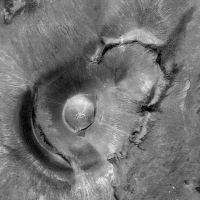
Earth art, also known as Land Art, emerged in the 1960s and 70s as part of the conceptual art movement. It involves creating artworks by sculpting the land or constructing structures in the landscape using natural materials like earth, rocks, or twigs. These works are often large-scale and emphasize the relationship between art and nature.
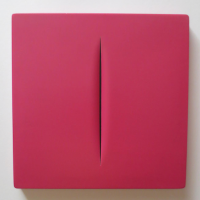
Spatialism is an art movement that originated in Italy in 1947, founded by Lucio Fontana with the intention of synthesizing sound, color, movement, and space into a new form of art. The movement's central ideas were outlined in Fontana's first manifesto, published in 1947, where he introduced the concept of spatial art to capture the spirit of the post-war era. His ideas were further developed in five subsequent manifestos. Although Fontana's ideas were sometimes considered vague, his influence was significant, as he was one of the first European artists to emphasize art as a performance and gesture.