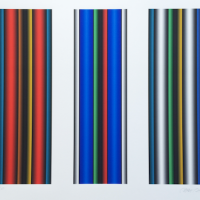
What is Earth Art?
Earth art, also known as Land Art, emerged in the 1960s and 70s as part of the conceptual art movement. It involves creating artworks by sculpting the land or constructing structures in the landscape using natural materials like earth, rocks, or twigs. These works are often large-scale and emphasize the relationship between art and nature.
- Show All
- Established
- Discoveries
ARTWORKS RELATED TO EARTH ART

Heinz Mack
Sandflügel, 1976
Sculpture / Object
Mixed Media
Inquire For Price

Javacheff Christo
Wrapped Monumento to Vittorio Emanuele, Piazza del Duomo, 1970
Limited Edition Print
Photograph
EUR 2,400

Javacheff Christo
Reichstag/Berlin Nacht, Wrapped, 1995
Limited Edition Print
Photograph
EUR 10,000

Javacheff Christo
The Pont Neuf Wrapped Reflecting Bridge PN-150, 1985
Limited Edition Print
Photograph
EUR 14,000

Gunther Uecker
Graphein III, Ahirom von Byblos, 2002
Limited Edition Print
Embossing
EUR 12,000

Javacheff Christo
Ericsson Display Monitor Unit 3111, Wrapped, Project for Personal Computer, 1985
Limited Edition Print
Lithograph
USD 12,000

Ugo Rondinone
Into the light, 2002
Limited Edition Print
Mixed Media
EUR 3,600

Vik Muniz
After Sonia Delaunay, 2025
Limited Edition Print
Pigment print
Currently Not Available

Javacheff Christo
Package on Wheelbarrow (project), 1963-2000
Drawing / Watercolor
Crayon
Inquire For Price
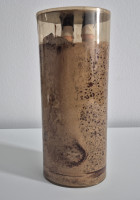
Dieter Roth
Untitled (Puppe in Schokolade), 1969
Sculpture / Object
Mixed Media
EUR 3,600
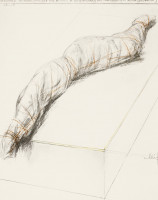
Javacheff Christo
Wrapped Woman, 1973
Limited Edition Print
Screen-print
USD 2,590
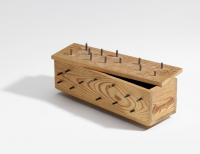
Gunther Uecker
Souvenir for Verheyen, 1989
Sculpture / Object
Mixed Media
GBP 15,000 - 20,000
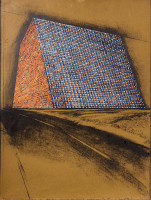
Javacheff Christo
Texas Mastaba, Project For 500,000 Stacked Oil Drums, 1971
Limited Edition Print
Lithograph
USD 1,550
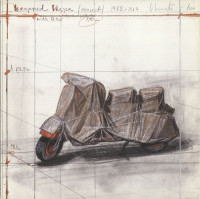
Javacheff Christo
Wrapped Vespa, 2006
Limited Edition Print
Mixed Media
USD 5,000 - 8,000
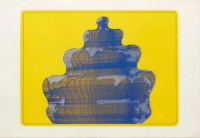
Dieter Roth
Torte in der Sonne (Fancy-Cake in the Sun), 1970
Limited Edition Print
Screen-print
GBP 4,200
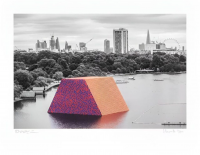
Javacheff Christo
The London Mastaba, 2018
Photography
Giclée printing
GBP 3,300
Related Articles
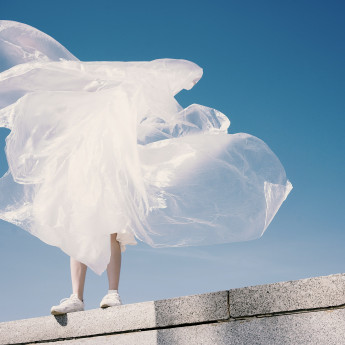
Popular, Art Movements - November 25, 2025
Trash to Treasure: Eco-Art and the Beauty of Recycled Materials
Discover how artists turn trash into treasure—transforming e-waste, scrap, and textiles into powerful, sustainable eco-art with global impact. Read More

Wire is a single strand or rod of flexible metal. It has been used since ancient times to make chains and jewelry decorations. Wire comes in various thicknesses and can be bent, braided, and cut using wire tools to create sculptures, assemblages, and mobiles. Different metals, such as copper, aluminum, and steel, are commonly used for wire art.
Ink is a colored liquid or paste used for writing, drawing, painting, and printing. The term also refers to the process of applying ink to mark, cover, stain, draw, or trace over pencil lines. Ink can be applied using various tools, such as pens, brushes, and quills.