Details
Artist
Styles
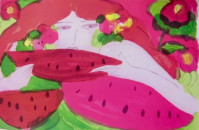
// This untitled lithograph by Walasse Ting from 1985, part of a limited edition of 200, vividly captures the artist's signature style, blending bold colors and expressive forms. The image portrays a reclining female figure adorned with vibrant flowers in her hair, her relaxed pose and languid gaze inviting the viewer into a world of sensuality and tranquility. Ting’s use of saturated hues—pink, blue, green, and pops of red and yellow—creates a striking contrast that enhances the composition's dreamlike quality. Known for merging elements of Eastern and Western art, Ting brings a sense of poetic freedom and exuberance to this piece, making it a celebration of color, form, and emotion.
Untitled WT EP 20, 1985
form
Medium
Size
72 x 101 cm
- Inches
- Centimeters
Edition
Price
- USD
- EUR
- GBP
Details
Artist
Styles
// This untitled lithograph by Walasse Ting from 1985, part of a limited edition of 200, vividly captures the artist's signature style, blending bold colors and expressive forms. The image portrays a reclining female figure adorned with vibrant flowers in her hair, her relaxed pose and languid gaze inviting the viewer into a world of sensuality and tranquility. Ting’s use of saturated hues—pink, blue, green, and pops of red and yellow—creates a striking contrast that enhances the composition's dreamlike quality. Known for merging elements of Eastern and Western art, Ting brings a sense of poetic freedom and exuberance to this piece, making it a celebration of color, form, and emotion.
- Recently Added
- Price (low-high )
- Price (high-low )
- Year (low-high )
- Year (high-low )

Walasse Ting
Lovely Nude, 1984
Limited Edition Print
Lithograph
EUR 1,100

Walasse Ting
Conversation, 1985
Limited Edition Print
Lithograph
EUR 990
Walasse Ting
Untitled WT EP 17, 1985
Limited Edition Print
Lithograph
EUR 1,450

Walasse Ting
Untitled WT EP 20, 1985
Limited Edition Print
Lithograph
EUR 1,490

Walasse Ting
Blue Horse, 1991
Limited Edition Print
Screen-print
Currently Not Available

Walasse Ting
I Love Cherries And Flowers, 1980
Limited Edition Print
Lithograph
Currently Not Available
Related Artists


Related Articles
Art Movements - November 21, 2022
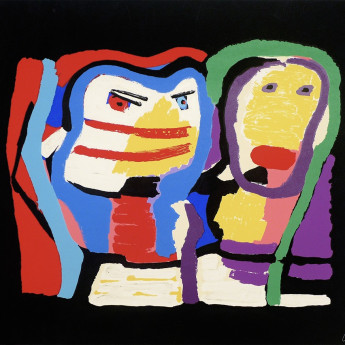
Botch, Blotch and Splotch: The Exuberant Maelstrom of the Cobra Art Movement.
Explore the CoBrA movement’s bold creativity, blending raw expression and experimentation. Discover its impact on post-war art and avant-garde traditions. Read More


What is abstract art?
Abstract art uses form, shape, line, and color to create a visual experience without attempting to represent external reality. The composition exists independently of the world's visual references, focusing on expressing ideas and emotions through non-representational means.