Original lithograph in colors on Rives BFK paper - Signed in pencil, dated and numbered
- From the Presidential Portfolio
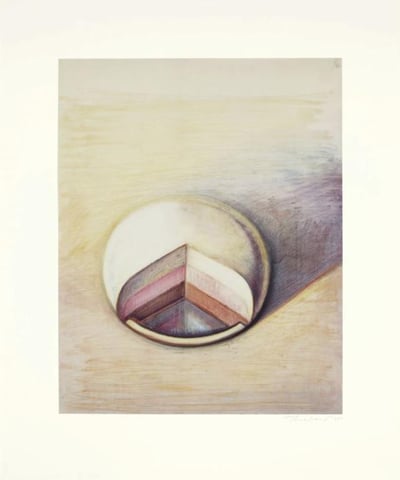
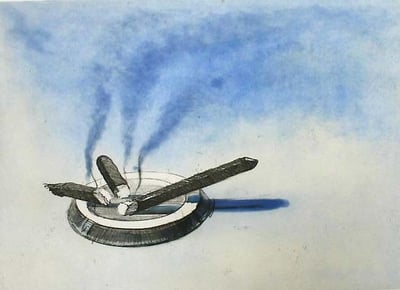
Glassed Candy by Wayne Thiebaud is a 1980 limited edition lithograph that exemplifies the artist's fascination with everyday objects. The artwork features three striped candy sticks in orange, blue, and black, placed in a clear glass jar. The simple, yet detailed depiction of the candy and the glass container highlights Thiebaud’s mastery of texture and light. His characteristic use of bold, vibrant colors and clean lines brings life to this still-life composition, while the subtle play of shadows and reflections adds a sense of depth. This print, part of the Presidential Portfolio, is hand-signed, dated, and numbered by the artist, showcasing his signature style of transforming mundane objects into iconic imagery.
Wayne Thiebaud (USA, 1920–2021) was a celebrated painter known for his vibrant depictions of everyday objects like cakes, pies, and gumball machines. His textured brushwork and use of bold color captured the charm of Americana. A key figure in American art, Thiebaud bridged Pop Art and realism.
LithographLithography is a printing method based on the principle that water and oil do not mix. It can be used to print artwork or text onto paper or other suitable materials. Traditionally, an image was drawn with wax, fat, or oil onto a lithographic limestone surface or plate. Today, metal plates and other surfaces are also used in lithographic printing.
Original lithograph in colors on Rives BFK paper - Signed in pencil, dated and numbered
- From the Presidential Portfolio
Glassed Candy by Wayne Thiebaud is a 1980 limited edition lithograph that exemplifies the artist's fascination with everyday objects. The artwork features three striped candy sticks in orange, blue, and black, placed in a clear glass jar. The simple, yet detailed depiction of the candy and the glass container highlights Thiebaud’s mastery of texture and light. His characteristic use of bold, vibrant colors and clean lines brings life to this still-life composition, while the subtle play of shadows and reflections adds a sense of depth. This print, part of the Presidential Portfolio, is hand-signed, dated, and numbered by the artist, showcasing his signature style of transforming mundane objects into iconic imagery.
Wayne Thiebaud (USA, 1920–2021) was a celebrated painter known for his vibrant depictions of everyday objects like cakes, pies, and gumball machines. His textured brushwork and use of bold color captured the charm of Americana. A key figure in American art, Thiebaud bridged Pop Art and realism.
My sin as a painter is that I just want to paint anything I want to paint - and
repaint.
- Wayne Thiebaud
Wayne Thiebaud (b. 1920 USA, d. 2021 USA) was an American painter best known for his vibrant depictions of everyday objects, particularly his iconic paintings of cakes, pies, and other desserts. His work is celebrated for its rich use of color, thickly applied paint, and a keen sense of light and shadow, which give his subjects a three-dimensional, almost tactile quality. Thiebaud's style blends Pop art sensibilities with a deep appreciation for traditional American realism, creating works that are both nostalgic and visually striking. Although often associated with Pop Art due to his focus on consumer goods, Thiebaud's work is distinguished by its emotional depth and subtle commentary on the passage of time and the pleasures of life. His paintings have been widely exhibited in major museums, including the Whitney Museum of American Art and the San Francisco Museum of Modern Art, establishing him as a beloved figure in American art.
The Bay Area Figurative Movement, which also goes by the names Bay Area Figurative School, Bay Area Figurative Art, or Bay Area Figuration, came to existence in San-Francisco Bay Area. This was in the mid-20th century, when a group of artists from the area stopped working on the then popular Abstract Expressionism for a preference to figuration in painting. The movement lasted a total of two decades during the 1950's and 1960's.