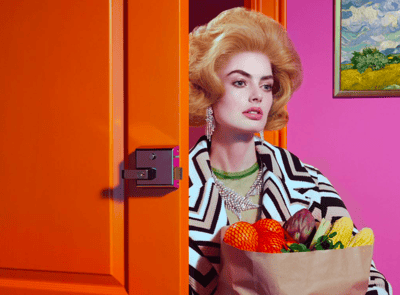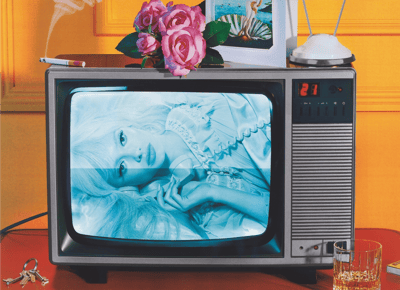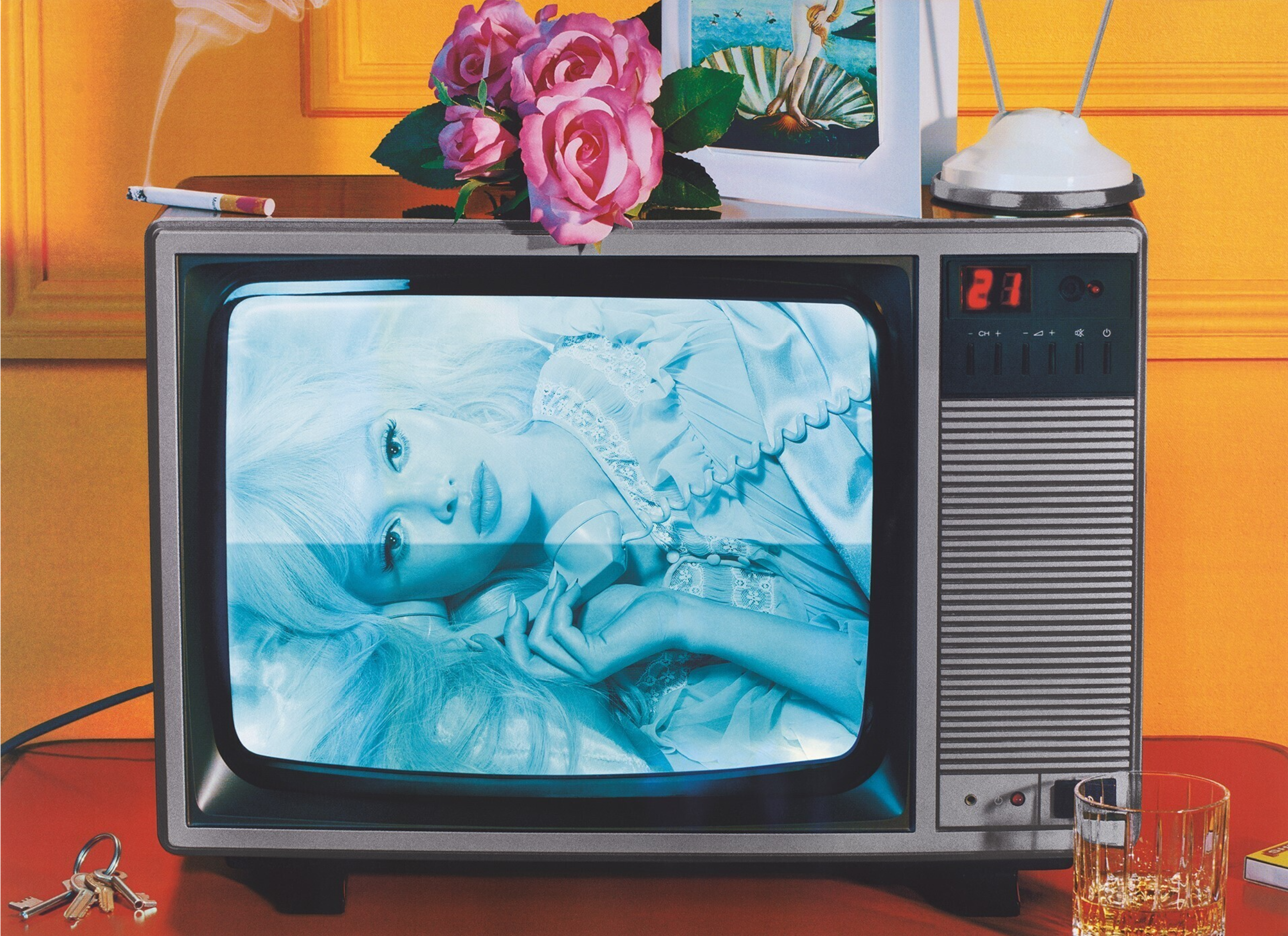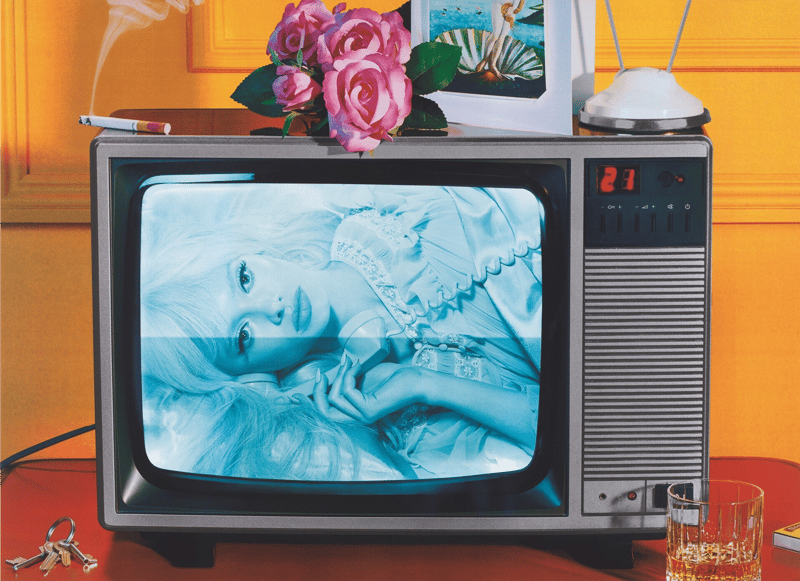
Miles Aldridge's Venus Etcetera (after Botticelli) is a limited edition screen print created in 2022. The artwork reimagines Botticelli's classic The Birth of Venus through a contemporary, retro lens. Displayed on an old television set, the image of a woman echoes the elegance and poise of Botticelli's Venus, yet the monochromatic blue tint and modern surroundings add a surreal, cinematic quality. Surrounding the TV, objects like pink roses, a drink glass, and a vintage lamp create a nostalgic, pop-culture atmosphere, blending high art with everyday kitsch. Aldridge’s use of color and silver ink enhances the glamour and allure of this contemporary take on a timeless icon.
Miles Aldridge (UK, 1964) is a celebrated fashion photographer and artist known for his vibrant, cinematic imagery. Inspired by film noir and pop art, his work blends saturated colors with meticulous compositions to explore themes of femininity, societal norms, and fiction. His photographs have appeared in Vogue Italia, The New Yorker, and prominent galleries worldwide.
Screen-printScreen printing is a technique where ink is transferred through a mesh onto a substrate, with areas blocked by a stencil to prevent ink from passing through. This method, also known as serigraphy or silkscreen printing, is commonly used to produce prints on posters, T-shirts, vinyl, stickers, wood, and other materials. The process is a type of stencil printing, allowing for vibrant, detailed designs on various surfaces.
Size
Inches
Centimeters
121.1 X 162 cm
Edition
Edition of 15
Price
USD
EUR
GBP
CHF
15,000EUR
?
+ VAT/import Duties (if applicable)
Authenticity Guaranteed
Insured Shipping
Online Since 2005
Share
●Inventory 11235
●Signed
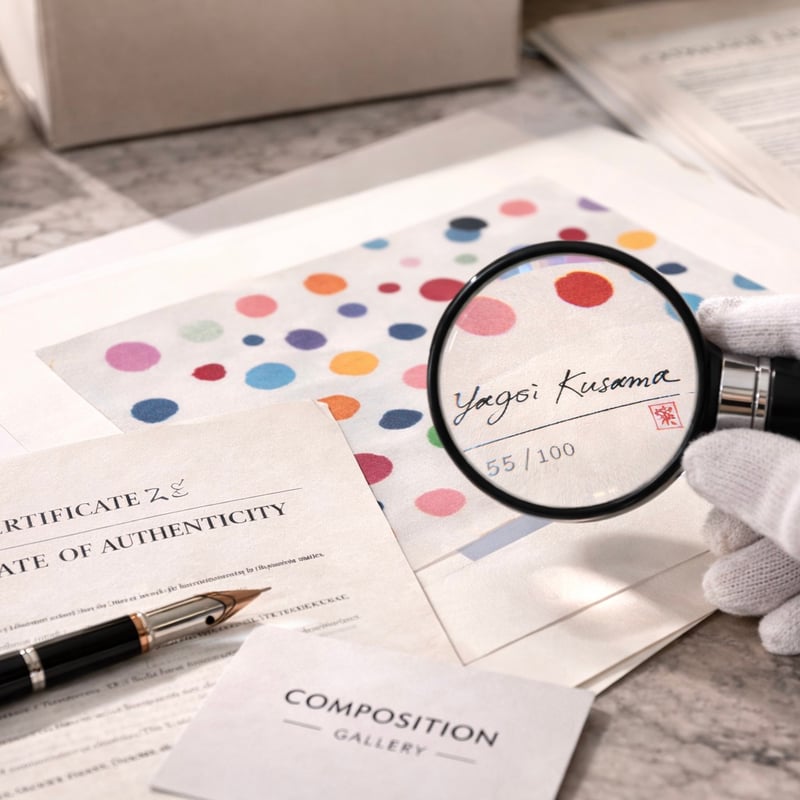
●Comes with gallery invoice and certificate
●Any questions?
Screenprint in colours with silver ink
Miles Aldridge's Venus Etcetera (after Botticelli) is a limited edition screen print created in 2022. The artwork reimagines Botticelli's classic The Birth of Venus through a contemporary, retro lens. Displayed on an old television set, the image of a woman echoes the elegance and poise of Botticelli's Venus, yet the monochromatic blue tint and modern surroundings add a surreal, cinematic quality. Surrounding the TV, objects like pink roses, a drink glass, and a vintage lamp create a nostalgic, pop-culture atmosphere, blending high art with everyday kitsch. Aldridge’s use of color and silver ink enhances the glamour and allure of this contemporary take on a timeless icon.
Miles Aldridge (UK, 1964) is a celebrated fashion photographer and artist known for his vibrant, cinematic imagery. Inspired by film noir and pop art, his work blends saturated colors with meticulous compositions to explore themes of femininity, societal norms, and fiction. His photographs have appeared in Vogue Italia, The New Yorker, and prominent galleries worldwide.
I think the power of image is in mystery - I endlessly create mysteries, by way of this dystopian message, to initiate intrigue.
- Miles Aldridge
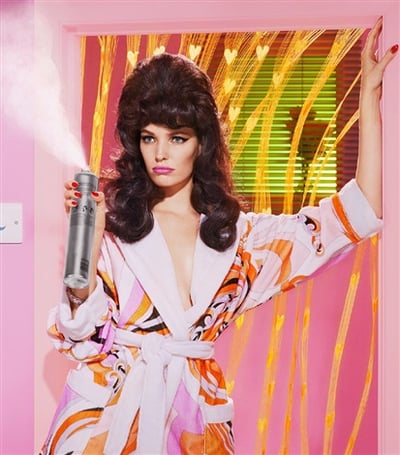
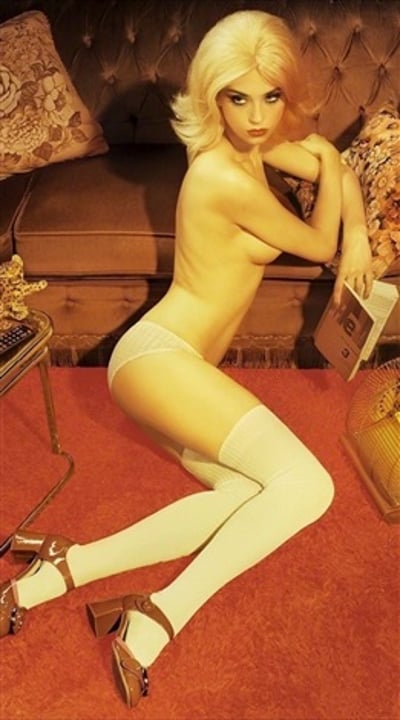
Miles Aldridge is a London-based British contemporary fashion photographer, artist, and illustrator. Educated at the prestigious Central St Martins, where he originally studied illustration and graphic design, Aldridge has had a varied and prolific career – during which he has not only produced advertising photography for numerous companies, but also played in an alternative rock band (The X-Men), and directed music videos for chart-topping alternative acts such as The Charlatans and The Verve. Aldridge's photographs can be characterized as retro-glamor and postmodern, and he is known for his use of bright, vivid, and often clashing colors, as well as his portraits of women in domestic settings – which often feature mildly disturbing or unsettling undertones. Miles Aldridge has worked extensively in the mediums of Polaroid, ultra-saturated digital photography, music videography, large prints and illustration, and he has showcased his works in art and portrait galleries worldwide. Magazines to use images created by Miles Aldridge include British Vogue, Harper's Bazaar, and The New York Times Magazine. (Artist website)
Kitsch is a term used to describe cheap, commercial, sentimental, or vulgar art and objects commonly associated with popular culture. The word is borrowed from German, where it originally means trash. Since the 1920s, kitsch has been used to denote the opposite of high art, often implying that the work lacks sophistication or artistic merit.