Details
Artist
Styles
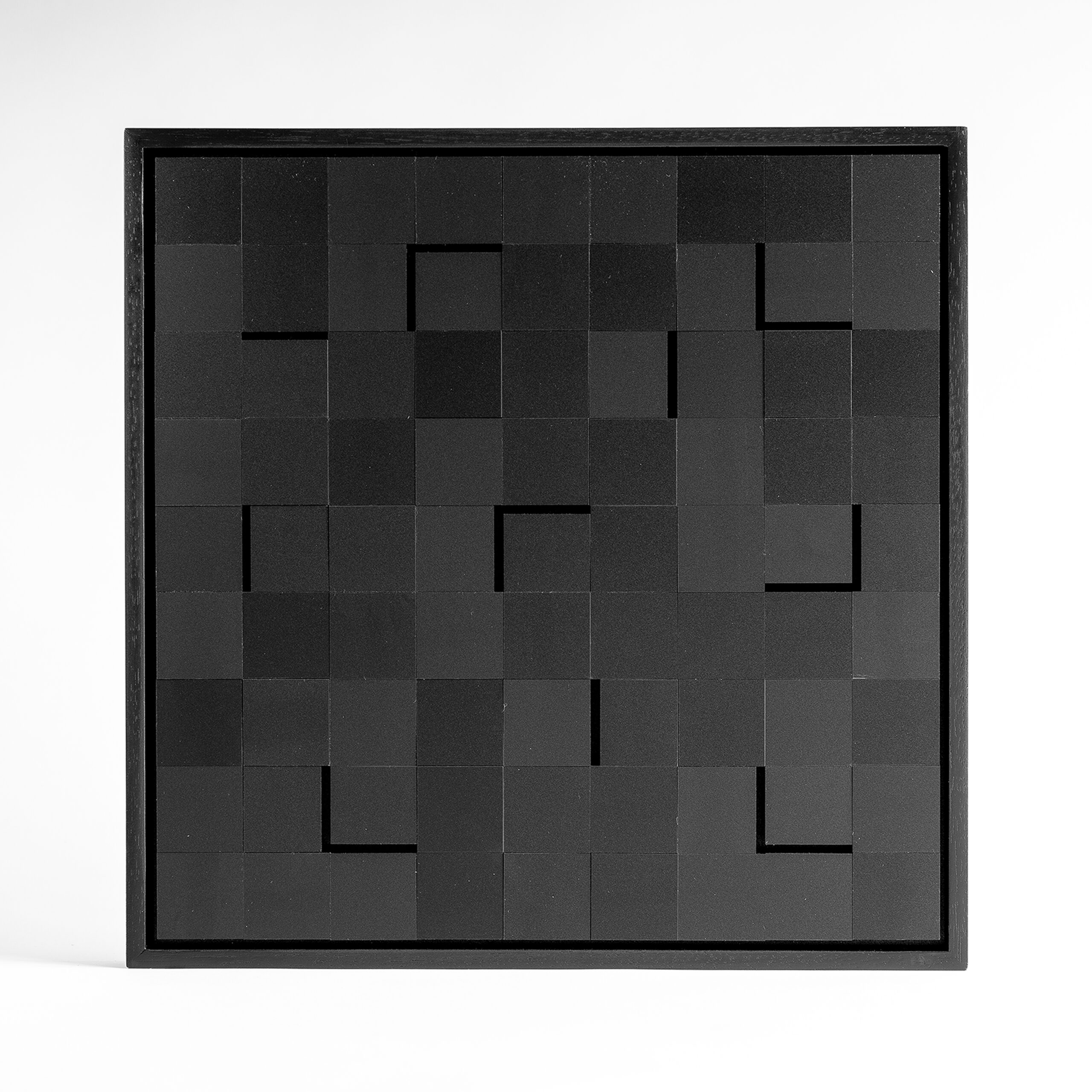
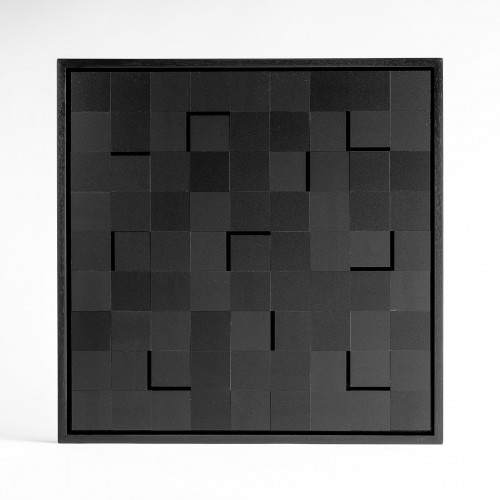
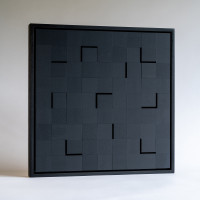
Wood and plastics. Signed in marker at the back. Unique piece out of the edition. Lumière Noire unique VI/X (2011) by Luis Tomasello is a unique piece made from wood and plastics, measuring 40 × 40 × 4 cm. The artwork presents a grid of matte black squares, with selected units subtly angled or recessed to catch and reflect light differently. This arrangement generates an understated yet engaging interplay of highlights and shadows, causing the monochrome surface to shift as the viewer’s perspective changes. In line with Tomasello’s kinetic and optical explorations, the work transforms minimalist geometry into an active, perception-driven experience. Signed in marker on the reverse, it stands as the only example in its edition.
Lumiere noire unique VI/X, 2011
form
Medium
Size
40 x 40 X 4 cm
- Inches
- Centimeters
Edition
Price
- USD
- EUR
- GBP
Details
Artist
Styles
Wood and plastics. Signed in marker at the back. Unique piece out of the edition. Lumière Noire unique VI/X (2011) by Luis Tomasello is a unique piece made from wood and plastics, measuring 40 × 40 × 4 cm. The artwork presents a grid of matte black squares, with selected units subtly angled or recessed to catch and reflect light differently. This arrangement generates an understated yet engaging interplay of highlights and shadows, causing the monochrome surface to shift as the viewer’s perspective changes. In line with Tomasello’s kinetic and optical explorations, the work transforms minimalist geometry into an active, perception-driven experience. Signed in marker on the reverse, it stands as the only example in its edition.
- Recently Added
- Price (low-high )
- Price (high-low )
- Year (low-high )
- Year (high-low )
Luis Tomasello
Lumiere Noire Unique VI/X, 2011
Sculpture / Object
Mixed Media
EUR 3,500
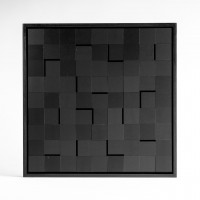
Luis Tomasello
Lumiere Noire Unique V/X, 2011
Sculpture / Object
Mixed Media
EUR 3,500
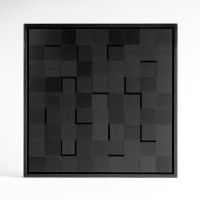
Luis Tomasello
Lumiere Noire Unique IV/X, 2011
Sculpture / Object
Mixed Media
EUR 3,500
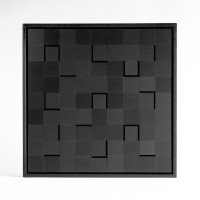
Luis Tomasello
Lumiere Noire Unique III/X, 2011
Sculpture / Object
Mixed Media
EUR 3,500
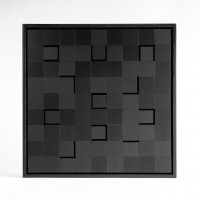
Luis Tomasello
Lumiere Noire Unique II/X, 2011
Sculpture / Object
Mixed Media
EUR 3,500
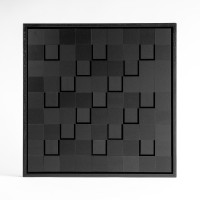
Luis Tomasello
Lumiere Noire Unique I/X, 2011
Sculpture / Object
Mixed Media
EUR 3,500

Luis Tomasello
S/T 1 - Verde, 2013
Limited Edition Print
Lithograph
EUR 3,000

Luis Tomasello
S/t 2, 2012
Sculpture / Object
Mixed Media
EUR 2,200

Luis Tomasello
S/t 3, 2012
Sculpture / Object
Mixed Media
EUR 2,200

Luis Tomasello
S/T - 3 Rosa, 2013
Limited Edition Print
Lithograph
EUR 3,000

Luis Tomasello
Grille Chromoplastique C, 2012
Sculpture / Object
Acrylic Sculpture
EUR 2,000

Luis Tomasello
Lumiere Noire, 2011
Sculpture / Object
Mixed Media
EUR 2,500

Luis Tomasello
ST 1, 2012
Sculpture / Object
Mixed Media
EUR 2,200

Luis Tomasello
S/T 4 - Verde , 2013
Limited Edition Print
Lithograph
EUR 3,000

Luis Tomasello
S/T 4 - Rosa , 2013
Limited Edition Print
Lithograph
EUR 3,000

Luis Tomasello
S/T 4 - Naranja , 2013
Limited Edition Print
Lithograph
EUR 3,000

Luis Tomasello
S/T 3 - Verde, 2013
Limited Edition Print
Lithograph
EUR 3,000

Luis Tomasello
S/T 3 - Naranja , 2013
Limited Edition Print
Lithograph
EUR 3,000

Luis Tomasello
S/T 2 - Verde, 2013
Limited Edition Print
Lithograph
EUR 3,000

Luis Tomasello
S/T 2 Rosa , 2013
Limited Edition Print
Lithograph
EUR 3,000

Luis Tomasello
S/T 2 - Naranja , 2013
Limited Edition Print
Lithograph
EUR 3,000

Luis Tomasello
S/T 1 - Rosa , 2013
Limited Edition Print
Lithograph
EUR 3,000

Luis Tomasello
S/T 1 - Naranja , 2013
Limited Edition Print
Lithograph
EUR 3,000

Luis Tomasello
Chromoplastique 1025, 2013
Sculpture / Object
Wood
EUR 4,000

Luis Tomasello
Grille Chromoplastique B, 2012
Sculpture / Object
Mixed Media
EUR 2,000

Luis Tomasello
Grille Chromoplastique A, 2012
Sculpture / Object
Object
EUR 2,000

Luis Tomasello
Cube Atmosphére Chromoplastique, 2011
Sculpture / Object
Wood
EUR 6,000
Related Artists



Related Articles
Popular, Collecting - July 23, 2025
Sculpture Care and Display: From Plinths to Pedestals in Your Home
Learn how to display and care for sculpture at home—from lighting tips to material care—so your art can truly shine in any space. Read More

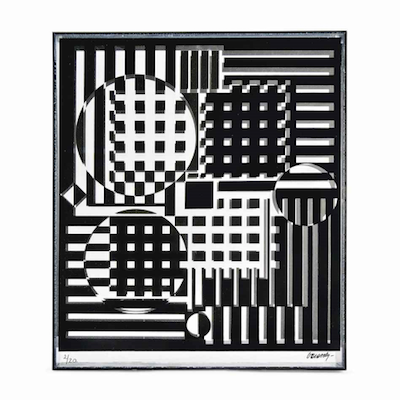
What is Op Art?
Op Art is a visual art style that uses optical illusions to create the impression of movement, vibrating patterns, flashing, or hidden images. The works are typically abstract, with many well-known pieces in black and white. The roots of Op Art can be traced back to earlier movements like Futurism, Constructivism, Dada, and Neo-Impressionism, particularly in their use of color effects and graphic design.