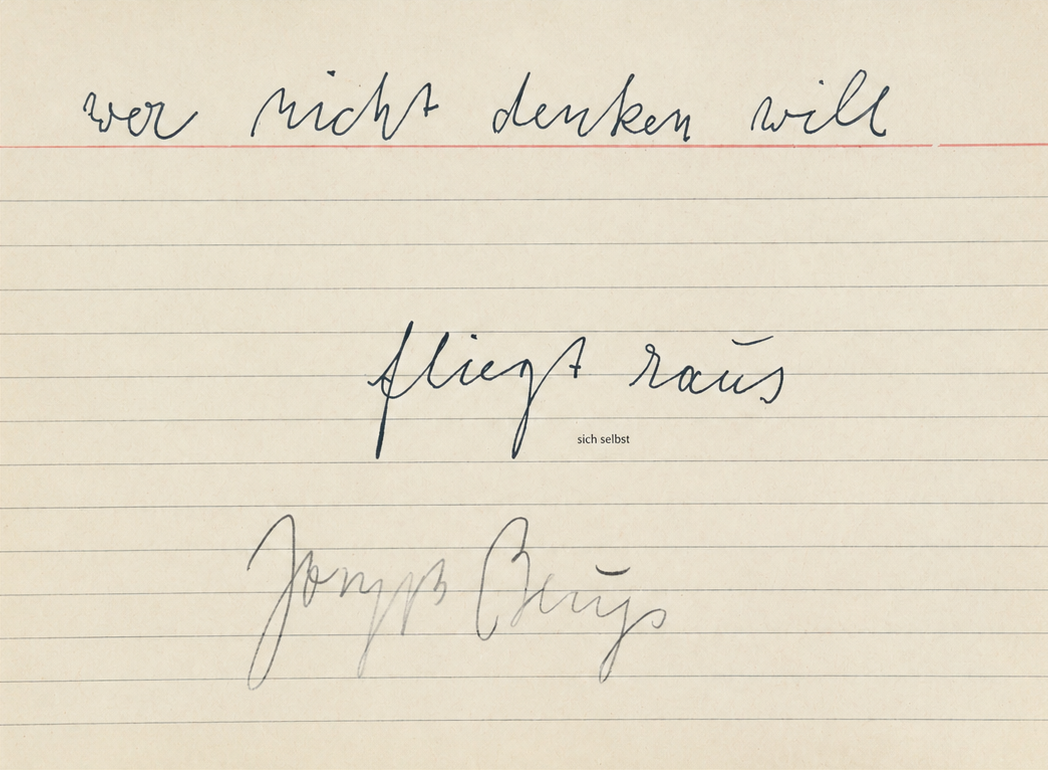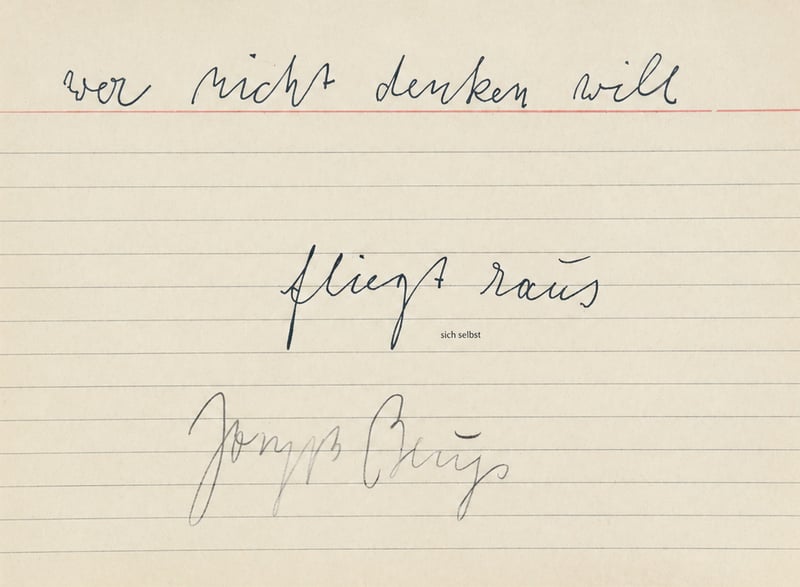
Index card with printed handwritten (wer nicht denken will fliegt raus) and typographic ( ‘sich selbst’ ) text. Hand-signed by the artist in pencil. Ref.: Schellmann ‘ Joseph Beuys – Multiples ’, 6th ed., 1985: nr. 172 (cfr. ‘card also sold separately’).
This characteristic multiple by Joseph Beuys distils his belief in thought, pedagogy, and the transformative power of art into a single humble index card. The printed handwritten phrase “wer nicht denken will fliegt raus” — whoever doesn’t want to think gets thrown out — is paired with the typographic title “sich selbst,” creating a layered interplay between the personal and the programmatic. Hand-signed in pencil by Beuys and catalogued in Schellmann’s definitive multiple reference, this deceptively simple object encapsulates the artist’s conviction that intellectual engagement is an essential human responsibility and the foundation of his expanded concept of art.
Artwork Copyright © Joseph BeuysJoseph Beuys (Germany, 1921–1986) was a groundbreaking German conceptual artist, sculptor, and performance artist. Known for his use of unconventional materials such as felt and fat, Beuys explored themes of humanism, ecology, and social change. His famous mantra, 'Everyone is an artist,' emphasized creativity as a universal force. A leader in Fluxus, his works remain profoundly influential.
Artwork Copyright © Joseph BeuysSich selbst (wer nicht denken will fliegt raus), 1977
Form
Medium
Size
- Inches
- Centimeters
Edition
Price
- USD
- EUR
- GBP
- CHF
- Authenticity Guaranteed
- Insured Shipping
- Online Since 2005
●Inventory 17346
●Signed
●Comes with gallery invoice and certificate
●Sell Us a Similar Artwork. Learn more.
Index card with printed handwritten (wer nicht denken will fliegt raus) and typographic ( ‘sich selbst’ ) text. Hand-signed by the artist in pencil. Ref.: Schellmann ‘ Joseph Beuys – Multiples ’, 6th ed., 1985: nr. 172 (cfr. ‘card also sold separately’).
This characteristic multiple by Joseph Beuys distils his belief in thought, pedagogy, and the transformative power of art into a single humble index card. The printed handwritten phrase “wer nicht denken will fliegt raus” — whoever doesn’t want to think gets thrown out — is paired with the typographic title “sich selbst,” creating a layered interplay between the personal and the programmatic. Hand-signed in pencil by Beuys and catalogued in Schellmann’s definitive multiple reference, this deceptively simple object encapsulates the artist’s conviction that intellectual engagement is an essential human responsibility and the foundation of his expanded concept of art.
Artwork Copyright © Joseph BeuysJoseph Beuys (Germany, 1921–1986) was a groundbreaking German conceptual artist, sculptor, and performance artist. Known for his use of unconventional materials such as felt and fat, Beuys explored themes of humanism, ecology, and social change. His famous mantra, 'Everyone is an artist,' emphasized creativity as a universal force. A leader in Fluxus, his works remain profoundly influential.
Artwork Copyright © Joseph BeuysAvailability
Size
Form
Medium
SORT BY
Joseph Beuys
Sich selbst (wer nicht denken will fliegt raus), 1977
Drawing / Watercolor
Mixed Media
EUR 700
Joseph Beuys
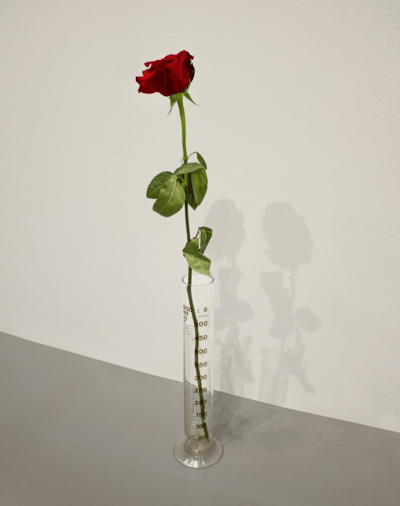
Eine Rose für direkte Demokratie, 1968
Sculpture / Object
Mixed Media
EUR 2,800
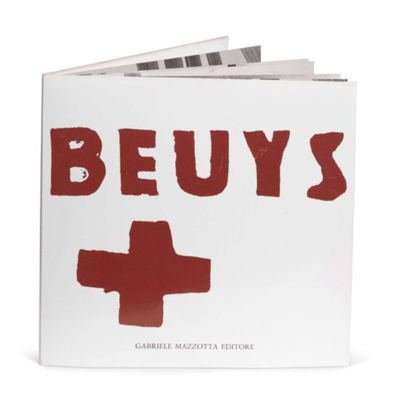
Joseph Beuys
Ja Ja Ja Ja Nee Nee Nee, 1970
Sculpture / Object
Mixed Media
EUR 2,500
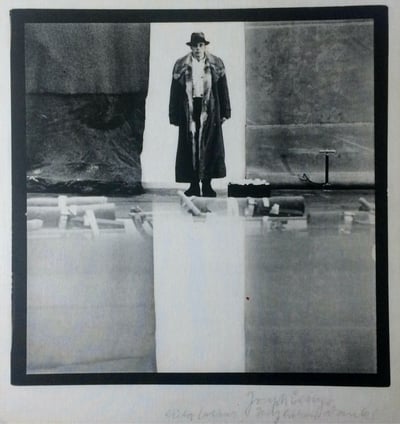
Joseph Beuys
Beuys for Lothar, 1973
Photography
Photograph
EUR 5,500
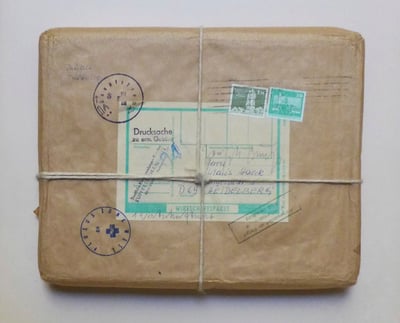
Joseph Beuys
Wirtschaftspaket, 1984
Sculpture / Object
Mixed Media
EUR 16,600
Related Artists
Related Articles
Popular, Art Movements - August 7, 2024
Art and Social Change: How Contemporary Artists Address Global Issues
Discover how contemporary artists drive social change! Explore impactful works addressing global issues like inequality, climate change, and human rights.Read More

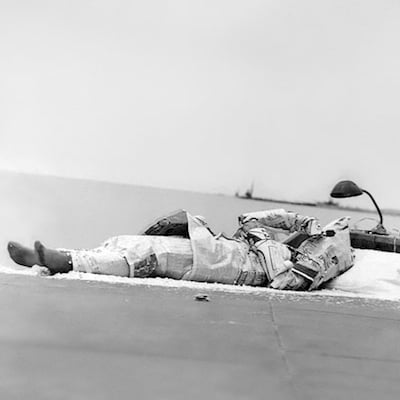
Artwork © Allan Kaprow’s “Happenings”
What is Happening?
A Happening is a term used to describe artistic and theatrical events held by artists in the 1950s and 60s. These events were typically staged in gallery installations or planned environments and often involved audience participation, along with elements like lighting, sounds, and slide projections. Happenings were a precursor to performance art, which later included the active participation of the artists themselves.