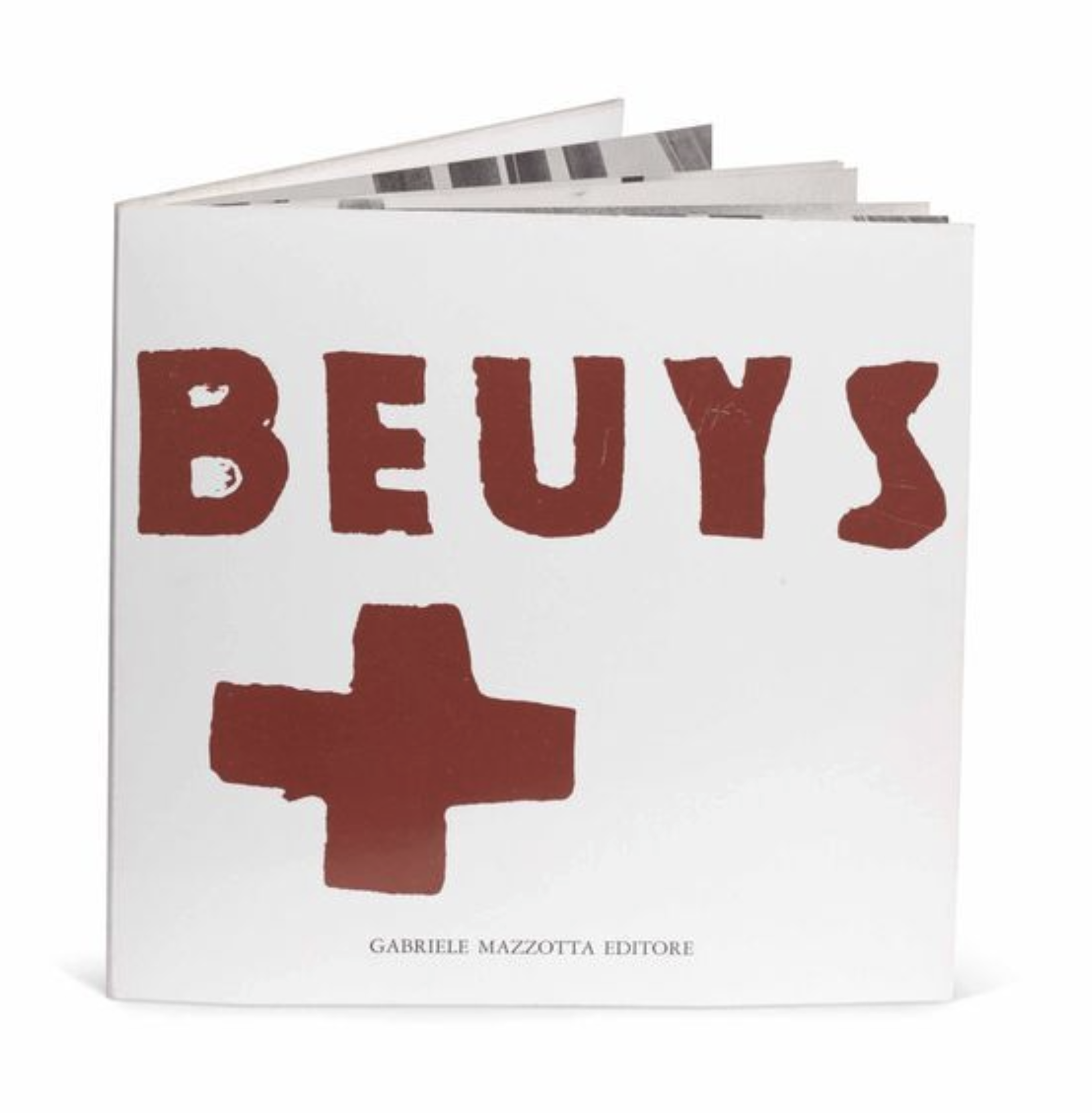
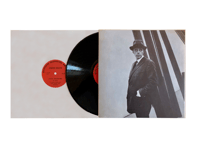
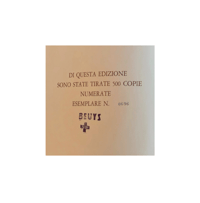
Vinyl within its original case. Stamped ‘Beuys’ and numbered. A performance by Joseph Beuys, recorded in Staatliche Kunstakademie, Düsseldorf, in 1968. Performers: J. Beuys in collaboration with H. Christiansen and J. Stüttgen. This is the editioned work published by Mazzotta, Milan. Another exemplar of this work is included in the Bonotto collection, Molvena (VI), Italy: Bibliography: Schellmann, Klüser, Catalogue Raisonné of the Art Multiples of Joseph Beuys, p. 17.
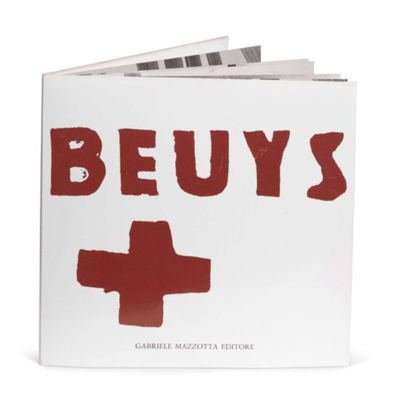
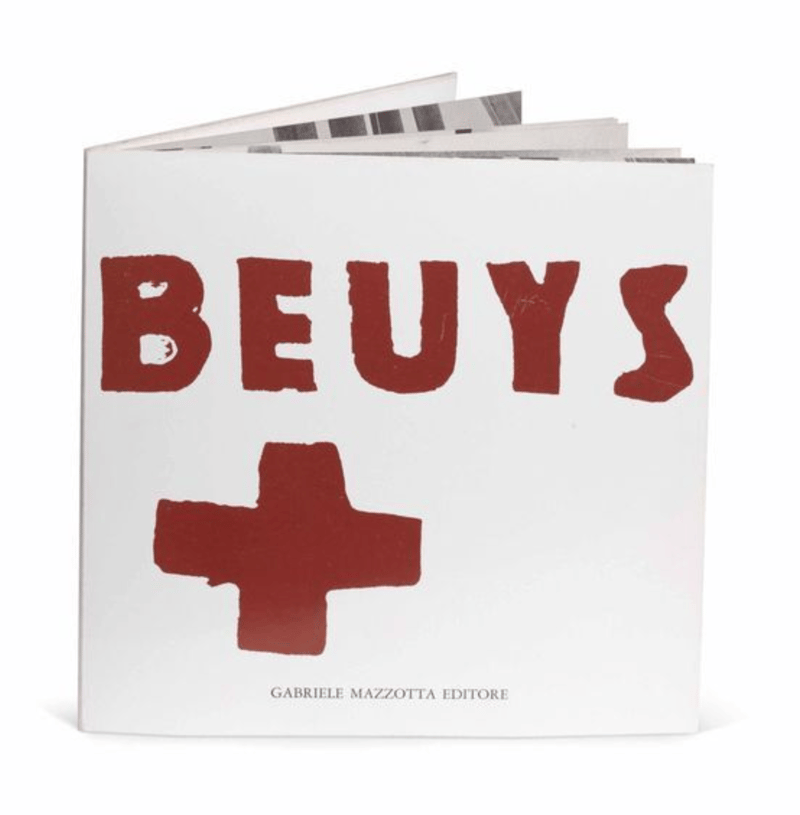
This artist's book and vinyl multiple by Joseph Beuys documents his legendary performance Ja Ja Ja Ja Nee Nee Nee, recorded at the Staatliche Kunstakademie Düsseldorf in 1968. The work consists of a vinyl record housed in its original case, featuring bold red lettering spelling 'BEUYS' and a prominent red cross on the white cover, published by Gabriele Mazzotta Editore. Stamped with the artist's name and numbered, this piece captures the raw sonic dimension of Beuys's practice, where repetitive vocal affirmation and negation become a meditation on language, consciousness, and the limits of communication.
Joseph Beuys (Germany, 1921–1986) was a groundbreaking German conceptual artist, sculptor, and performance artist. Known for his use of unconventional materials such as felt and fat, Beuys explored themes of humanism, ecology, and social change. His famous mantra, 'Everyone is an artist,' emphasized creativity as a universal force. A leader in Fluxus, his works remain profoundly influential.
Mixed MediaMixed media refers to artwork that incorporates more than one medium within a single piece. Unlike multimedia art, which combines distinct forms of visual art and often includes elements like sound, video, or digital media, mixed media focuses on combining traditional art materials, such as paint, ink, and collage. Mixed media art allows artists to achieve a wide range of effects and textures by layering and blending different materials.
Vinyl within its original case. Stamped ‘Beuys’ and numbered. A performance by Joseph Beuys, recorded in Staatliche Kunstakademie, Düsseldorf, in 1968. Performers: J. Beuys in collaboration with H. Christiansen and J. Stüttgen. This is the editioned work published by Mazzotta, Milan. Another exemplar of this work is included in the Bonotto collection, Molvena (VI), Italy: Bibliography: Schellmann, Klüser, Catalogue Raisonné of the Art Multiples of Joseph Beuys, p. 17.
This artist's book and vinyl multiple by Joseph Beuys documents his legendary performance Ja Ja Ja Ja Nee Nee Nee, recorded at the Staatliche Kunstakademie Düsseldorf in 1968. The work consists of a vinyl record housed in its original case, featuring bold red lettering spelling 'BEUYS' and a prominent red cross on the white cover, published by Gabriele Mazzotta Editore. Stamped with the artist's name and numbered, this piece captures the raw sonic dimension of Beuys's practice, where repetitive vocal affirmation and negation become a meditation on language, consciousness, and the limits of communication.
Joseph Beuys (Germany, 1921–1986) was a groundbreaking German conceptual artist, sculptor, and performance artist. Known for his use of unconventional materials such as felt and fat, Beuys explored themes of humanism, ecology, and social change. His famous mantra, 'Everyone is an artist,' emphasized creativity as a universal force. A leader in Fluxus, his works remain profoundly influential.
I think the tree is an element of regeneration which in itself is a concept of time.
- Joseph Beuys
Widely recognised as one of the most influential artists of the late 20th century, Joseph Beuys was a multi-faceted artist whose works were created through many different forms; traditional mediums such as painting and sculpture, as well as performance art and an involvement in social and political activities. Beuys, alongside Andy Warhol and Kaii Higashiyama, created the Global-Art-Fusion project in 1985; this was a fax-art project in which drawings of all three artists were distributed around the world within the space of 32 minutes – the fax went through Dusseldorf, New York, Tokyo and was finally received at Vienna's Palais-Liechtenstein Museum of Modern Art – the fax was taken to be a sign of peace during the Cold War. A lot of Beuys’ installations and performance art employed the use of unorthodox materials and adopted a ritualistic approach, often met with controversy; How to Explain Pictures To a Dead Hare is one of his most recognised performances – Beuys walked around the gallery for two hours while explaining the concept of the surrounding art to the dead hare that he carried with him.
Mail Art is a populist art movement centered on the creation and exchange of small-scale artworks through the postal service. It developed out of the Fluxus movement in the 1950s and 1960s and has since evolved into a global art movement. Ray Johnson is recognized as the first mail artist, and his New York School is considered the first network of mail artists. Mail artists rely heavily on a network to exchange their works, often creating a community of artists connected through the postal system.