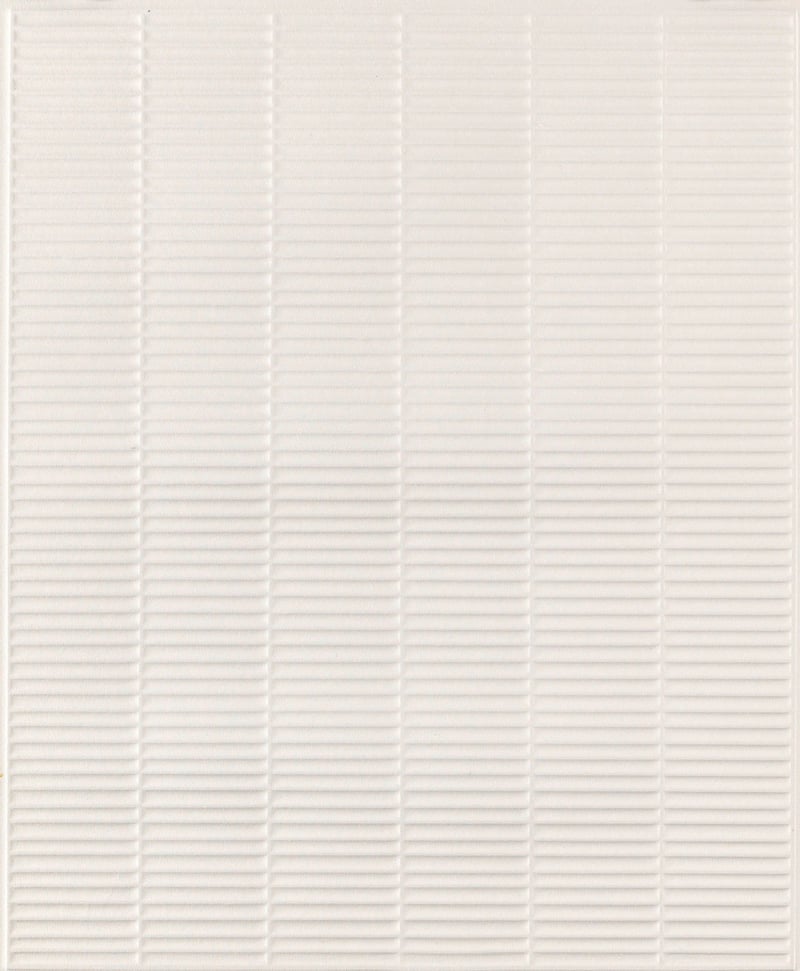
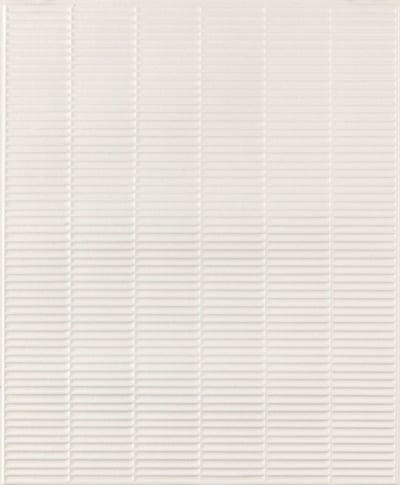
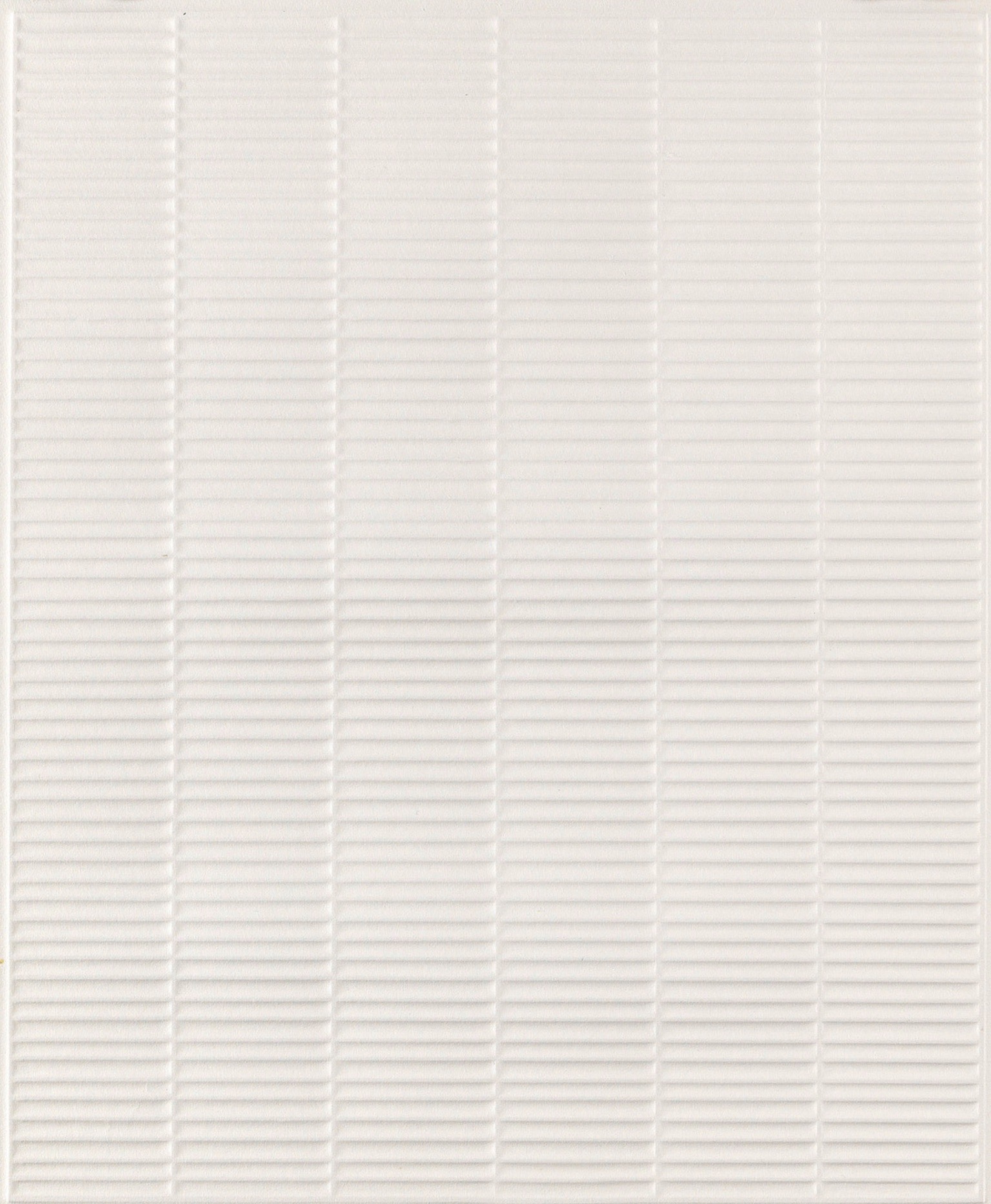
Untitled M-IV by Jan Schoonhoven, created in 1972, is a limited edition embossing print that embodies the minimalist and structural essence of the Dutch artist's style. Known for his work in the Nul (Zero) movement, Schoonhoven’s piece reflects a fascination with repetition and precision. The embossed lines create a subtle three-dimensional texture, allowing light to play on the surface and emphasize the uniformity of the grid-like pattern. This restrained design invites viewers to consider the nuances of light and shadow, minimalism, and texture within a monochromatic palette. The artwork, limited to an edition of 120, reflects Schoonhoven's intent to explore form and repetition, providing a calm, meditative experience.
Artwork Copyright © Jan SchoonhovenJan Schoonhoven (Netherlands, 1914–1994) was a pioneering abstract artist and a leading figure of the Dutch Nul movement. Renowned for his monochromatic white reliefs, he explored texture and repetition using simple materials like cardboard and paper. His works embody a minimalist aesthetic, emphasizing light and shadow, and are celebrated in international collections.
Artwork Copyright © Jan SchoonhovenUntitled M-IV, 1972
Form
Medium
Size
- Inches
- Centimeters
Edition
Price
Available works →
- Authenticity Guaranteed
- Insured Shipping
- Online Since 2005
●
●Inventory 6965
●Signed
●Comes with gallery invoice and certificate
●Sell Us a Similar Artwork. Learn more.
Untitled M-IV by Jan Schoonhoven, created in 1972, is a limited edition embossing print that embodies the minimalist and structural essence of the Dutch artist's style. Known for his work in the Nul (Zero) movement, Schoonhoven’s piece reflects a fascination with repetition and precision. The embossed lines create a subtle three-dimensional texture, allowing light to play on the surface and emphasize the uniformity of the grid-like pattern. This restrained design invites viewers to consider the nuances of light and shadow, minimalism, and texture within a monochromatic palette. The artwork, limited to an edition of 120, reflects Schoonhoven's intent to explore form and repetition, providing a calm, meditative experience.
Artwork Copyright © Jan SchoonhovenJan Schoonhoven (Netherlands, 1914–1994) was a pioneering abstract artist and a leading figure of the Dutch Nul movement. Renowned for his monochromatic white reliefs, he explored texture and repetition using simple materials like cardboard and paper. His works embody a minimalist aesthetic, emphasizing light and shadow, and are celebrated in international collections.
Artwork Copyright © Jan Schoonhoven- Recently Added
- Price (Low-High)
- Price (High-Low)
- Year (Low-High)
- Year (High-Low)
Jan Schoonhoven
Untitled M-IV, 1972
Limited Edition Print
Embossing
Currently Not Available
Related Artists
Related Articles
Popular, News, Artists - February 27, 2026
The Sovereign Self: Tracey Emin’s A Second Life at Tate Modern (2026) and the Evolution of a Global Market
Tracey Emin’s A Second Life at Tate Modern (2026) redefines her legacy, signaling institutional canonisation and a maturing global market.Read More
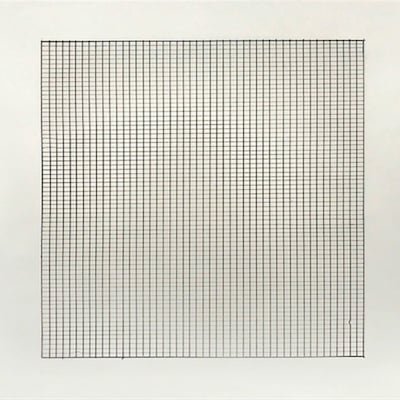
Artwork by Agnes Martin
What is minimalism?
Minimalism is a style in music and visual arts characterized by pared-down designs and simplicity. It began in Western art after World War II, gaining prominence particularly in American visual arts. Minimalism draws heavily on aspects of modernism and is often viewed as a reaction against Abstract Expressionism, as well as a precursor to post-minimal art practices. Prominent minimalist artists include Agnes Martin, Donald Judd, Robert Morris, Frank Stella, and Dan Flavin.
Jan Schoonhoven
Untitled M-IV, 1972
45 x 37 cm


