Details
Artist
Styles
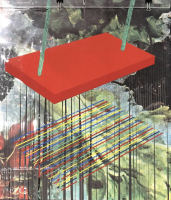
Acrylic and Mixed Media on paper. Signed, Dated, and Titled in Pencil along the bottom. The painting was created as part of a series for a fundraiser at the Hahnemann Hospital, a cardiovascular facility in Philadelphia. Drawing #14 for Heart Time Flowers (1980) by James Rosenquist is an acrylic and mixed media work on paper measuring 20 x 28 inches. Part of a series created for a fundraiser benefiting Hahnemann Hospital's cardiovascular programs, the composition features colorful nail-like forms arranged in loose clusters. These vibrant linear elements are centered around a glowing red halo—likely symbolizing the human heart or the energy of life itself. The floating, rhythmic positioning of the nails suggests both fragility and precision, evoking surgical instruments or vascular structures. Rosenquist’s characteristic use of pop imagery and abstraction here merges aesthetic play with social intention. Signed, dated, and titled in pencil.
Drawing #14 For Heart Time Flowers, 1980
form
Medium
Size
50.8 x 71.1 cm
- Inches
- Centimeters
Edition
Price
Details
Artist
Styles
Acrylic and Mixed Media on paper. Signed, Dated, and Titled in Pencil along the bottom. The painting was created as part of a series for a fundraiser at the Hahnemann Hospital, a cardiovascular facility in Philadelphia. Drawing #14 for Heart Time Flowers (1980) by James Rosenquist is an acrylic and mixed media work on paper measuring 20 x 28 inches. Part of a series created for a fundraiser benefiting Hahnemann Hospital's cardiovascular programs, the composition features colorful nail-like forms arranged in loose clusters. These vibrant linear elements are centered around a glowing red halo—likely symbolizing the human heart or the energy of life itself. The floating, rhythmic positioning of the nails suggests both fragility and precision, evoking surgical instruments or vascular structures. Rosenquist’s characteristic use of pop imagery and abstraction here merges aesthetic play with social intention. Signed, dated, and titled in pencil.
- Recently Added
- Price (low-high )
- Price (high-low )
- Year (low-high )
- Year (high-low )

James Rosenquist
Flower Garden, 1972
Limited Edition Print
Lithograph
USD 1,200

James Rosenquist
Marilyn, 1974
Limited Edition Print
Lithograph
Inquire For Price

James Rosenquist
Dusting Off Roses, 1965
Limited Edition Print
Lithograph
Inquire For Price

James Rosenquist
Drawing #14 For Heart Time Flowers, 1980
Drawing / Watercolor
Mixed Media
Inquire For Price

James Rosenquist
Book And Pointer For The Fast Student, 1977
Drawing / Watercolor
Collage
Inquire For Price
James Rosenquist
Sketch For Forest Ranger, 1967
Limited Edition Print
Silkscreen
USD 1,500

James Rosenquist
Moon Box, 1971
Limited Edition Print
Lithograph
EUR 3,100

James Rosenquist
Ice Point From Art And Sport, 1983
Limited Edition Print
Lithograph
USD 4,450

James Rosenquist
Yellow Landing, 1974
Limited Edition Print
Lithograph
USD 11,900

James Rosenquist
Woman In The Sun, 1991
Limited Edition Print
Lithograph
USD 4,450

James Rosenquist
Nuclear Neighborhood, 1977
Limited Edition Print
Etching
USD 3,750

James Rosenquist
Towel, Star, Sunglasses, 1977
Limited Edition Print
Etching
USD 3,750

James Rosenquist
Where The Water Goes (from The Welcome To The Water Planet), 1989
Limited Edition Print
Collage
Inquire For Price

James Rosenquist
Universal Star Leg, 1974
Limited Edition Print
Collage
USD 3,200

James Rosenquist
Federal Spending (second State), 1978
Limited Edition Print
Etching And Aquatint
Inquire For Price

James Rosenquist
A Pale Angels Halo (Yellow), 1973
Limited Edition Print
Lithograph
USD 1,200

James Rosenquist
Federal Spending, 1978
Limited Edition Print
Etching And Aquatint
Inquire For Price

James Rosenquist
Miles, 1975
Limited Edition Print
Screen-print
USD 2,000
James Rosenquist
Just Desert Israel 2nd State, 1979
Limited Edition Print
Intaglio
Inquire For Price

James Rosenquist
Tide (2nd State), 1976
Limited Edition Print
Etching
Inquire For Price

James Rosenquist
Swing Screen, 1976
Limited Edition Print
Etching And Aquatint
Inquire For Price

James Rosenquist
Window Washer Glass House, 1978
Limited Edition Print
Mixed Media
USD 1,450

James Rosenquist
Window Washer Glass House (black And White), 1978
Limited Edition Print
Mixed Media
Inquire For Price

James Rosenquist
The Flame Still Dances On Leos Book, 1997
Limited Edition Print
Lithograph
USD 1,350

James Rosenquist
SPOKES (green), 1978
Limited Edition Print
Etching And Aquatint
Inquire For Price

James Rosenquist
Certificate, 1962
Limited Edition Print
Etching
Inquire For Price

James Rosenquist
Tide, 1979
Limited Edition Print
Etching And Aquatint
Inquire For Price

James Rosenquist
Somewhere To Light, 1966
Limited Edition Print
Screen-print
USD 6,600

James Rosenquist
The Book Disappears For The Fast Student 2nd State, 1978
Limited Edition Print
Etching And Aquatint
USD 1,100

James Rosenquist
Horse Blinders (North), 1972
Limited Edition Print
Mixed Media
USD 5,500

James Rosenquist
Alphabet Avalanche, 1979
Limited Edition Print
Lithograph
USD 6,620

James Rosenquist
Starfish, 1974
Limited Edition Print
Serigraph
Inquire For Price

James Rosenquist
Spring Cheer, 1st. State , 1978
Limited Edition Print
Etching And Aquatint
USD 4,250

James Rosenquist
Spokes , 1977
Limited Edition Print
Etching And Aquatint
USD 4,390

James Rosenquist
Hot Lake, 1978
Limited Edition Print
Etching And Aquatint
USD 4,390

James Rosenquist
Flamingo Capsule, 1973
Limited Edition Print
Screen-print
USD 18,500

James Rosenquist
High Pool, 1966
Limited Edition Print
Lithograph
USD 6,700

James Rosenquist
Circles Of Confusion, 1965
Limited Edition Print
Screen-print
EUR 2,500

James Rosenquist
Gravity Feed, 1978
Limited Edition Print
Aquatint
USD 2,350

James Rosenquist
Sunglass Lens - Landing Net - Triangle, 1974
Limited Edition Print
Etching
Inquire For Price

James Rosenquist
New York Says It, 1983
Limited Edition Print
Lithograph
USD 1,400

James Rosenquist
Star Ladder (Second State), 1978
Limited Edition Print
Lithograph
USD 3,400

James Rosenquist
Rails, 1975-1976
Limited Edition Print
Lithograph
USD 9,500

James Rosenquist
Pushbuttons, 1972
Limited Edition Print
Lithograph
USD 7,500

James Rosenquist
Forehead 2, 1968
Limited Edition Print
Lithograph
USD 6,500

James Rosenquist
Flameout For Picasso, 1973
Limited Edition Print
Lithograph
USD 4,500

James Rosenquist
The World Art Festival, 1982
Limited Edition Print
Lithograph
Currently Not Available

James Rosenquist
My Mind Is A Glass Of Water, 1972
Limited Edition Print
Lithograph
Currently Not Available
Related Artists


Related Articles

Popular, Art Movements - May 01, 2020
Reinvention of the Art world: The Insurgency of Pop Art
Explore the rise of Pop Art, from its roots in 1950s Britain to its global impact. Discover iconic works by Warhol, Lichtenstein, and others redefining culture. Read More

What is Hyper-realism?
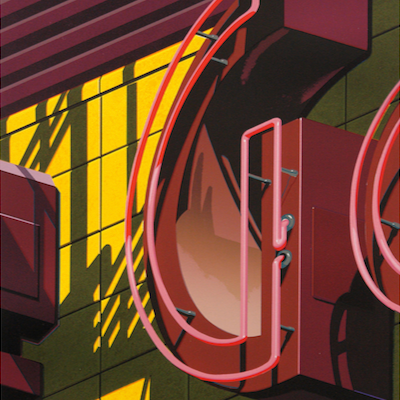
Hyperrealism is a genre of sculpture and painting that closely resembles high-resolution photographs. It is an evolution of Photorealism and is often applied to an independent art style or movement that became prominent in Europe and the United States in the early 2000s. Hyperrealist artists focus on extreme detail and precision, creating works that are often indistinguishable from real-life images.