Details
Artist
Styles
Lithograph printed in colours, on Arches paper. // Helena Vieira da Silva's Grottes is a captivating lithograph from 1971, created in her characteristic abstract and textural style. The piece is printed in colors on Arches paper, utilizing a palette dominated by deep blacks, greens, and subtle hints of blue and yellow. The composition evokes the complexity and depth of a dense, maze-like space, resembling caves or architectural structures, consistent with Vieira da Silva’s fascination with labyrinthine environments. The layering and overlapping of brushstrokes create a sense of movement and spatial ambiguity, inviting viewers to explore the intricate details within the piece. This limited edition print, measuring 76 x 56 cm, is an exceptional example of Vieira da Silva's exploration of space and perspective, capturing the viewer’s attention through its depth and dynamism.
Grottes, 1971
form
Medium
Size
76 x 56 cm
- Inches
- Centimeters
Edition
Price
- USD
- EUR
- GBP
Details
Artist
Styles
Lithograph printed in colours, on Arches paper. // Helena Vieira da Silva's Grottes is a captivating lithograph from 1971, created in her characteristic abstract and textural style. The piece is printed in colors on Arches paper, utilizing a palette dominated by deep blacks, greens, and subtle hints of blue and yellow. The composition evokes the complexity and depth of a dense, maze-like space, resembling caves or architectural structures, consistent with Vieira da Silva’s fascination with labyrinthine environments. The layering and overlapping of brushstrokes create a sense of movement and spatial ambiguity, inviting viewers to explore the intricate details within the piece. This limited edition print, measuring 76 x 56 cm, is an exceptional example of Vieira da Silva's exploration of space and perspective, capturing the viewer’s attention through its depth and dynamism.
- Recently Added
- Price (low-high )
- Price (high-low )
- Year (low-high )
- Year (high-low )

Helena Vieira Da Silva
Azteque (Tumulus), 1971
Limited Edition Print
Lithograph
EUR 1,550

Helena Vieira Da Silva
Untitled (Rua Das Chagas), 1987
Limited Edition Print
Lithograph
EUR 1,550

Helena Vieira Da Silva
Les Grilles, 1961
Limited Edition Print
Lithograph
EUR 1,350

Helena Vieira Da Silva
L’Échiquier , 1961
Limited Edition Print
Lithograph
EUR 1,750

Helena Vieira Da Silva
Grottes, 1971
Limited Edition Print
Lithograph
EUR 1,650

Helena Vieira Da Silva
Faïence, 1971
Limited Edition Print
Lithograph
Currently Not Available
Related Artists


Related Articles

Popular, Art Movements - November 20, 2024
Understanding Abstract Expressionism: Emotion and Gesture
Explore the emotional depth of Abstract Expressionism! Discover how artists like Pollock and Rothko used gesture and color to convey human complexity. Read More

What is Cubism?
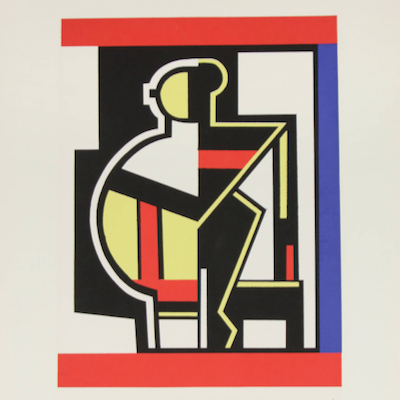
Cubism is an art movement that aimed to depict multiple perspectives of objects or figures within a single picture. Artists Georges Braque and Pablo Picasso pioneered this style around 1907. The name Cubism emerged from their use of geometric shapes and outlines that often resembled cubes, breaking objects down into abstracted forms.