What is abstract expressionism?
Abstract Expressionism is an art movement that emerged in the United States during the 1940s and 1950s. Characterized by large, abstract canvases, the movement emphasized spontaneous, expressive brushwork and the use of color and form to convey emotion rather than represent reality. Artists like Jackson Pollock, Mark Rothko, and Willem de Kooning are key figures in this movement. Abstract Expressionism marked a shift in the art world, making New York City a center of the international art scene.
- Show All
- Established
- Discoveries
ARTWORKS RELATED TO ABSTRACT EXPRESSIONISM

Agnes Martin
Untitled (from Paintings and Drawings: 1974-1990), 1991
Limited Edition Print
Lithograph
EUR 8,600

Jean-Paul Riopelle
Four winds (I), 1980
Limited Edition Print
Monoprint
Inquire For Price

Louise Bourgeois
Jitterbug, 1998
Limited Edition Print
Lithograph
GBP 11,000 - 15,000

Jordi Alcaraz
Sculpture, 2026
Sculpture / Object
Mixed Media
EUR 6,500

Jordi Alcaraz
Autoretrat caminant, 2026
Sculpture / Object
Mixed Media
EUR 10,000

Fernando Botero
Pedrito, 1975
Limited Edition Print
Offset Print
EUR 6,600

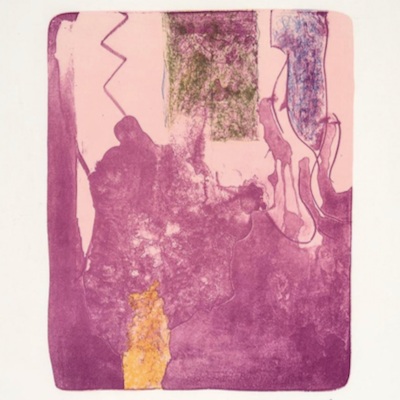
Helen Frankenthaler
Lot's Wife, 1971
Limited Edition Print
Lithograph
USD 50,000 - 60,000

Hans Hartung
L 1973-46, 1973
Limited Edition Print
Lithograph
EUR 2,050

Jasper Johns
Summer (Blue), 1985-91
Limited Edition Print
Lithograph
USD 4,500

Robert Rauschenberg
Passport (from the Ten from Leo Castelli portfolio), 1967
Sculpture / Object
Mixed Media
USD 5,350

Jack Youngerman
Untitled 2, from the White Portfolio, 1972
Limited Edition Print
Intaglio
Inquire For Price

Jack Youngerman
Untitled 1, from the White Portfolio, 1972
Limited Edition Print
Intaglio
Inquire For Price

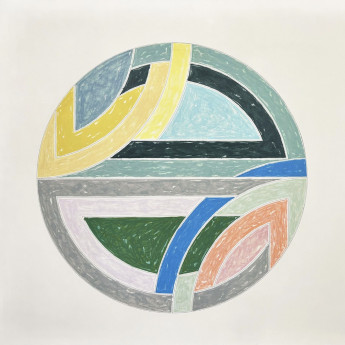
Frank Stella
The Decanter, 1986
Sculpture / Object
Mixed Media
Inquire For Price

Robert Rauschenberg
Publicon Station IV, 1978
Sculpture / Object
Mixed Media
USD 34,000 - 50,000

Robert Rauschenberg
Untitled, 1982
Drawing / Watercolor
Mixed Media
Inquire For Price

Robert Rauschenberg
Water Stop, 1968
Limited Edition Print
Lithograph
Inquire For Price
Related Articles
Art Movements - September 03, 2025
Decoding Abstract Art: How to Approach and Appreciate Non-Representational Works
Explore iconic abstract art through works by Chillida, Calder, Frankenthaler & more. Discover how form, color, and rhythm shape our experience. Read More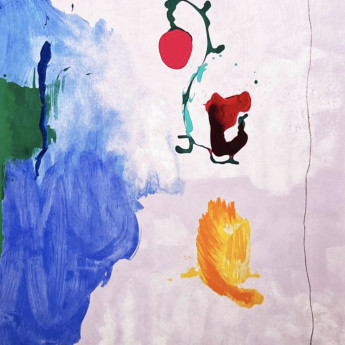

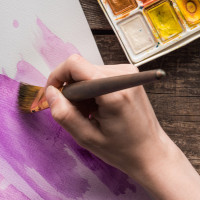
Acrylic on paper is a technique that involves using acrylic paints on various paper types and textures. Artists often choose watercolor paper with smooth or rough surfaces to apply acrylics using watercolor techniques such as bleeding, washing, and spattering. This approach allows for a wide range of effects, combining the flexibility of acrylics with the delicate qualities of watercolor methods.

Oil on board is a painting technique where oil paint is applied to either wood panels that have been sanded and primed or high-density cardboard covered with canvas. These surfaces offer the advantage of being more compact for storage compared to traditional stretched canvas on frames, while still providing a stable surface for painting.