Details
Artist
Styles
// Hunter by Fernando Botero is a pencil drawing from 1980, embodying the artist's unique style of exaggerated, voluminous figures. The sketch depicts a rotund hunter, dressed in classic hunting attire, complete with a hat, ammunition belt, and rifle slung over his shoulder. Standing amidst tall grasses, the figure's facial expression and body language convey a sense of calm confidence. Botero's characteristic approach to form, with his emphasis on rounded and inflated shapes, adds a humorous and satirical element to the portrayal, possibly commenting on themes of masculinity and authority. The simplicity of pencil on paper highlights the elegance of Botero’s line work and his ability to evoke personality through minimal detail.
Hunter, 1980
form
Medium
Size
39.4 x 33 cm
- Inches
- Centimeters
Edition
Range
- USD
- EUR
- GBP
Details
Artist
Styles
// Hunter by Fernando Botero is a pencil drawing from 1980, embodying the artist's unique style of exaggerated, voluminous figures. The sketch depicts a rotund hunter, dressed in classic hunting attire, complete with a hat, ammunition belt, and rifle slung over his shoulder. Standing amidst tall grasses, the figure's facial expression and body language convey a sense of calm confidence. Botero's characteristic approach to form, with his emphasis on rounded and inflated shapes, adds a humorous and satirical element to the portrayal, possibly commenting on themes of masculinity and authority. The simplicity of pencil on paper highlights the elegance of Botero’s line work and his ability to evoke personality through minimal detail.
- Recently Added
- Price (low-high )
- Price (high-low )
- Year (low-high )
- Year (high-low )

Fernando Botero
Dessins Et Aquarelles (2), 1984
Limited Edition Print
Lithograph
EUR 6,350

Fernando Botero
Pedrito, 1975
Limited Edition Print
Offset Print
EUR 6,600
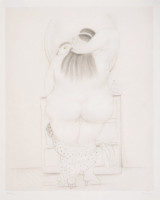
Fernando Botero
Dessins Et Aquarelles: One Plate, 1984
Limited Edition Print
Offset Print
USD 8,500

Fernando Botero
La Toilette, 1983
Limited Edition Print
Offset Print
EUR 6,870

Fernando Botero
Profile De Jeune Homme, 1992
Drawing / Watercolor
Pen And Ink
USD 17,900

Fernando Botero
Hunter, 1980
Drawing / Watercolor
Pencil
USD 29,000 - 35,000

Fernando Botero
Fumador De Cigarrillos, 1975 -1980
Limited Edition Print
Lithograph
Currently Not Available

Fernando Botero
The Dancers, 1983
Limited Edition Print
Lithograph
Currently Not Available

Fernando Botero
Man And Woman, .
Sculpture / Object
Bronze
Currently Not Available
Related Artists


Related Articles

Popular, Art Movements - November 20, 2024
Understanding Abstract Expressionism: Emotion and Gesture
Explore the emotional depth of Abstract Expressionism! Discover how artists like Pollock and Rothko used gesture and color to convey human complexity. Read More

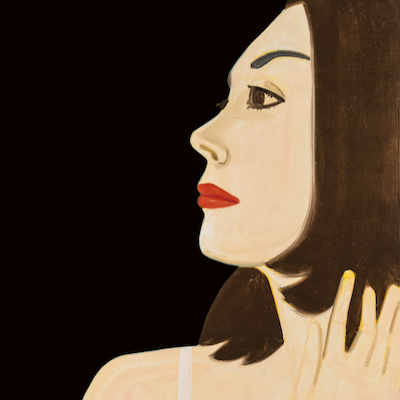
What is figurative art?
Sometimes known as Figurativism, figurative art refers to sculptures and paintings that are clearly or specifically derived from real objects, making them representational. The term figurative art is often used in contrast to abstract art. However, since the emergence of abstract art, figurative art has come to describe any form of modern art that has strong references to the real world or actual situations.