
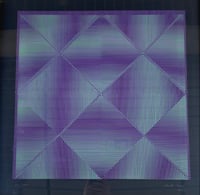

Double screenprint
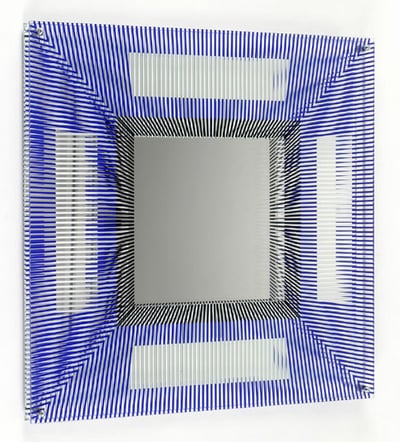
Rilievo ottico cinetico by Alberto Biasi is a limited edition screen-print from 1972, demonstrating the artist's mastery in optical and kinetic art. The composition uses geometric patterns and repetitive lines to create an illusion of movement and depth. The intricate interplay of green and purple hues enhances the visual effect, making the forms appear dynamic as the viewer’s perspective shifts. Biasi’s work exemplifies the Op Art movement, exploring visual perception and how simple linear elements can manipulate spatial perception.
Artwork Copyright © Alberto BiasiAlberto Biasi (Italy, 1937) is an Italian artist and a leading figure in the Kinetic and Optical Art movements. As a co-founder of Gruppo N in 1960, he explored visual perception through dynamic works that engage viewers in interactive experiences. Biasi's art is featured in major institutions, including the Museum of Modern Art in New York and the Centre Pompidou in Paris.
Artwork Copyright © Alberto BiasiRilievo ottico cinetico, 1972
Form
Medium
Size
- Inches
- Centimeters
Edition
Price
- USD
- EUR
- GBP
- CHF
- Authenticity Guaranteed
- Insured Shipping
- Online Since 2005
●Inventory 13351
●Signed
●Comes with gallery invoice and certificate
●Sell Us a Similar Artwork. Learn more.
Double screenprint
Rilievo ottico cinetico by Alberto Biasi is a limited edition screen-print from 1972, demonstrating the artist's mastery in optical and kinetic art. The composition uses geometric patterns and repetitive lines to create an illusion of movement and depth. The intricate interplay of green and purple hues enhances the visual effect, making the forms appear dynamic as the viewer’s perspective shifts. Biasi’s work exemplifies the Op Art movement, exploring visual perception and how simple linear elements can manipulate spatial perception.
Artwork Copyright © Alberto BiasiAlberto Biasi (Italy, 1937) is an Italian artist and a leading figure in the Kinetic and Optical Art movements. As a co-founder of Gruppo N in 1960, he explored visual perception through dynamic works that engage viewers in interactive experiences. Biasi's art is featured in major institutions, including the Museum of Modern Art in New York and the Centre Pompidou in Paris.
Artwork Copyright © Alberto Biasi- Recently Added
- Price (Low-High)
- Price (High-Low)
- Year (Low-High)
- Year (High-Low)

Alberto Biasi
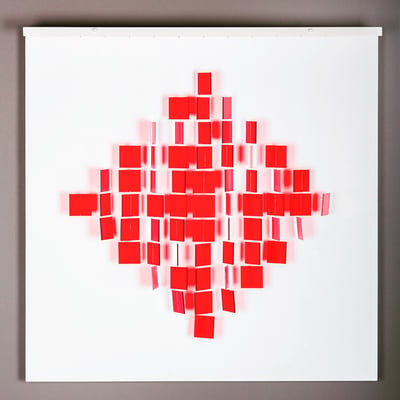
Red Rain, 2022
Sculpture / Object
Mixed Media
EUR 3,000

Alberto Biasi
Rilievo ottico cinetico, 1972
Limited Edition Print
Screen-print
EUR 1,900
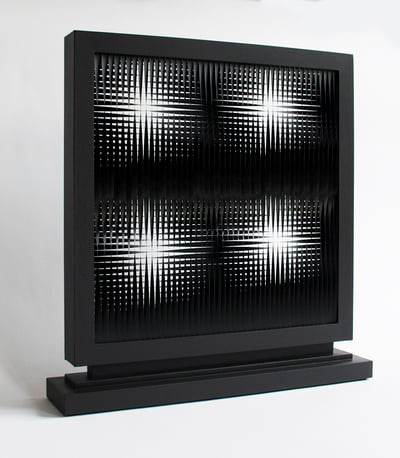
Alberto Biasi
Torsioni Sovrapposte Noir, 2017
Sculpture / Object
Mixed Media
EUR 3,000
Related Artists

Related Articles
Collecting - March 25, 2025
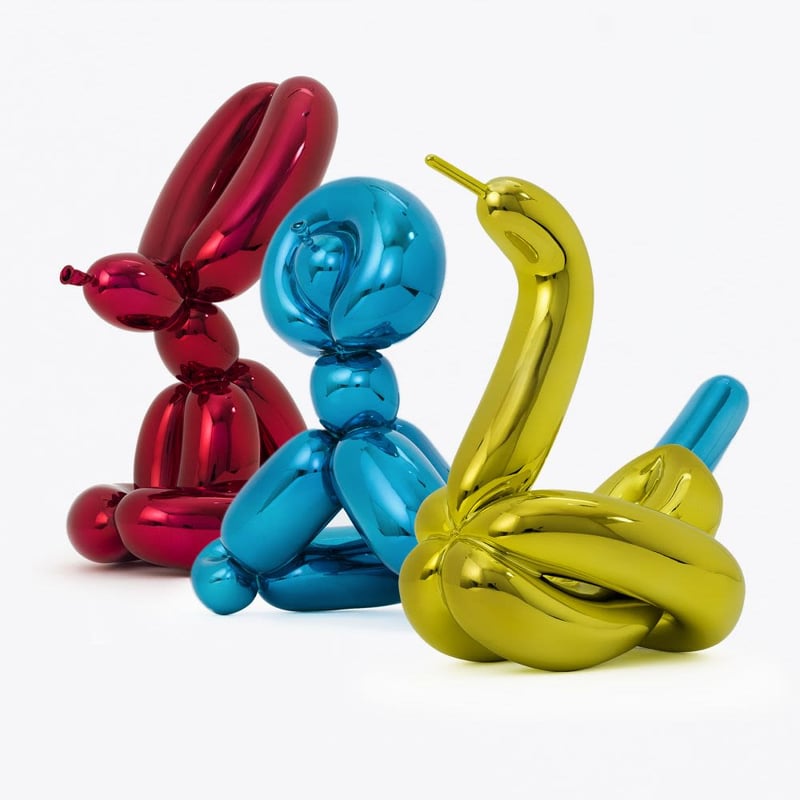
Understanding Editioned Sculptures: What Collectors Need to Know
Explore the value of editioned sculptures, from bronze to electric art. Learn how edition size, material, and artist impact collectability.Read More

Artwork by Ellsworth Kelly
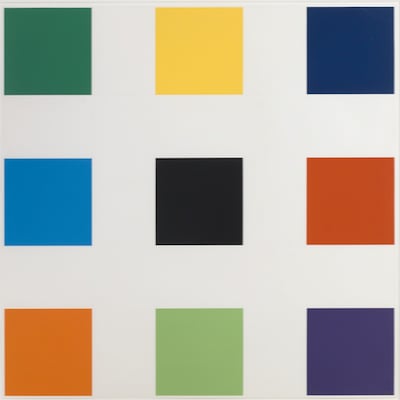
What is Hard Edge Art?
Hard Edge art is a style of abstract painting that became popular in the 1960s. It features areas of color separated by crisp, sharp edges that are painted with geometric precision. The term hard-edge painting was coined by art critic Jules Langsner to describe this approach, which contrasts with the softer, more fluid forms of other abstract styles.


Alberto Biasi
Rilievo ottico cinetico, 1972
63 x 63 cm


