Details
Artist
Styles
Color woodcut - Published by Crown Point Press // Al Held's Pachinko (1989) is a color woodcut print that demonstrates his fascination with complex, geometric abstraction. The composition is vibrant and dynamic, filled with interconnected shapes and bold primary colors. Central to the piece are large blue cylindrical forms intersecting with angular yellow planes, framed within a structural grid. The background features shades of red and pink, creating a vivid contrast with the blue and yellow elements. Held's precise use of geometry and color invites viewers to explore depth, perspective, and the illusion of spatial relationships, reminiscent of architectural and mechanical forms.
Details
Artist
Styles
Color woodcut - Published by Crown Point Press // Al Held's Pachinko (1989) is a color woodcut print that demonstrates his fascination with complex, geometric abstraction. The composition is vibrant and dynamic, filled with interconnected shapes and bold primary colors. Central to the piece are large blue cylindrical forms intersecting with angular yellow planes, framed within a structural grid. The background features shades of red and pink, creating a vivid contrast with the blue and yellow elements. Held's precise use of geometry and color invites viewers to explore depth, perspective, and the illusion of spatial relationships, reminiscent of architectural and mechanical forms.
- Recently Added
- Price (low-high )
- Price (high-low )
- Year (low-high )
- Year (high-low )

Al Held
Camerata XII, 1989
Drawing / Watercolor
Watercolor
USD 29,500

Al Held
Pachinko, 1989
Limited Edition Print
Woodcut
USD 5,500

Al Held
Pradorama, 1991
Limited Edition Print
Lithograph
EUR 4,200
Related Artists


Related Articles

Popular, Art Movements - November 20, 2024
Understanding Abstract Expressionism: Emotion and Gesture
Explore the emotional depth of Abstract Expressionism! Discover how artists like Pollock and Rothko used gesture and color to convey human complexity. Read More

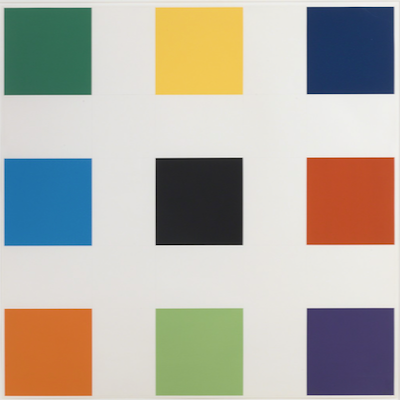
Artwork by Ellsworth Kelly
What is Hard Edge Art?
Hard Edge art is a style of abstract painting that became popular in the 1960s. It features areas of color separated by crisp, sharp edges that are painted with geometric precision. The term hard-edge painting was coined by art critic Jules Langsner to describe this approach, which contrasts with the softer, more fluid forms of other abstract styles.
RECENTLY VIEWED
-->