
What is a plate?
A plate is a broad, primarily flat vessel used for serving food, but it can also serve ceremonial or decorative purposes. Plates are typically circular, though they can be any shape and made from various water-resistant materials. Most plates have raised edges, either by curving upward or featuring a wider lip. Vessels without a raised edge or with a more rounded profile are often considered bowls or dishes, while very large, plate-shaped vessels might also be classified as dishes.
Show All
- Show All
- Established
- Discoveries
Show All
- Show All
Artworks Related to Plate
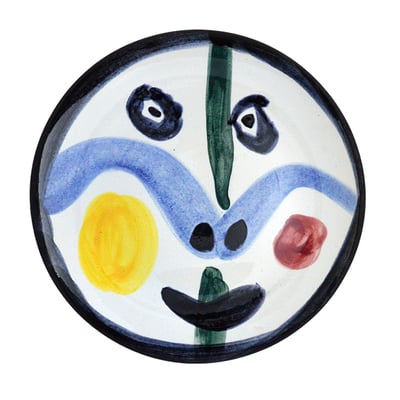
Pablo Picasso
Face No 0 Round Plate, 1963
Ceramics
Plate
USD 15,200
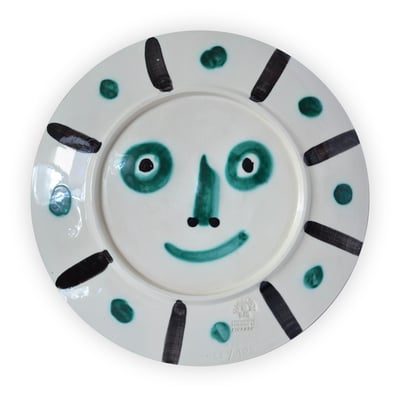
Pablo Picasso
Face with palm-leaves #366, 1956
Ceramics
Plate
USD 17,900
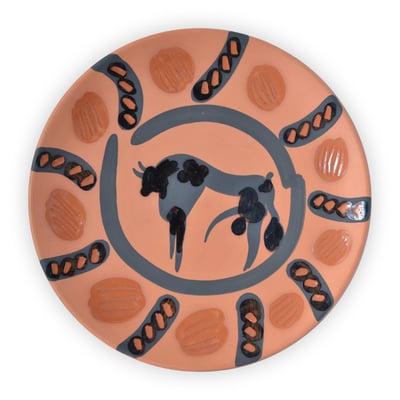
Pablo Picasso
Bull #392 R529, 1957
Ceramics
Plate
USD 15,900
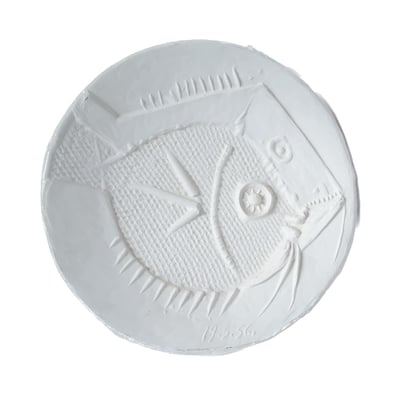
Pablo Picasso
Big Fish #332 B95, 1956
Ceramics
Plate
USD 17,800
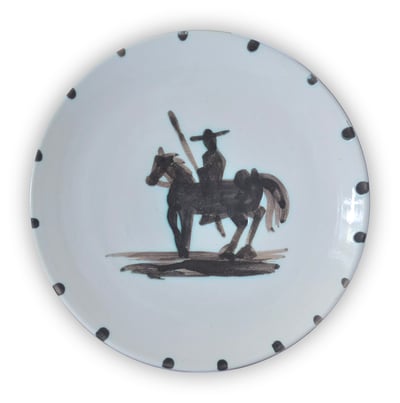
Pablo Picasso
Picador, 1952
Ceramics
Plate
USD 6,700
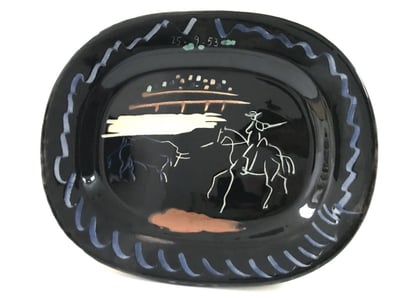
Pablo Picasso
Corrida sur fond noir, 1953
Ceramics
Plate
EUR 12,000 - 15,000
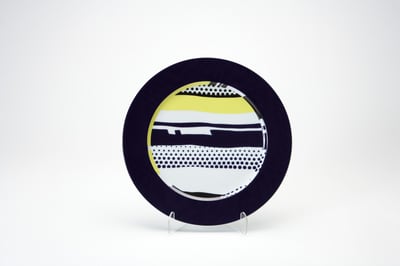
Roy Lichtenstein
Rosenthal plate 1, 2000
Sculpture / Object
Plate
EUR 700
Related Articles



Drypoint is an intaglio printmaking technique where an image is incised onto a plate using a sharp, pointed tool, typically a needle made of metal or diamond. Traditionally, copper plates were used, but today zinc, plexiglass, or acetate are also common. Drypoint is easier for drawing artists to master compared to engraving, as the needle technique resembles drawing with a pencil rather than the more complex burin used in engraving.
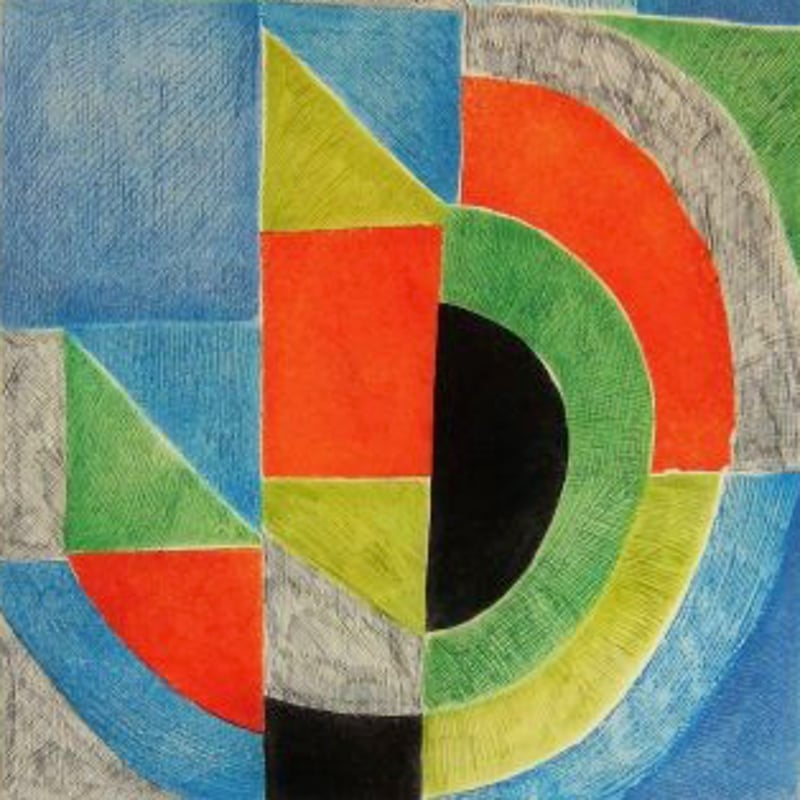
Réalités Nouvelles means new realities and refers to an exhibiting society founded in 1939 in Paris by Sonia Delaunay. The Salon des Réalités Nouvelles was dedicated to promoting abstract art, which it considered to be a new reality because it does not imitate the existing physical world. The movement emphasized that abstract art creates its own reality, independent of the external world, and played a significant role in the development and recognition of abstract art in the mid-20th century.

Avant-garde refers to innovative and experimental ideas in the arts that challenge established norms and conventions. Originating from the French term for advance guard, it describes both the movement and the artists who push the boundaries of creativity, often exploring new techniques, forms, and concepts. The avant-garde has been a driving force in various art movements throughout history, such as Dadaism, Surrealism, and Abstract Expressionism, continually reshaping the landscape of art and culture.
Can't find your Answer?
Thank you! Your question has been sent — we'll get back to you shortly.
