Drypoint on J Whatman laid paper
- Signed and numbered in pencil
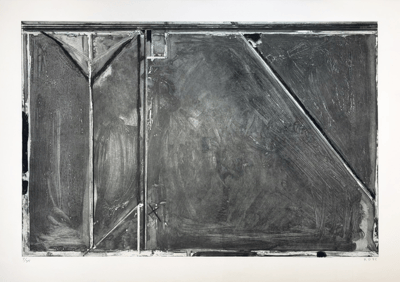
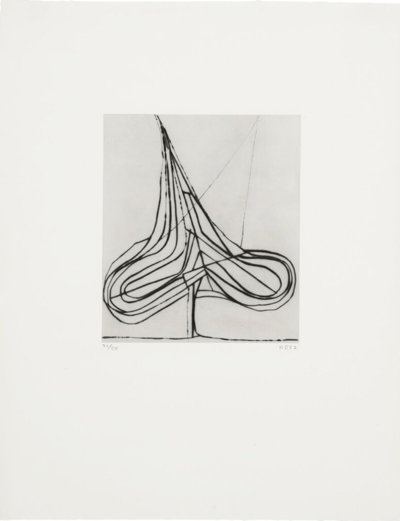
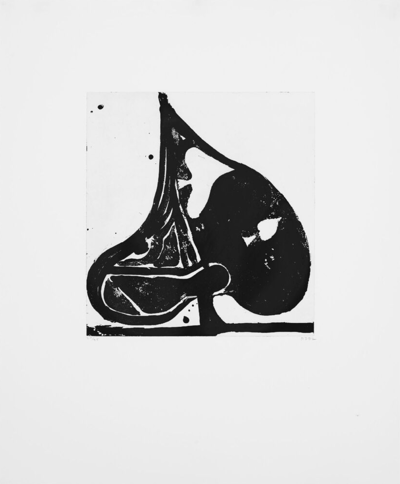
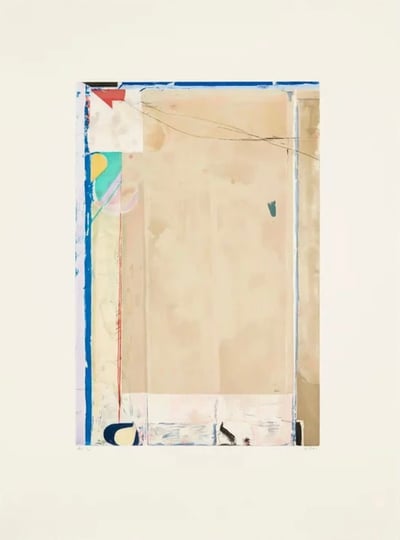
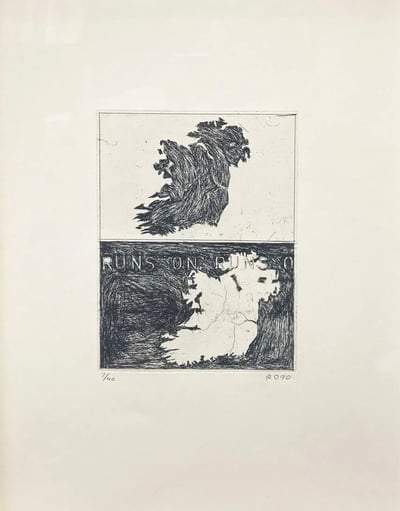
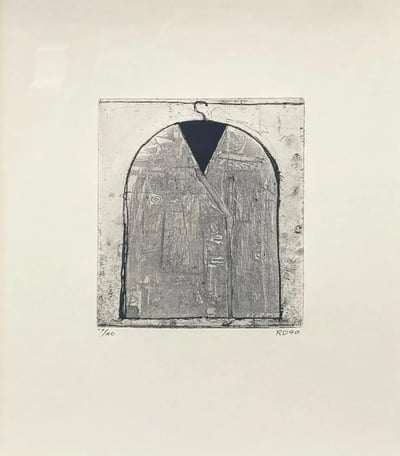
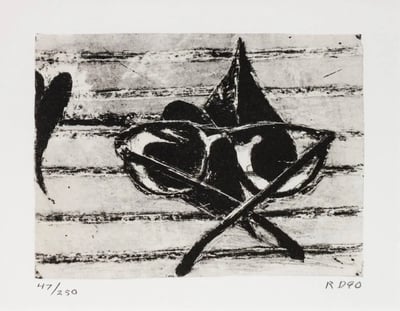
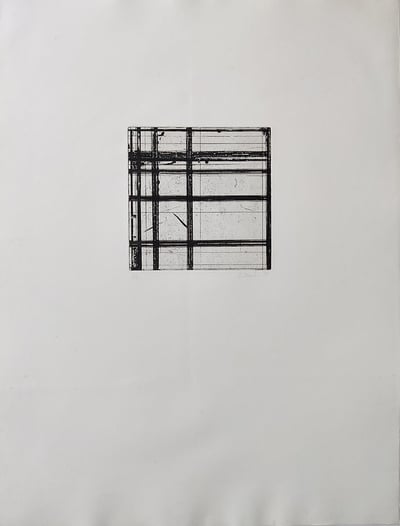
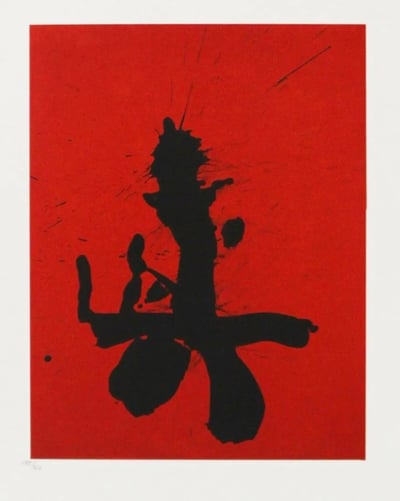
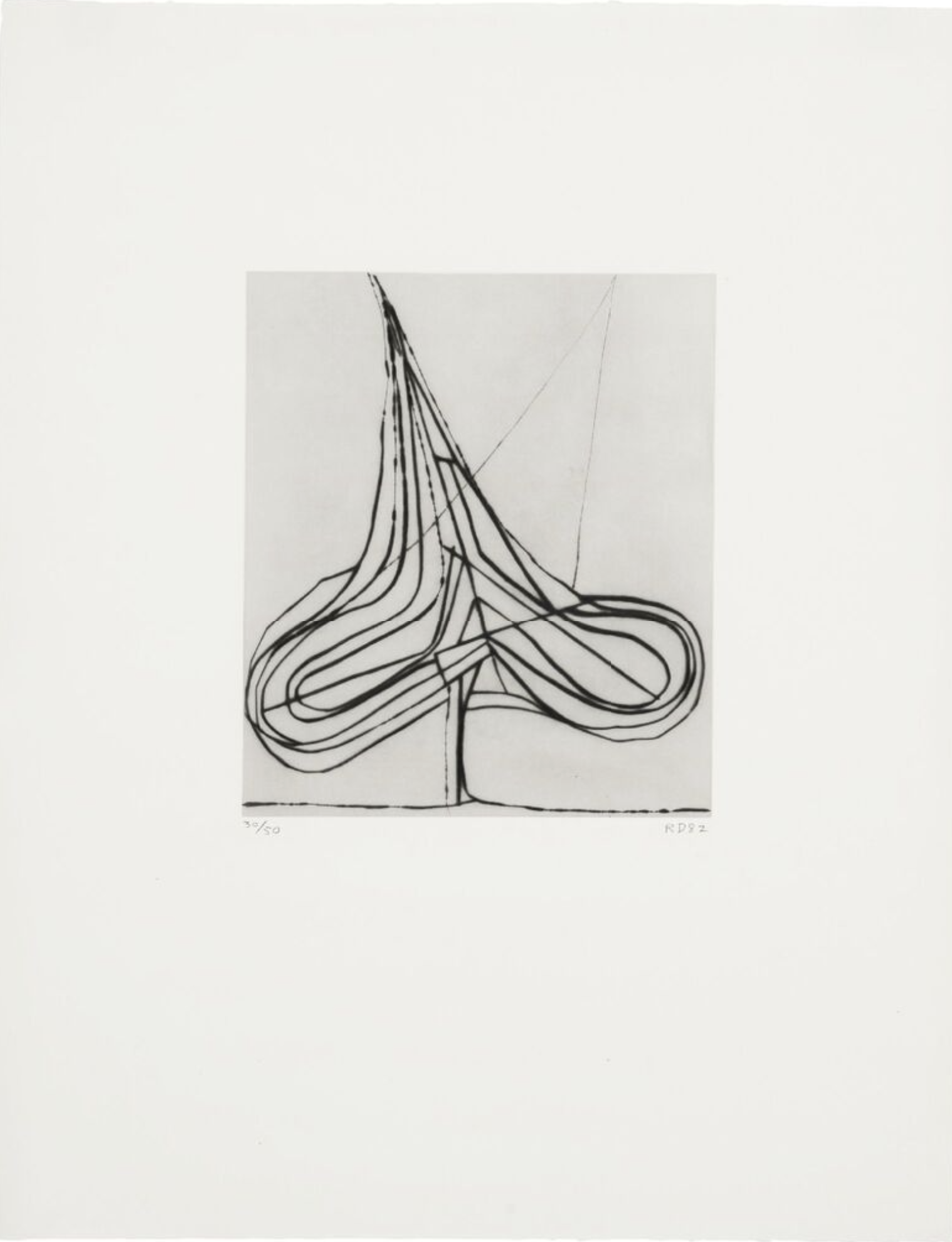
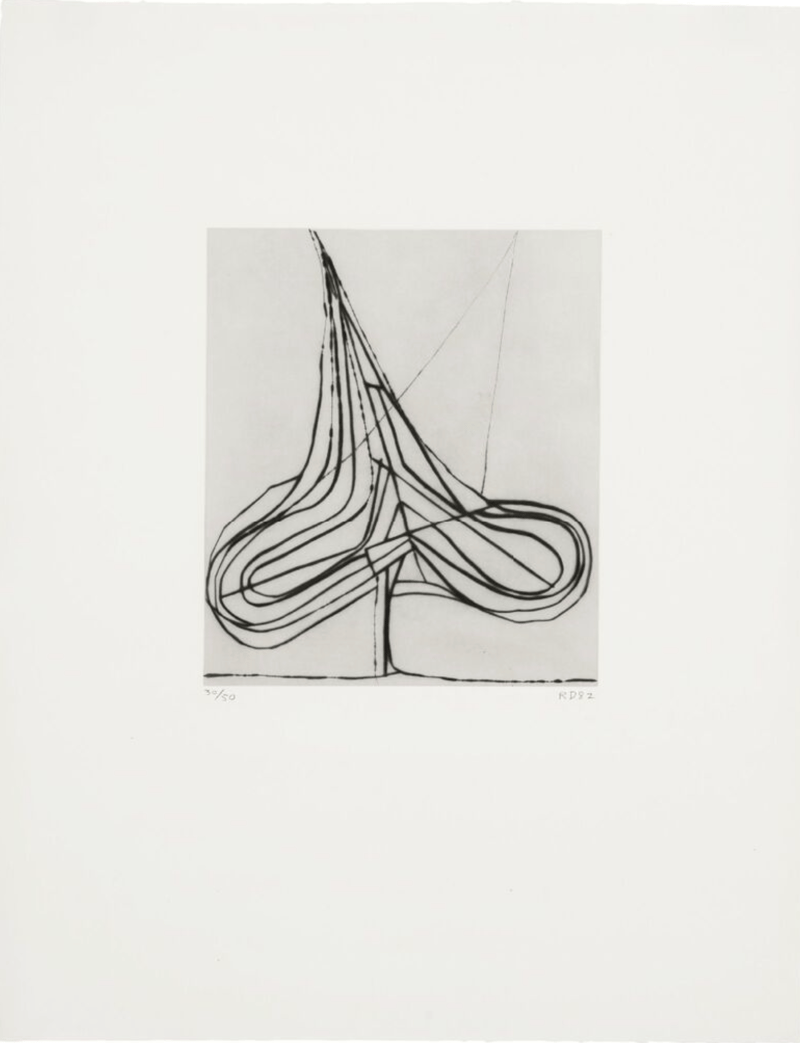
Richard Diebenkorn, Spade Drypoint is a drypoint print created in 1982. This limited-edition work features delicate, linear abstractions in black, reminiscent of fluid architectural forms or organic structures. The central shape, composed of sweeping, layered lines, evokes a spade-like form, enclosed within a rectangular frame. The crisp yet subtle lines, created through the drypoint technique, produce a sense of depth and texture, contrasting against the softer background. Diebenkorn's mastery of line and form is evident in the way the abstract elements interact with the negative space. Printed on J. Whatman laid paper, the print is signed and numbered in pencil, with an edition size of 50. This work is a testament to Diebenkorn’s exploration of minimalism and abstraction, emphasizing the expressive potential of simple, well-executed lines.
Richard Diebenkorn (USA, 1922–1993) was a celebrated painter and printmaker, known for his transition from abstract expressionism to figurative work and back to abstraction. His Ocean Park series, inspired by the landscapes of California, features luminous, geometric compositions. Diebenkorn’s art bridges abstraction and representation, leaving a profound impact on modern art.
DrypointDrypoint is an intaglio printmaking technique where an image is incised onto a plate using a sharp, pointed tool, typically a needle made of metal or diamond. Traditionally, copper plates were used, but today zinc, plexiglass, or acetate are also common. Drypoint is easier for drawing artists to master compared to engraving, as the needle technique resembles drawing with a pencil rather than the more complex burin used in engraving.
Drypoint on J Whatman laid paper
- Signed and numbered in pencil
Richard Diebenkorn, Spade Drypoint is a drypoint print created in 1982. This limited-edition work features delicate, linear abstractions in black, reminiscent of fluid architectural forms or organic structures. The central shape, composed of sweeping, layered lines, evokes a spade-like form, enclosed within a rectangular frame. The crisp yet subtle lines, created through the drypoint technique, produce a sense of depth and texture, contrasting against the softer background. Diebenkorn's mastery of line and form is evident in the way the abstract elements interact with the negative space. Printed on J. Whatman laid paper, the print is signed and numbered in pencil, with an edition size of 50. This work is a testament to Diebenkorn’s exploration of minimalism and abstraction, emphasizing the expressive potential of simple, well-executed lines.
Richard Diebenkorn (USA, 1922–1993) was a celebrated painter and printmaker, known for his transition from abstract expressionism to figurative work and back to abstraction. His Ocean Park series, inspired by the landscapes of California, features luminous, geometric compositions. Diebenkorn’s art bridges abstraction and representation, leaving a profound impact on modern art.
Mistakes can't be erased, but they move you from your present position.
- Richard Diebenkorn
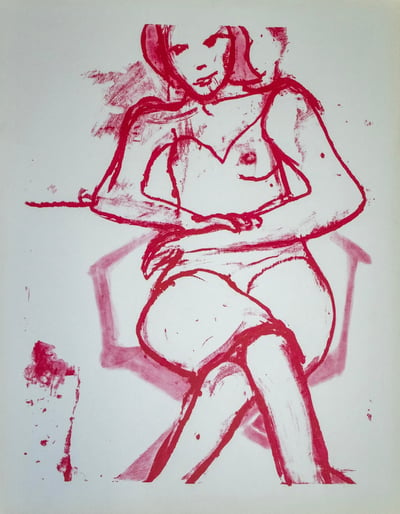
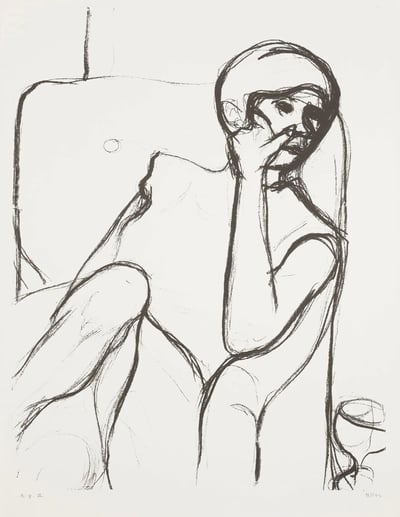
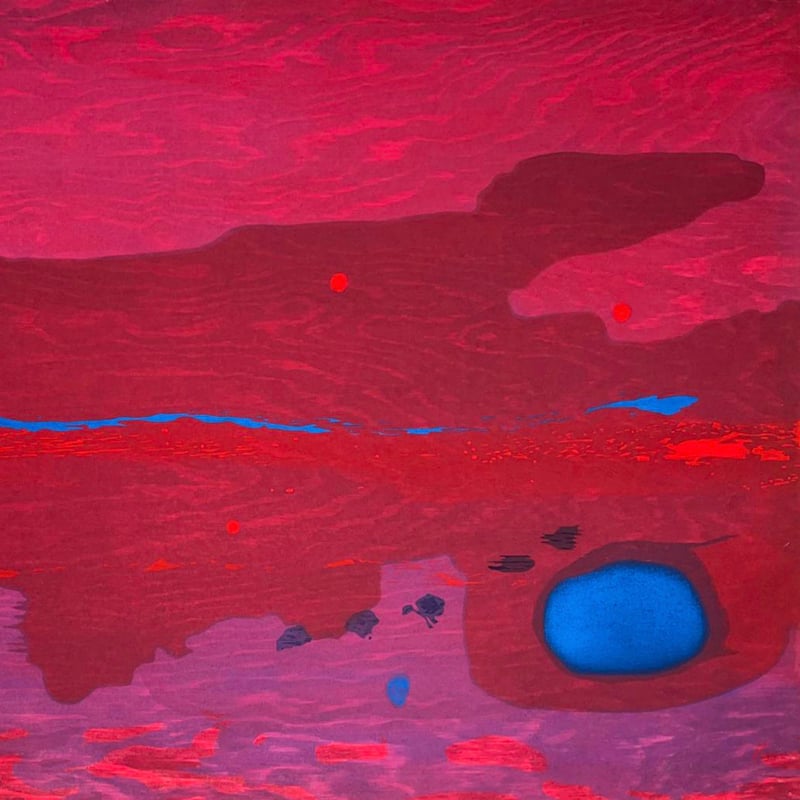
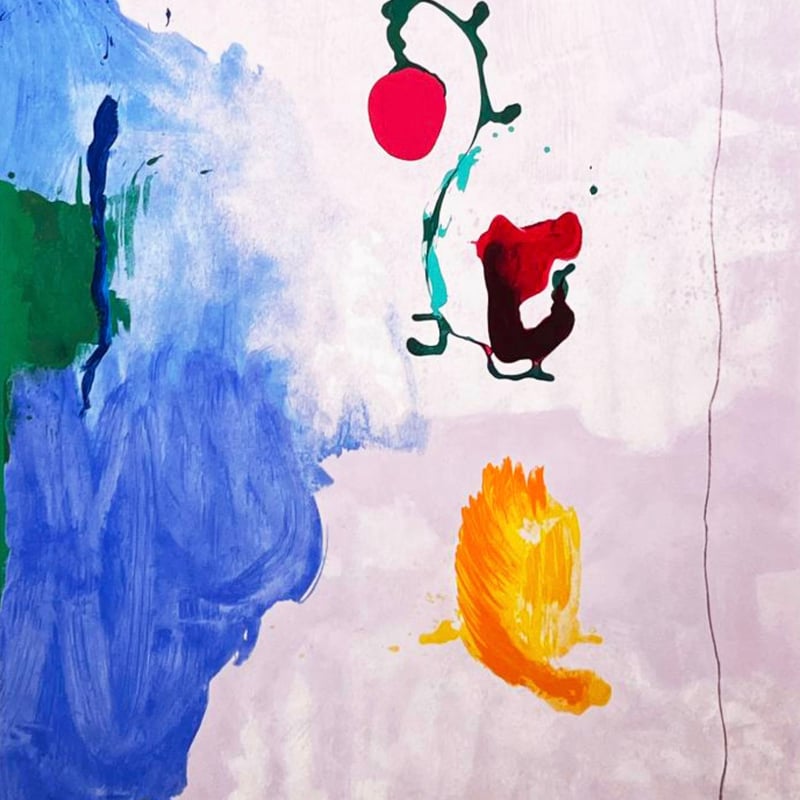
Arguably best known for his Ocean Park paintings, Richard Diebenkorn was a painter and printmaker with early roots in abstract expressionism and a later involvement with the Bay Area Figurative Movement throughout the 1950’s and 1960’s. His move to figuration saw works such as Girl On a Terrace come to light – he employed a range of soft, subtle colours to create his simple depictions of life at the time. Diebenkorn explored figuration for a decade or so before he returned to his abstraction origins – this is when he began to compile the Ocean Park series, a selection of works that, while abstract, still managed to capture the essence of the landscape and the times he was living among. While it could be stated that his artistic career was divided into three different segments – abstraction, figuration and abstraction once again – Diebenkorn was not afraid to mix the two, and his portraits were usually a striking blend of the two. His work has frequently been compared to that of Willem De Kooning – an artist that Diebenkorn has often cited as an inspiration. (Artist website)
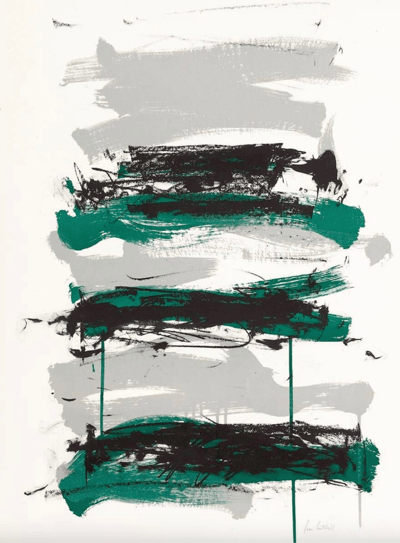
Abstract art uses form, shape, line, and color to create a visual experience without attempting to represent external reality. The composition exists independently of the world's visual references, focusing on expressing ideas and emotions through non-representational means.