
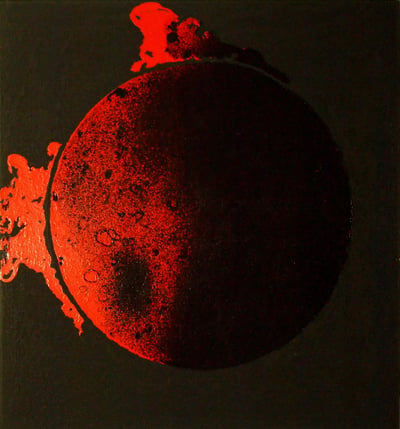
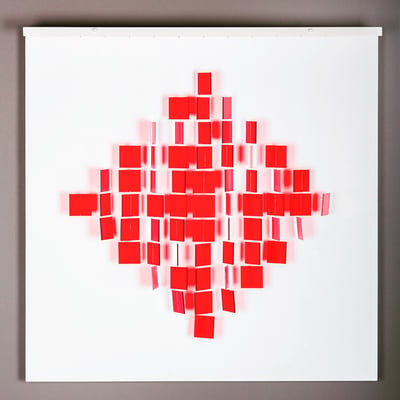
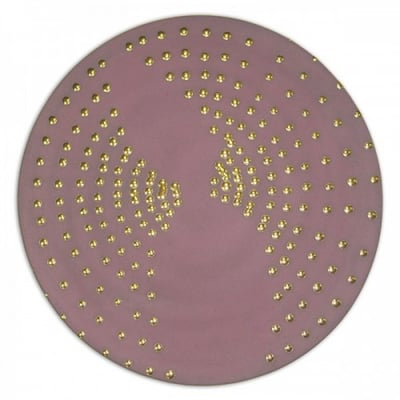
repreduced with full page in the book "Kyotoscoop, Paul Van Hoeydonck " - pg 36 - plexi framed
Artwork Copyright © Paul Van HoeydonckPaul Van Hoeydonck (Belgium, 1925–2025) was a multidisciplinary artist best known for his sculpture Fallen Astronaut, which was placed on the Moon during the Apollo 15 mission. His diverse body of work spanned painting, drawing, and sculpture, often exploring themes of space, technology, and human ambition in the cosmos.
Artwork Copyright © Paul Van HoeydonckKyotoscoop, 1989
Form
Medium
Size
- Inches
- Centimeters
Price
Available works →
- Authenticity Guaranteed
- Insured Shipping
- Online Since 2005
●
●Inventory 1260
●Signed
●Comes with gallery invoice and certificate
●Sell Us a Similar Artwork. Learn more.
repreduced with full page in the book "Kyotoscoop, Paul Van Hoeydonck " - pg 36 - plexi framed
Artwork Copyright © Paul Van HoeydonckPaul Van Hoeydonck (Belgium, 1925–2025) was a multidisciplinary artist best known for his sculpture Fallen Astronaut, which was placed on the Moon during the Apollo 15 mission. His diverse body of work spanned painting, drawing, and sculpture, often exploring themes of space, technology, and human ambition in the cosmos.
Artwork Copyright © Paul Van Hoeydonck- Recently Added
- Price (Low-High)
- Price (High-Low)
- Year (Low-High)
- Year (High-Low)
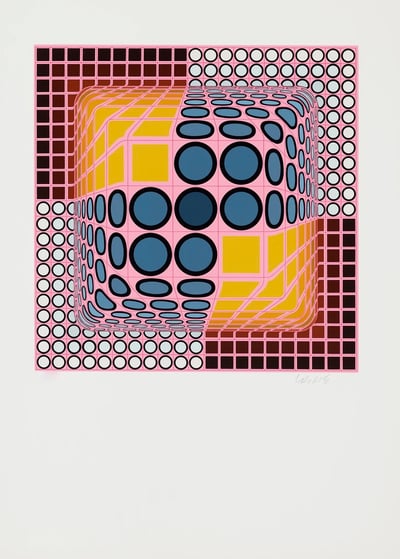
Paul Van Hoeydonck
Suite Olympic Centennial, 1991
Limited Edition Print
Serigraph
Currently Not Available
Related Artists
Related Articles
Popular, Artists, Collecting - September 1, 2026
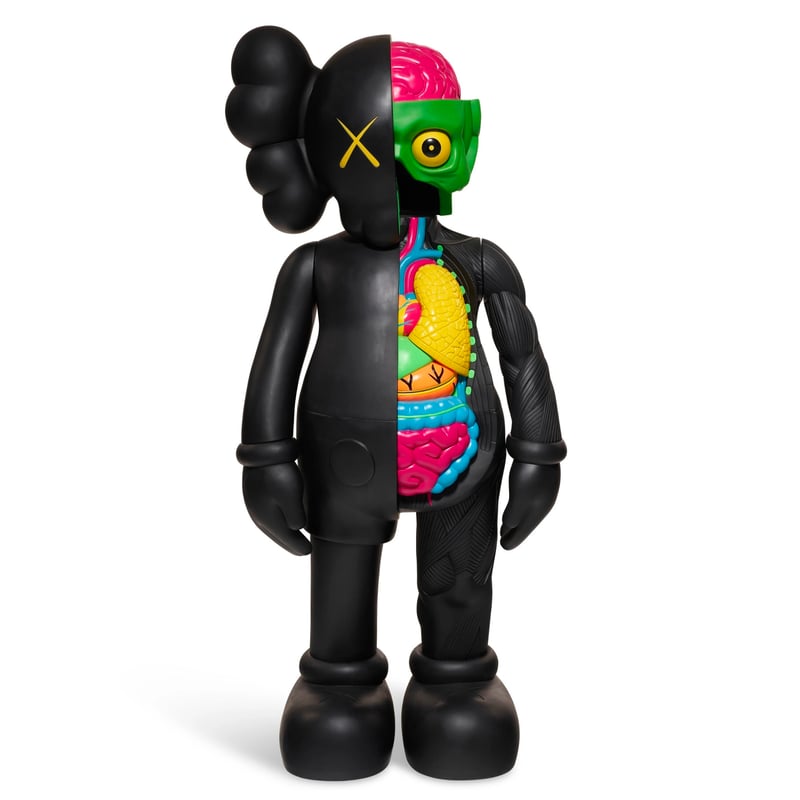
KAWS Companion Editions: Vinyl, Four Foot and Dissected
A collector’s guide to KAWS Companion editions, from the 1999 Bounty Hunter vinyl figure to Four Foot, Dissected, Sorayama and Star Wars releases.Read More
Artwork by Otto Piene
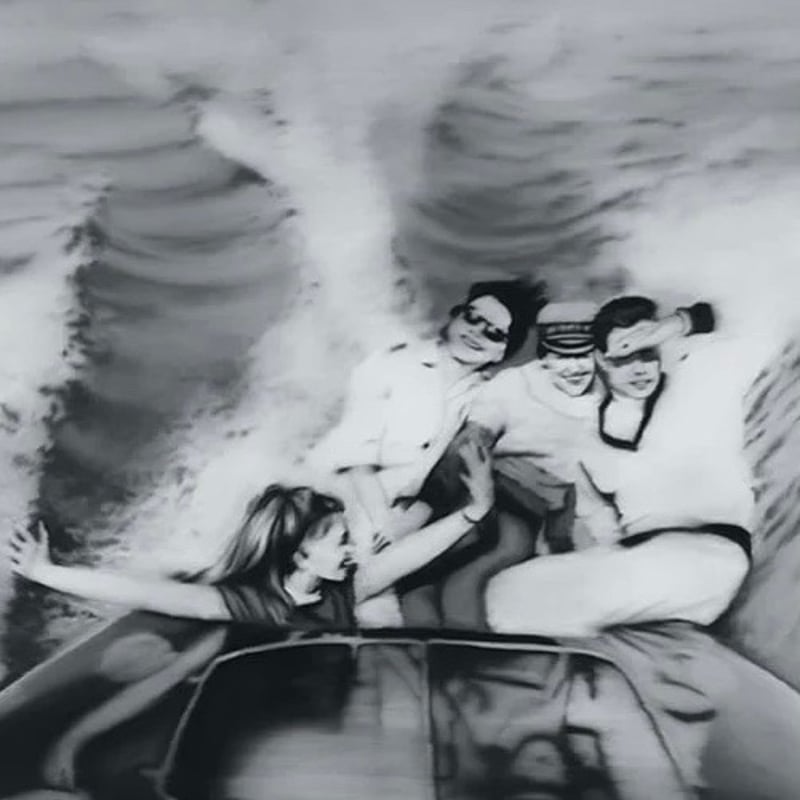
What is the Zero Movement?
ZERO was an art movement founded by Otto Piene and Heinz Mack, aiming to develop into a large international and cross-border movement. The name ZERO originated from a magazine founded by Heinz Mack in 1957, which became a platform for the group's ideas. The magazine was published for several years before ceasing in 1967. The ZERO movement sought to create a new beginning in art, emphasizing light, space, and movement, and became influential in post-war European art.


