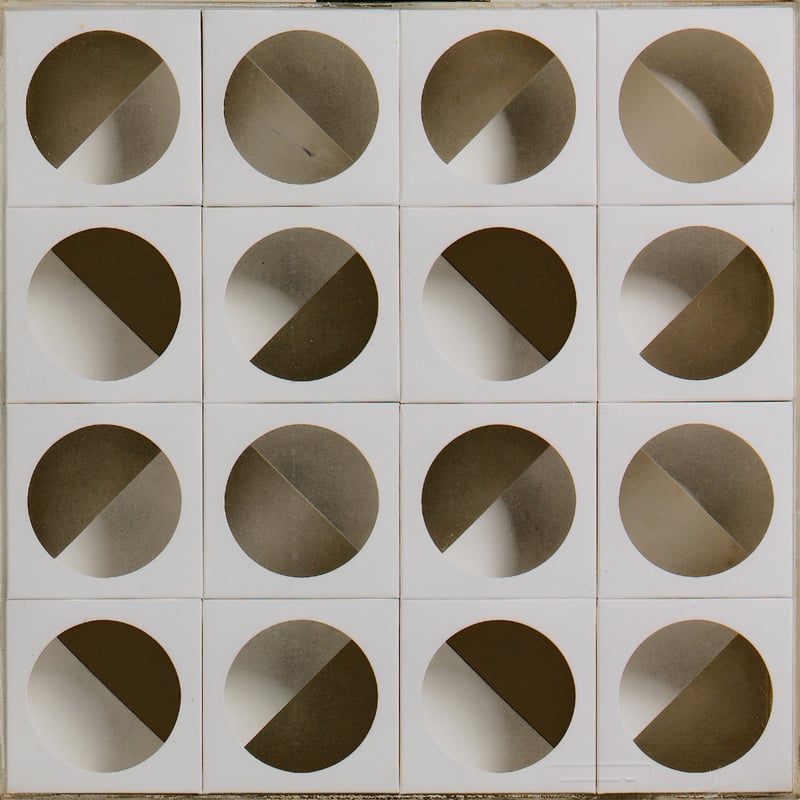
Carton with plexiglass
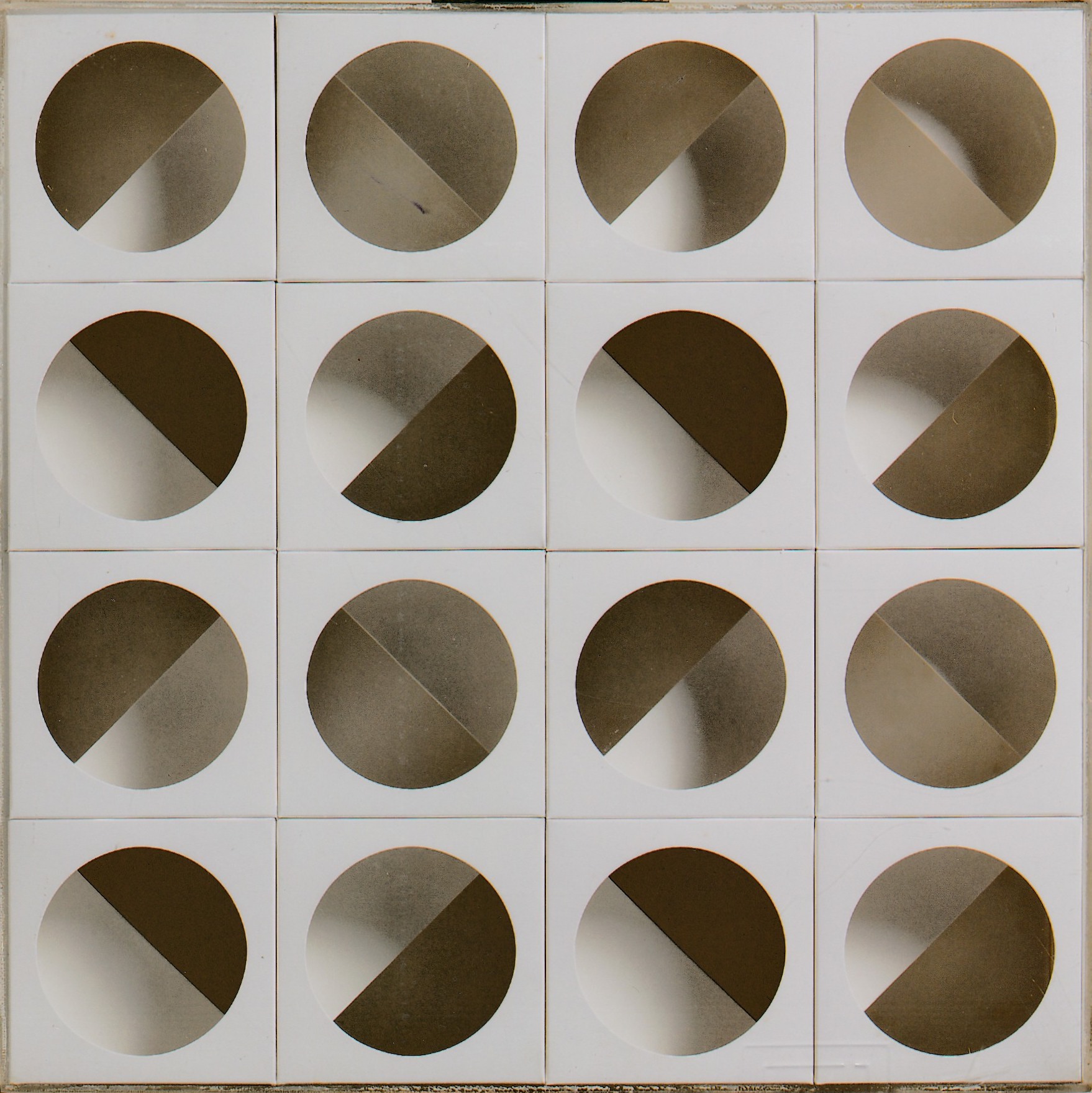
Inter-Ena Cubo by Paolo Scheggi, created in 1965, is a striking exploration of depth and spatial perception through the use of mixed media. This work combines cardboard and plexiglass, arranged in a grid of sixteen circular cutouts, each half-filled with a contrasting gradient that creates an illusion of three-dimensionality. Scheggi’s use of layered materials invites viewers to engage with the interplay of light and shadow, evoking a sense of movement within the static form. The geometric repetition and muted tones contribute to a minimalist yet dynamic composition, typical of Scheggi’s engagement with spatial concepts during the 1960s. Measuring 41 cm by 41 cm with a depth of 11 cm, this piece exemplifies the artist’s commitment to challenging the boundaries between surface and space.
Artwork Copyright © Paolo ScheggiPaolo Scheggi (Italy, 1940–1971) was a pivotal figure in the Italian Spatialist movement, renowned for his monochromatic works featuring layered canvases with elliptical or circular openings. His 'Intersuperfici' series challenged traditional perceptions of space and depth in art. Scheggi's innovative approach extended to architecture, fashion, and performance, leaving a lasting impact on 20th-century art.
Artwork Copyright © Paolo ScheggiInter-Ena Cubo, 1965
Form
Medium
Size
- Inches
- Centimeters
Edition
Price
Available works →
- Authenticity Guaranteed
- Insured Shipping
- Online Since 2005
●
●Inventory 5501
●Signed
●Comes with gallery invoice and certificate
●Sell Us a Similar Artwork. Learn more.
Carton with plexiglass
Inter-Ena Cubo by Paolo Scheggi, created in 1965, is a striking exploration of depth and spatial perception through the use of mixed media. This work combines cardboard and plexiglass, arranged in a grid of sixteen circular cutouts, each half-filled with a contrasting gradient that creates an illusion of three-dimensionality. Scheggi’s use of layered materials invites viewers to engage with the interplay of light and shadow, evoking a sense of movement within the static form. The geometric repetition and muted tones contribute to a minimalist yet dynamic composition, typical of Scheggi’s engagement with spatial concepts during the 1960s. Measuring 41 cm by 41 cm with a depth of 11 cm, this piece exemplifies the artist’s commitment to challenging the boundaries between surface and space.
Artwork Copyright © Paolo ScheggiPaolo Scheggi (Italy, 1940–1971) was a pivotal figure in the Italian Spatialist movement, renowned for his monochromatic works featuring layered canvases with elliptical or circular openings. His 'Intersuperfici' series challenged traditional perceptions of space and depth in art. Scheggi's innovative approach extended to architecture, fashion, and performance, leaving a lasting impact on 20th-century art.
Artwork Copyright © Paolo Scheggi- Recently Added
- Price (Low-High)
- Price (High-Low)
- Year (Low-High)
- Year (High-Low)
Paolo Scheggi
Inter-Ena Cubo, 1965
Sculpture / Object
Mixed Media
Currently Not Available
Related Artists

Related Articles
Popular, News, Artists - January 27, 2026
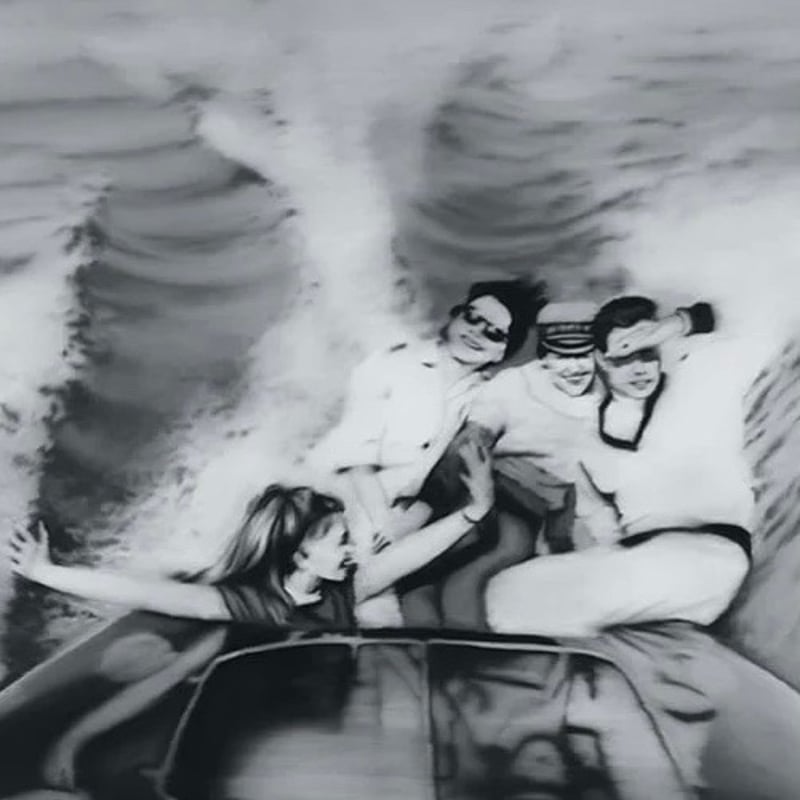
Gerhard Richter at Fondation Louis Vuitton: Why It Matters for Collectors
Art dealer Kris Ghesquière examines the Gerhard Richter exhibition at Fondation Louis Vuitton and its significance for collectors and the art market.Read More

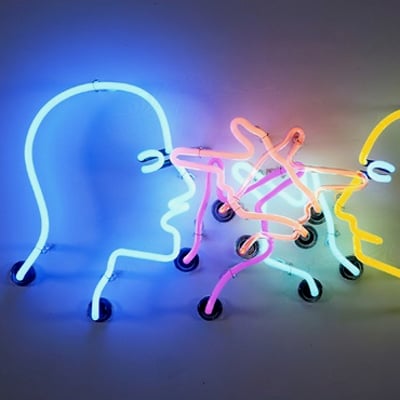
Artwork by Bruce Nauman
What is Process Art?
Process Art is an artistic movement and creative approach where the focus is on the act of creation rather than the final product. The term process in this context refers to the various stages of art-making, including gathering, sorting, associating, and organizing materials and actions. This movement emphasizes the artistic journey and the human expression involved in creating art, rather than the finished piece itself. Process Art is driven by inherent motivation, intentionality, and the rationale behind the actions, viewing the creative process as the true artwork.
Paolo Scheggi
Inter-Ena Cubo, 1965
41 x 41 x 11 cm


