Motorized artwork: metal, motor and mirror. Edition d'Atelier
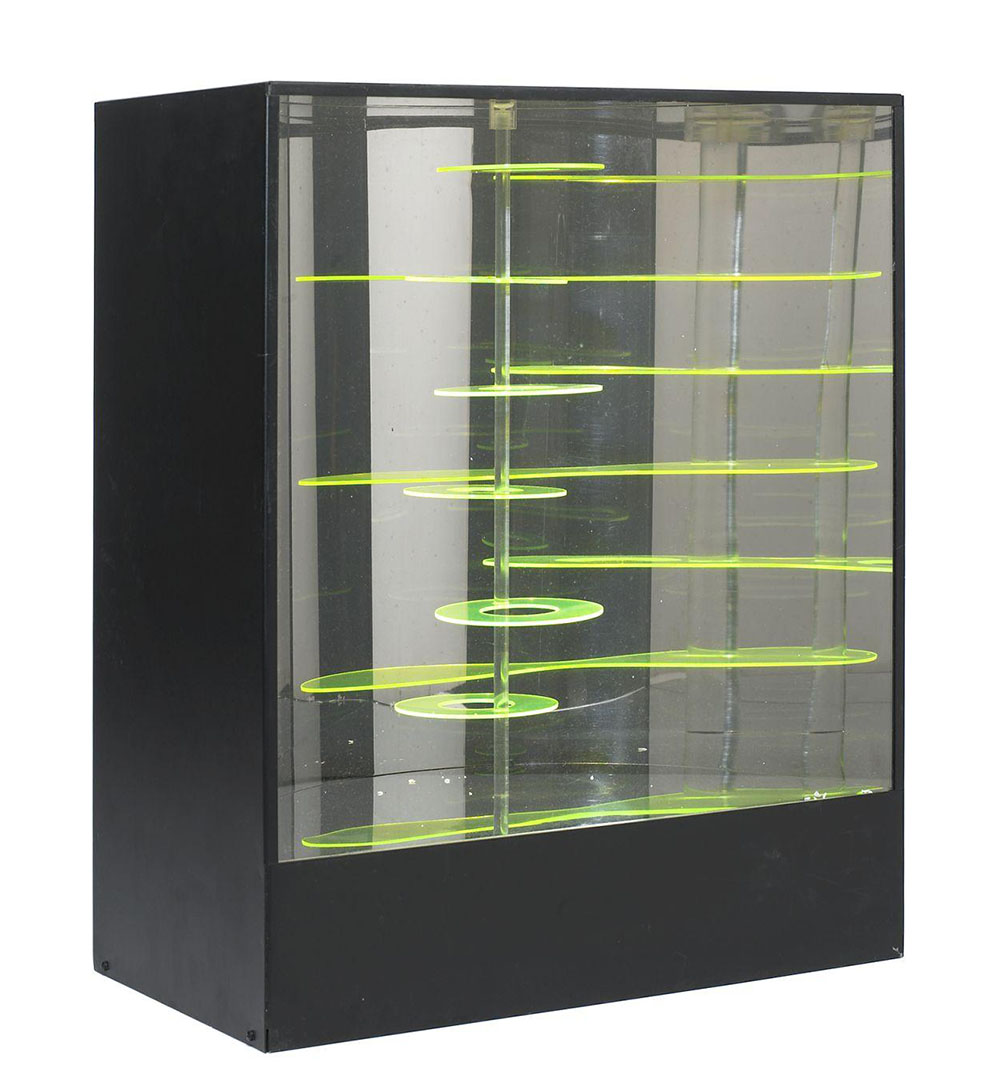
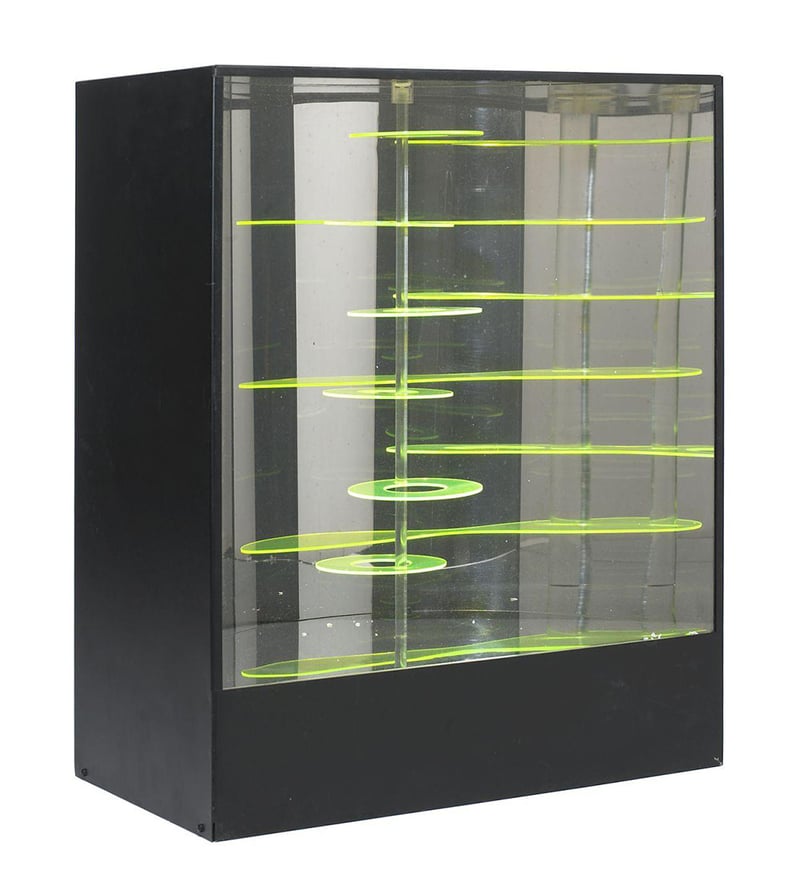
Déplacement optique A by Martha Boto is a motorized acrylic sculpture from 1969 that exemplifies the artist's interest in kinetic art and optical illusions. This piece, crafted with metal, a motor, and mirrors, creates a mesmerizing experience of movement and light. Yellow-green circular acrylic discs are arranged at varying heights within a black rectangular box, and the motor introduces subtle rotations, generating dynamic reflections that alter depending on the viewer's angle. This interplay of geometry, reflection, and motion captures Boto's exploration of space, perception, and the fluid boundaries between the physical and visual dimensions.
Artwork Copyright © Martha BotoMartha Boto (Argentina, 1925–2004) was a pioneering kinetic and programmed art artist. Co-founder of the Group of Non-Figurative Artists of Argentina, she created innovative sculptures and installations exploring movement, light, and color. Her works, often incorporating Plexiglas and electric motors, deliver dynamic and immersive visual experiences.
Artwork Copyright © Martha BotoDéplacement optique A, 1969
Form
Medium
Size
- Inches
- Centimeters
Edition
Price
- USD
- EUR
- GBP
- CHF
- Authenticity Guaranteed
- Insured Shipping
- Online Since 2005
●Inventory 2554
●Signed
●Comes with gallery invoice and certificate
●Any questions?
Motorized artwork: metal, motor and mirror. Edition d'Atelier
Déplacement optique A by Martha Boto is a motorized acrylic sculpture from 1969 that exemplifies the artist's interest in kinetic art and optical illusions. This piece, crafted with metal, a motor, and mirrors, creates a mesmerizing experience of movement and light. Yellow-green circular acrylic discs are arranged at varying heights within a black rectangular box, and the motor introduces subtle rotations, generating dynamic reflections that alter depending on the viewer's angle. This interplay of geometry, reflection, and motion captures Boto's exploration of space, perception, and the fluid boundaries between the physical and visual dimensions.
Artwork Copyright © Martha BotoMartha Boto (Argentina, 1925–2004) was a pioneering kinetic and programmed art artist. Co-founder of the Group of Non-Figurative Artists of Argentina, she created innovative sculptures and installations exploring movement, light, and color. Her works, often incorporating Plexiglas and electric motors, deliver dynamic and immersive visual experiences.
Artwork Copyright © Martha Boto- Recently Added
- Price (Low-High)
- Price (High-Low)
- Year (Low-High)
- Year (High-Low)
Martha Boto
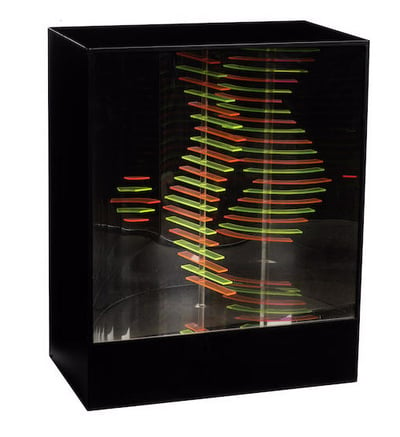
Déplacement optique D, 1969
Sculpture / Object
Object
EUR 6,000
Martha Boto
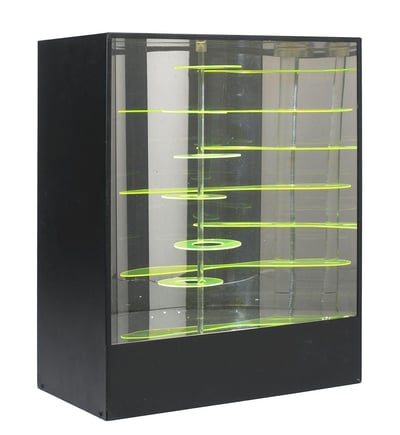
Déplacement optique A, 1969
Sculpture / Object
Acrylic sculpture
EUR 6,000

Martha Boto
2 Demi cones avec anneaux de couleurs, 1975
Sculpture / Object
Acrylic sculpture
EUR 3,500
Related Artists

Related Articles

Collecting - March 25, 2025
Understanding Editioned Sculptures: What Collectors Need to Know
Explore the value of editioned sculptures, from bronze to electric art. Learn how edition size, material, and artist impact collectability.Read More


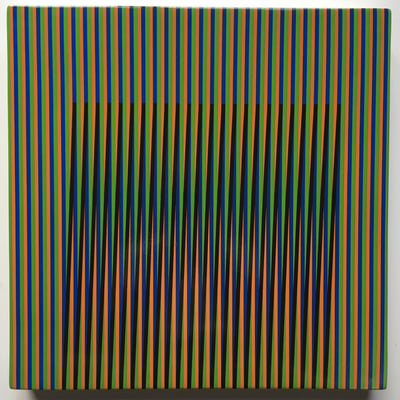
Artwork by Carlos Cruz-Diez
What is Latin American art?
Latin American Art is a style which takes inspiration from its culture, society, politics, native traditions, religions and landscape. Op-Art and Kinetic Art figure prominently in Latin artworks. Colors in Latin American compositions are often bold. Latin American artists work in all media and movements.