
Details
Artist
Styles
From Façade portfolio. - Literature: Baro 72; 75 - Two photographic collage screeprints on wove paper with screenprint on acetate overlay. - Each signed in pencil, dated and numbered. - Published/printed by Harry N. Abrams/Chiron Press, New York, Louise Nevelson’s Clown's Houses and Four in the Morning, from her 1966 Façade series, are photographic collage screenprints enhanced with acetate overlays. These monochromatic works reflect Nevelson’s sculptural aesthetic, translating her assemblages into layered two-dimensional compositions. Using overlapping photographic images of wooden reliefs and structural forms, Nevelson creates an abstract architectural language—evoking both physical and psychological spaces. The play of shadow and form, combined with the translucent acetate layer, adds depth and a sense of motion. These prints were produced in an edition of 125, with a smaller colored-paper version also issued.
Clown's Houses; Four in the Morning, 1966
form
Medium
Size
57.2 x 43.5 cm
- Inches
- Centimeters
Edition
Price
Details
Artist
Styles
From Façade portfolio. - Literature: Baro 72; 75 - Two photographic collage screeprints on wove paper with screenprint on acetate overlay. - Each signed in pencil, dated and numbered. - Published/printed by Harry N. Abrams/Chiron Press, New York, Louise Nevelson’s Clown's Houses and Four in the Morning, from her 1966 Façade series, are photographic collage screenprints enhanced with acetate overlays. These monochromatic works reflect Nevelson’s sculptural aesthetic, translating her assemblages into layered two-dimensional compositions. Using overlapping photographic images of wooden reliefs and structural forms, Nevelson creates an abstract architectural language—evoking both physical and psychological spaces. The play of shadow and form, combined with the translucent acetate layer, adds depth and a sense of motion. These prints were produced in an edition of 125, with a smaller colored-paper version also issued.
- Recently Added
- Price (low-high )
- Price (high-low )
- Year (low-high )
- Year (high-low )

Louise Nevelson
Winter Chord, 1974
Sculpture / Object
Wood
EUR 14,850

Louise Nevelson
Sky Flower, 1977
Limited Edition Print
Collage
USD 5,000 - 6,000

Louise Nevelson
Dusk In August From Portfolio 9, 1967
Limited Edition Print
Lithograph
USD 1,950

Louise Nevelson
Senza Titolo, 1975
Limited Edition Print
Screen-print
EUR 3,700

Louise Nevelson
Bicentennial Dawn, 1976
Limited Edition Print
Serigraph
USD 1,450

Louise Nevelson
Untitled (Red Rectangle On Black), 1975
Limited Edition Print
Silkscreen
EUR 5,450

Louise Nevelson
Nursery Rhyme, 1966
Limited Edition Print
Serigraph
Inquire For Price

Louise Nevelson
Lullaby For Jumbo, 1966
Limited Edition Print
Serigraph
Currently Not Available

Louise Nevelson
Dark Song, 1966
Limited Edition Print
Serigraph
Currently Not Available
Related Artists


Related Articles

Popular, Art Movements - May 05, 2022
Minimalism in the XX Century: Simple Gestures and Essential Ideas.
Explore Minimalism in the 20th century, from art to architecture. Discover its evolution, pioneers like Donald Judd, and its impact on modern creativity. Read More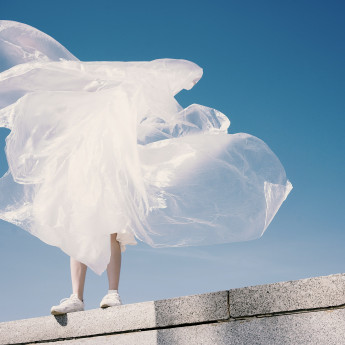
What is Process Art?
Process Art is an artistic movement and creative approach where the focus is on the act of creation rather than the final product. The term process in this context refers to the various stages of art-making, including gathering, sorting, associating, and organizing materials and actions. This movement emphasizes the artistic journey and the human expression involved in creating art, rather than the finished piece itself. Process Art is driven by inherent motivation, intentionality, and the rationale behind the actions, viewing the creative process as the true artwork.