What is collage?
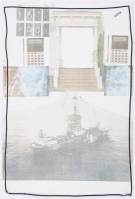
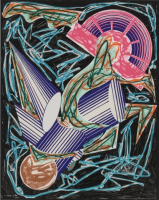
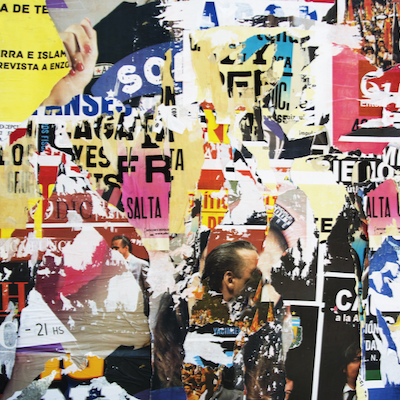
Collage is a production art technique commonly used in visual arts where a new artwork is created by assembling various materials. These materials can include ribbons, newspaper and magazine clippings, pieces of handmade or colored paper, photographs, text fragments, and other objects, all combined to form a cohesive whole.
Notable Artists Working in collage
From papier collé to fine art
Although artists had pasted paper into pictures for centuries, collage entered modern art around 1912, when Picasso glued a piece of printed oilcloth into Still Life with Chair Caning and Braque began his papiers collés, incorporating strips of imitation wood-grain wallpaper into Cubist compositions. The gesture was radical: for the first time, a fragment of the everyday world sat inside the picture rather than being depicted by it. Dada artists such as Kurt Schwitters and Hannah Höch pushed the technique further with tram tickets, newsprint and photographic cut-ups, while the Surrealists mined old engravings for dreamlike juxtapositions. By mid-century, Robert Rauschenberg's combines had dissolved the boundary between collage, painting and object altogether.
"If it is the plumes that make the plumage, it is not the glue that makes the collage."
Max Ernst
Ernst's point still holds: what defines a good collage is not the pasting but the thinking — the charge created when unrelated fragments are forced into a single image.
Materials and construction
A collage begins with a support — paper, board, canvas or panel — onto which the artist fixes cut or torn elements: printed matter, photographs, coloured and handmade papers, fabric, foil, sometimes thin found objects. Adhesives range from traditional wheat starch and animal glues to modern acrylic mediums and PVA. Many artists work in layers, letting earlier elements show through gaps or translucent papers, and combine collage with drawing, gouache, stencil or paint so the pasted and the hand-made read as one surface.
Edges matter. Torn edges give a soft, fibrous transition; knife-cut edges give crisp graphic breaks. Some artists press their collages flat under weight; others deliberately leave elements lifting slightly from the surface for relief and shadow. When you look closely at a collage, this physical decision-making is visible in a way that few other mediums allow — you are seeing exactly where the artist's hand placed, aligned and committed each fragment.
What to inspect before buying
Collage is a physically layered medium, so condition assessment starts at the edges of each pasted element. Look for lifting, tenting or curling corners, which indicate adhesive failure, and for staining or discolouration where glue has bled through thin papers. Many twentieth-century collages incorporate newsprint and magazine pages, which are acidic by nature: some browning is expected and often accepted as part of the work's character, but active brittleness or flaking is a conservation concern. Ask whether the work has been examined or treated by a paper conservator, and request condition images in raking light, which reveals lifting and undulation that straight-on photography hides.
Framing and long-term care
Collages should be framed with UV-filtering glazing, acid-free mounts and a spacer keeping the glazing off the surface — layered elements can adhere to glass under pressure or humidity. Because the component papers age at different rates, light exposure is more damaging here than in many mediums: one fragment may fade dramatically while its neighbour holds, unbalancing the composition permanently. Keep collages away from direct sunlight and maintain stable humidity; repeated swings cause the layers to expand and contract at different rates, stressing every glued join. Never attempt to reattach a lifting element yourself — modern tapes and household glues cause damage that is expensive or impossible to reverse.
Uniqueness, editions and value
A collage is almost always a unique object, which is central to its appeal for collectors: even when an artist works in a series, no two sheets can be identical, because the source materials themselves differ. This distinguishes collage-based works from prints, though the two often intersect — artists frequently add collaged elements to editioned prints, creating hybrid works where each impression is subtly individual. When buying, be clear about which you are acquiring: a fully unique collage, a print after a collage, or an edition with hand-applied collage elements. Provenance and documentation carry particular weight, since the medium's use of found printed matter can make dating and attribution genuinely difficult without a paper trail. A well-documented collage by a significant artist, in stable condition, is among the most direct and personal objects a collector can own — the artist's actual choices, fixed in place.
Artworks Related to Collage
Frank Stella
Nowe Miastro (IV), from the Paper Relief Project, 1975
Drawing / Watercolor
Collage
USD 11,450
James Rosenquist
Book and Pointer for the fast Student, 1977
Drawing / Watercolor
Collage
Inquire For Price
Frank Stella
Had Gadya: Front Cover, from Illustrations after El Lissitzky's Had Gadya, 1984
Limited Edition Print
Collage
USD 19,850
Andy Warhol
Private Listing
Limited Edition Print
Andy Warhol
Private Listing
Drawing / Watercolor
Andy Warhol
Private Listing
Drawing / Watercolor
Andy Warhol
Private Listing
Drawing / Watercolor
Andy Warhol
Private Listing
Drawing / Watercolor
Robert Rauschenberg
People Have Enough Trouble Without Being Intimidated by an Artichoke, 1979
Limited Edition Print
Collage
Inquire For Price
Andy Warhol
Private Listing
Drawing / Watercolor
Andy Warhol
Private Listing
Drawing / Watercolor
Related Terms

Lithography is a printing method based on the principle that water and oil do not mix. It can be used to print artwork or text onto paper or other suitable materials. Traditionally, an image was drawn with wax, fat, or oil onto a lithographic limestone surface or plate. Today, metal plates and other surfaces are also used in lithographic printing.

Mixed media refers to artwork that incorporates more than one medium within a single piece. Unlike multimedia art, which combines distinct forms of visual art and often includes elements like sound, video, or digital media, mixed media focuses on combining traditional art materials, such as paint, ink, and collage. Mixed media art allows artists to achieve a wide range of effects and textures by layering and blending different materials.

Screen printing is a technique where ink is transferred through a mesh onto a substrate, with areas blocked by a stencil to prevent ink from passing through. This method, also known as serigraphy or silkscreen printing, is commonly used to produce prints on posters, T-shirts, vinyl, stickers, wood, and other materials. The process is a type of stencil printing, allowing for vibrant, detailed designs on various surfaces.
Can't find your Answer?
Thank you! Your question has been sent — we'll get back to you shortly.