
Details
Artist
Styles
Linocut on wove paper. Hand-signed in pencil and numbered. // Cafe de Flore I channels the legendary Parisian literary café through Jörg Immendorff's raucous Neo-Expressionist vision. Vibrant red and orange dominate a chaotic scene teeming with monkey-like characters surrounded by food, drinks, and a glowing lamp overhead. The bold linocut technique strips the café mythology of its refined veneer, replacing it with raw, carnivalesque energy. Printed in an edition of 33, this 1997 work fuses art-historical homage with Immendorff's distinctive political satire, transforming a site of intellectual gathering into a theatre of unbridled expression.
Cafe de Flore I, 1997/2003
form
Medium
Size
72 x 90 cm
- Inches
- Centimeters
Edition
Price
Details
Artist
Styles
Linocut on wove paper. Hand-signed in pencil and numbered. // Cafe de Flore I channels the legendary Parisian literary café through Jörg Immendorff's raucous Neo-Expressionist vision. Vibrant red and orange dominate a chaotic scene teeming with monkey-like characters surrounded by food, drinks, and a glowing lamp overhead. The bold linocut technique strips the café mythology of its refined veneer, replacing it with raw, carnivalesque energy. Printed in an edition of 33, this 1997 work fuses art-historical homage with Immendorff's distinctive political satire, transforming a site of intellectual gathering into a theatre of unbridled expression.
- Recently Added
- Price (low-high )
- Price (high-low )
- Year (low-high )
- Year (high-low )

Jorg Immendorf
Söhne Der Sonne I, 1997/2003
Limited Edition Print
Linocut
EUR 2,100

Jorg Immendorf
Söhne Der Sonne II, 1997/2003
Limited Edition Print
Linocut
EUR 2,100

Jorg Immendorf
Surrealistisches Tribunal, 1998
Limited Edition Print
Linocut
EUR 2,300

Jorg Immendorf
Wir Kommen, 2001
Limited Edition Print
Silkscreen
EUR 2,100

Jorg Immendorf
Lästerzungen
Limited Edition Print
Screen-print
EUR 2,300

Jorg Immendorf
Nase 2
Limited Edition Print
Silkscreen
EUR 1,600

Jorg Immendorf
Schwarzes Schaf
Limited Edition Print
Silkscreen
EUR 1,900

Jorg Immendorf
Malerwald
Limited Edition Print
Silkscreen
EUR 2,300
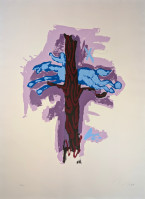
Jorg Immendorf
AT-Aquarell, 2000
Limited Edition Print
Silkscreen
EUR 2,100

Jorg Immendorf
No Title (Red Man), 2006
Limited Edition Print
Silkscreen
EUR 2,300

Jorg Immendorf
Ohne Titel / AT-Spiegelgrafik
Limited Edition Print
Silkscreen
EUR 2,300

Jorg Immendorf
Dialog - Gertrude, 2001
Limited Edition Print
Silkscreen
EUR 2,300

Jorg Immendorf
Ständchen Für B Und D, 1991/2003
Limited Edition Print
Linocut
Currently Not Available
Related Artists


Related Articles

Collecting - March 25, 2025
Understanding Editioned Sculptures: What Collectors Need to Know
Explore the value of editioned sculptures, from bronze to electric art. Learn how edition size, material, and artist impact collectability. Read More

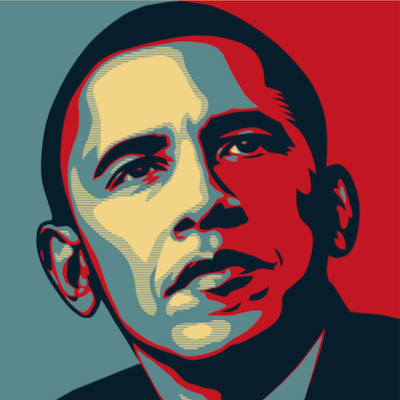
What is appropriation?
Appropriation in art involves using pre-existing images or objects with little or no modification. This technique has played a significant role across various art forms, including visual arts, music, performance, and literature. In visual arts, appropriation refers to the practice of adopting, sampling, recycling, or borrowing elements—or even entire forms—of existing visual culture, integrating them into new works to create meaning or critique.