Details
Artist
Styles
Linocut from the series "Suite Nipon pour CB". Jean-Charles Blais’s Suite Nipon Pour CB (1985) is a linocut that presents a striking, graphic composition centered on a pair of clasped hands. Rendered in bold black and white against a vivid red background, the image emphasizes contrast and texture inherent to the linocut technique. The simplified, expressive lines carve out the figure’s torso and arms, while the hands—firmly joined—suggest themes of unity, introspection, or quiet tension. The surrounding red field, filled with abstracted interior forms, adds intensity and spatial ambiguity. Created during a period when Blais explored raw, direct imagery, the work reflects both physicality and emotional restraint within a limited but powerful visual language.
Suite Nipon Pour CB, 1985
form
Medium
Size
65.5 x 50 cm
- Inches
- Centimeters
Edition
Price
- USD
- EUR
- GBP
Details
Artist
Styles
Linocut from the series "Suite Nipon pour CB". Jean-Charles Blais’s Suite Nipon Pour CB (1985) is a linocut that presents a striking, graphic composition centered on a pair of clasped hands. Rendered in bold black and white against a vivid red background, the image emphasizes contrast and texture inherent to the linocut technique. The simplified, expressive lines carve out the figure’s torso and arms, while the hands—firmly joined—suggest themes of unity, introspection, or quiet tension. The surrounding red field, filled with abstracted interior forms, adds intensity and spatial ambiguity. Created during a period when Blais explored raw, direct imagery, the work reflects both physicality and emotional restraint within a limited but powerful visual language.
- Recently Added
- Price (low-high )
- Price (high-low )
- Year (low-high )
- Year (high-low )

Jean-Charles Blais
Suite Nipon Pour CB, 1985
Limited Edition Print
Linocut
EUR 2,200
Related Artists



Related Articles

Art Movements - June 23, 2023
Graffiti Time Lines on Urban Murals: Uncovering a Street Art Makeover
Explore the evolution of graffiti and street art, from urban murals to mainstream galleries. Discover artists and works reshaping public spaces worldwide. Read More
What is Nouveau Realism?
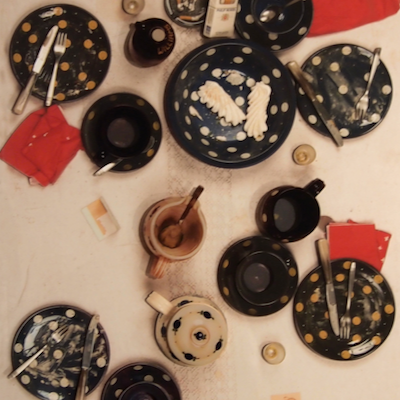
Nouveau Réalisme is an artistic movement founded in 1960 by art critic Pierre Restany and painter Yves Klein during a collective exhibition at a gallery in Milan. Restany wrote the original manifesto in April 1960, proclaiming the movement. In October of that year, nine artists, including Martial Raysse, Yves Klein, Daniel Spoerri, Jean Tinguely, Arman, Pierre Restany, and three Ultra-Lettrists—Jacques de la Villeglé, François Dufrêne, and Raymond Hains—signed the declaration. In 1961, the movement expanded to include Mimmo Rotella, Niki de Saint Phalle, Gérard Deschamps, and César. The movement emphasized a return to reality in art, often incorporating everyday objects and exploring the boundaries between art and life.