Details
Artist
Styles
Linoleum cut printed in colors on handmade Kurotani Mitsumata paper - Signed, dated, and numbered in pencil - Published by Low Road Studios // Jasper Johns’ Untitled (Flag and Vase) (2000) is a linocut print that juxtaposes two iconic motifs— the American flag and a silhouette of a vase. The stars and stripes dominate the background in vibrant red, white, and blue, while the foreground features a black-and-white striped vase form that interrupts the flag's symmetry. This combination of patriotic imagery with abstract forms highlights Johns' interest in recontextualizing familiar symbols and exploring themes of identity, perception, and national representation. Printed on handmade Kurotani Mitsumata paper, this piece is signed, dated, and numbered, showcasing Johns' mastery in blending symbolism with abstraction.
Untitled (Flag and Vase), 2000
form
Medium
Size
57.8 x 42.5 cm
- Inches
- Centimeters
Edition
Price
Details
Artist
Styles
Linoleum cut printed in colors on handmade Kurotani Mitsumata paper - Signed, dated, and numbered in pencil - Published by Low Road Studios // Jasper Johns’ Untitled (Flag and Vase) (2000) is a linocut print that juxtaposes two iconic motifs— the American flag and a silhouette of a vase. The stars and stripes dominate the background in vibrant red, white, and blue, while the foreground features a black-and-white striped vase form that interrupts the flag's symmetry. This combination of patriotic imagery with abstract forms highlights Johns' interest in recontextualizing familiar symbols and exploring themes of identity, perception, and national representation. Printed on handmade Kurotani Mitsumata paper, this piece is signed, dated, and numbered, showcasing Johns' mastery in blending symbolism with abstraction.
- Recently Added
- Price (low-high )
- Price (high-low )
- Year (low-high )
- Year (high-low )

Jasper Johns
Periscope, 1981
Limited Edition Print
Etching And Aquatint
USD 25,000 - 30,000

Jasper Johns
Cross Hatch, 1977
Limited Edition Print
Screen-print
USD 2,500

Jasper Johns
Untitled - Faces (ULAE 243), 1988
Limited Edition Print
Carborundum
USD 41,000 - 45,000

Jasper Johns
Untitled (Faces On Purple), 1988
Limited Edition Print
Carborundum
USD 21,000 - 30,000

Jasper Johns
Summer (Blue), 1985-91
Limited Edition Print
Lithograph
USD 4,500
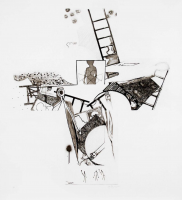
Jasper Johns
The Season, 1990
Limited Edition Print
Etching
USD 14,000 - 17,000

Jasper Johns
Painting With Two Balls I, 1962
Limited Edition Print
Lithograph
USD 31,500

Jasper Johns
Souvenir I, 1972
Limited Edition Print
Lithograph
Inquire For Price

Jasper Johns
Zone, 1972
Limited Edition Print
Lithograph
Inquire For Price

Jasper Johns
Sun On Six, 2000
Limited Edition Print
Linocut
Inquire For Price

Jasper Johns
Hinged Canvas, 1971
Limited Edition Print
Lithograph
USD 5,000

Jasper Johns
Untitled (from The Geldzahler Portfolio), 1998
Limited Edition Print
Etching
USD 6,300

Jasper Johns
Valentine, 2010
Limited Edition Print
Etching And Aquatint
Inquire For Price

Jasper Johns
Untitled (Fragmented Frame), 1992
Limited Edition Print
Lithograph
USD 10,700

Jasper Johns
Untitled (Faded Impressions), 1992
Limited Edition Print
Lithograph
Inquire For Price

Jasper Johns
Untitled (Shattered Vessel), 1992
Limited Edition Print
Lithograph
Inquire For Price

Jasper Johns
Coathanger And Spoon, 1971
Limited Edition Print
Lithograph
Inquire For Price

Jasper Johns
Ventriloquist, 1985
Limited Edition Print
Lithograph
USD 13,000

Jasper Johns
Knee, 1974
Limited Edition Print
Lithograph
USD 7,350

Jasper Johns
Bent Stencil, 1971
Limited Edition Print
Lithograph
USD 7,650

Jasper Johns
Voice 2, 1982
Limited Edition Print
Lithograph
USD 7,670

Jasper Johns
Summer, 1985
Limited Edition Print
Etching And Aquatint
USD 5,250

Jasper Johns
Sketch From Untitled I, 1974
Limited Edition Print
Lithograph
USD 9,200

Jasper Johns
Ventriloquist, 1990
Limited Edition Print
Lithograph
USD 10,000 - 15,000

Jasper Johns
Untitled (Flag And Vase), 2000
Limited Edition Print
Linocut
Currently Not Available

Jasper Johns
Double Flags, 1979-80
Limited Edition Print
Lithograph
Currently Not Available

Jasper Johns
Technics And Creativity, 1971
Limited Edition Print
Mixed Media
Currently Not Available
Related Artists


Related Articles

Collecting - May 01, 2022
Collecting prints and multiples: a brief introduction on how to start
Learn how to start collecting prints and multiples. Discover tips on editions, artist proofs, and choosing prints that combine value, creativity, and affordability. Read More

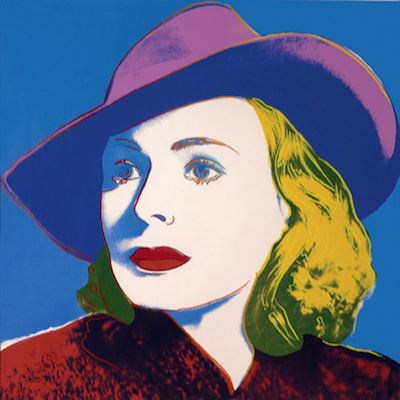
What is pop-art?
Pop Art is an art movement that began in Britain in 1955 and in the late 1950s in the U.S. It challenged traditional fine arts by incorporating imagery from popular culture, such as news, advertising, and comic books. Pop Art often isolates and recontextualizes materials, combining them with unrelated elements. The movement is more about the attitudes and ideas that inspired it than the specific art itself. Pop Art is seen as a reaction against the dominant ideas of Abstract Expressionism, bringing everyday consumer culture into the realm of fine art.