Screen print on Velin BFK Rives 270gsm
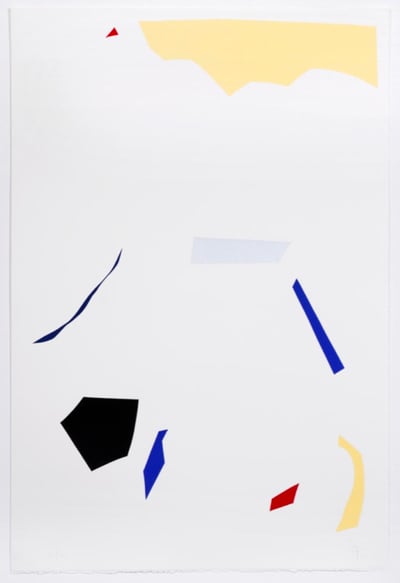
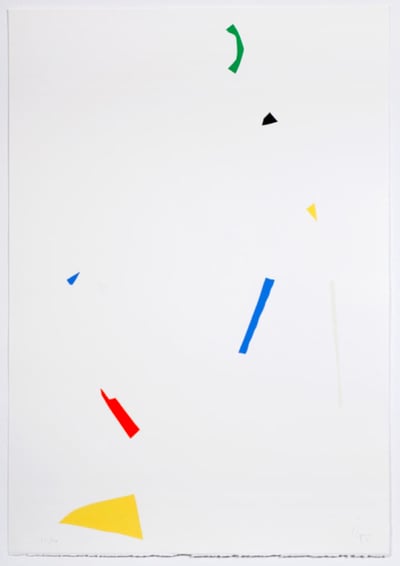
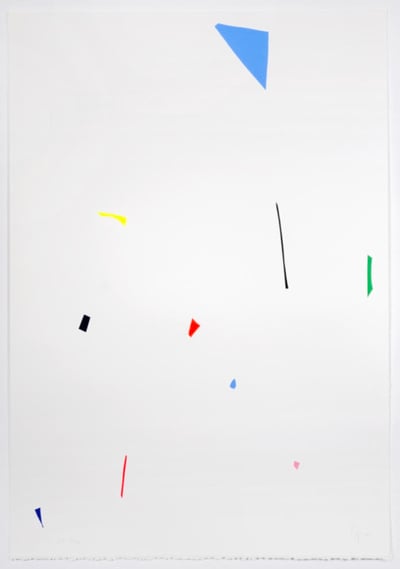
Edition of 40 - This light and minimalist work is part of a series of four screen prints based on the collage series “Messerschitte” that the artist worked on from end of the 70s, until the early 90s.
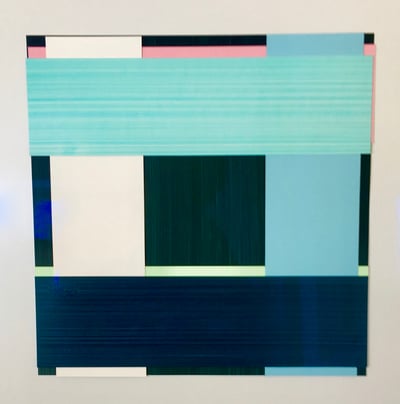
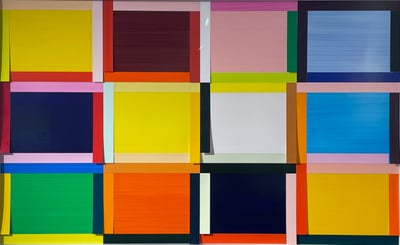
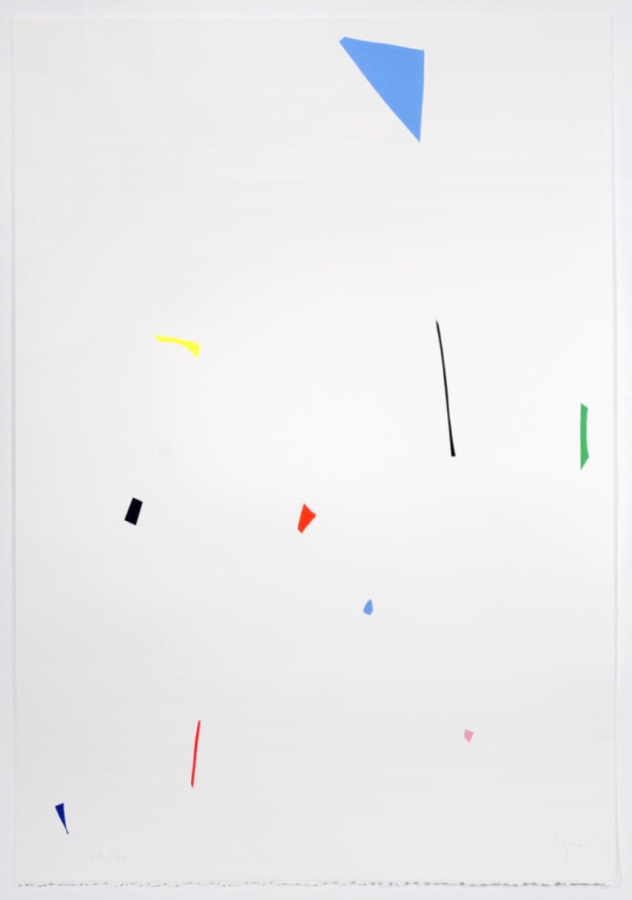
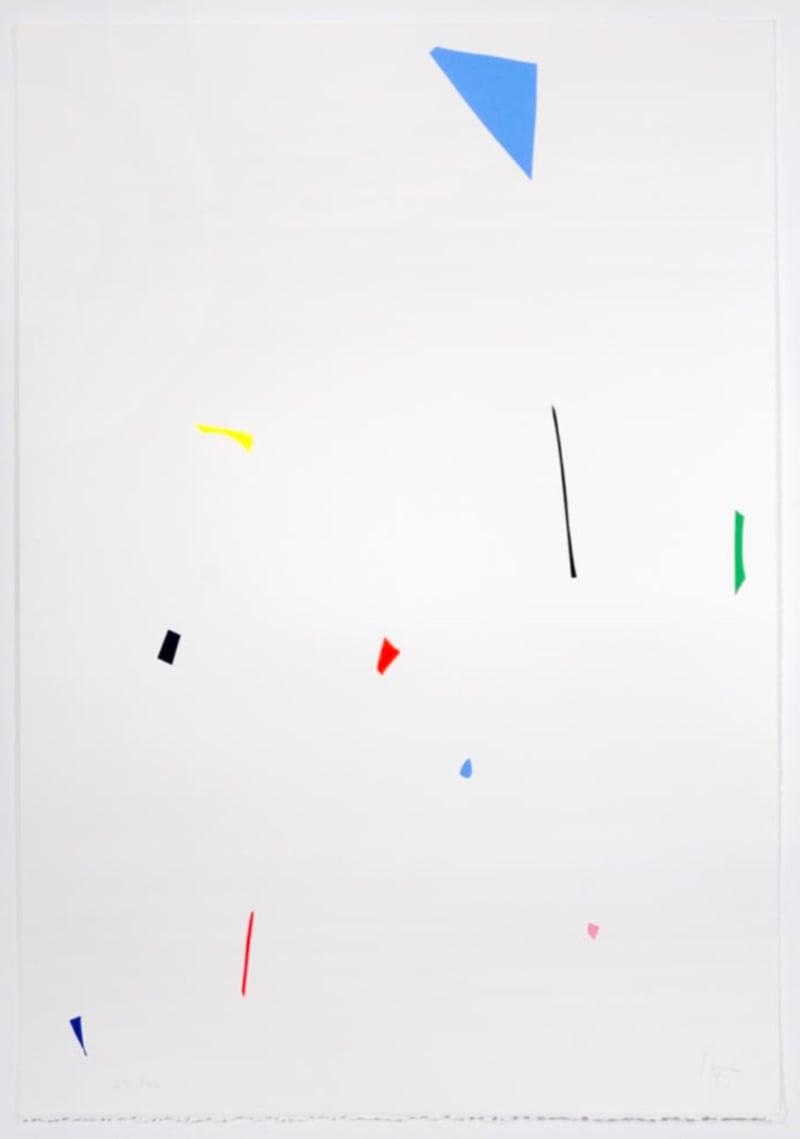
ohne Titel (2) by Imi Knoebel, created in 1995, is a minimalist screen print that forms part of a series based on Knoebel's Messerschitte collages. This piece presents an arrangement of abstract shapes in bright, primary colors—blue, red, yellow, black, green, and a small pink accent—scattered across an expansive white background. The composition features a playful distribution of these irregular forms, creating a sense of weightlessness and spatial freedom. Knoebel’s minimalist approach allows the vibrant shapes to stand out, highlighting the relationship between color, shape, and negative space. This work exemplifies Knoebel's dedication to pure abstraction, with each element carefully positioned to invite contemplation of simplicity and visual harmony.
Imi Knoebel (Germany, 1940) is a prominent abstract artist associated with minimalism and constructivism. Known for his bold use of color and geometric forms, his works span painting, sculpture, and installation. Influenced by the Bauhaus and his studies with Joseph Beuys, Knoebel's art explores light, space, and materiality.
Screen-printScreen printing is a technique where ink is transferred through a mesh onto a substrate, with areas blocked by a stencil to prevent ink from passing through. This method, also known as serigraphy or silkscreen printing, is commonly used to produce prints on posters, T-shirts, vinyl, stickers, wood, and other materials. The process is a type of stencil printing, allowing for vibrant, detailed designs on various surfaces.
Screen print on Velin BFK Rives 270gsm
Edition of 40 - This light and minimalist work is part of a series of four screen prints based on the collage series “Messerschitte” that the artist worked on from end of the 70s, until the early 90s.
ohne Titel (2) by Imi Knoebel, created in 1995, is a minimalist screen print that forms part of a series based on Knoebel's Messerschitte collages. This piece presents an arrangement of abstract shapes in bright, primary colors—blue, red, yellow, black, green, and a small pink accent—scattered across an expansive white background. The composition features a playful distribution of these irregular forms, creating a sense of weightlessness and spatial freedom. Knoebel’s minimalist approach allows the vibrant shapes to stand out, highlighting the relationship between color, shape, and negative space. This work exemplifies Knoebel's dedication to pure abstraction, with each element carefully positioned to invite contemplation of simplicity and visual harmony.
Imi Knoebel (Germany, 1940) is a prominent abstract artist associated with minimalism and constructivism. Known for his bold use of color and geometric forms, his works span painting, sculpture, and installation. Influenced by the Bauhaus and his studies with Joseph Beuys, Knoebel's art explores light, space, and materiality.
If you want to stay alive, you have to do something radical.
- Imi Knoebel
Imi Knoebel (b. 1940 Germany) is a German contemporary artist known for his contributions to minimalism and abstract art. Knoebel's work is characterized by its exploration of color, form, and space, often through the use of simple geometric shapes and a restricted color palette. A student of Joseph Beuys at the Kunstakademie Düsseldorf, Knoebel was initially influenced by Constructivism and the Bauhaus, leading him to develop a visual language that emphasizes purity of form and the interaction of shapes within a given space. His work often includes large-scale installations, paintings, and sculptures that challenge the boundaries between painting and sculpture. Knoebel is particularly known for his vibrant use of color in later works, where he expanded his palette to include bright, dynamic hues. His contributions to contemporary art have been widely recognized, with his work exhibited in major museums and galleries around the world, cementing his status as a significant figure in post-war European art.
Minimalism is a style in music and visual arts characterized by pared-down designs and simplicity. It began in Western art after World War II, gaining prominence particularly in American visual arts. Minimalism draws heavily on aspects of modernism and is often viewed as a reaction against Abstract Expressionism, as well as a precursor to post-minimal art practices. Prominent minimalist artists include Agnes Martin, Donald Judd, Robert Morris, Frank Stella, and Dan Flavin.