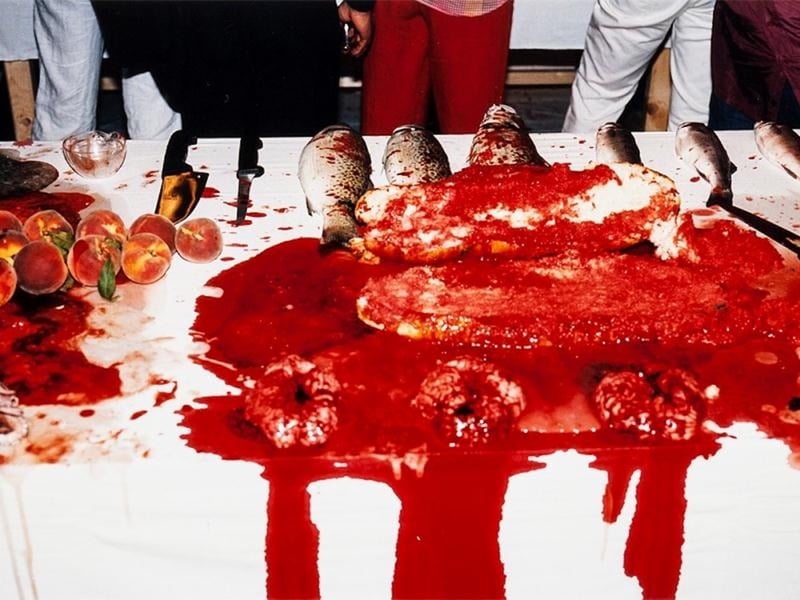
C-print on Kodak Professional paper - signed and numbered on the back
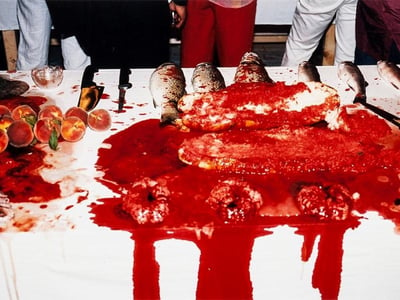
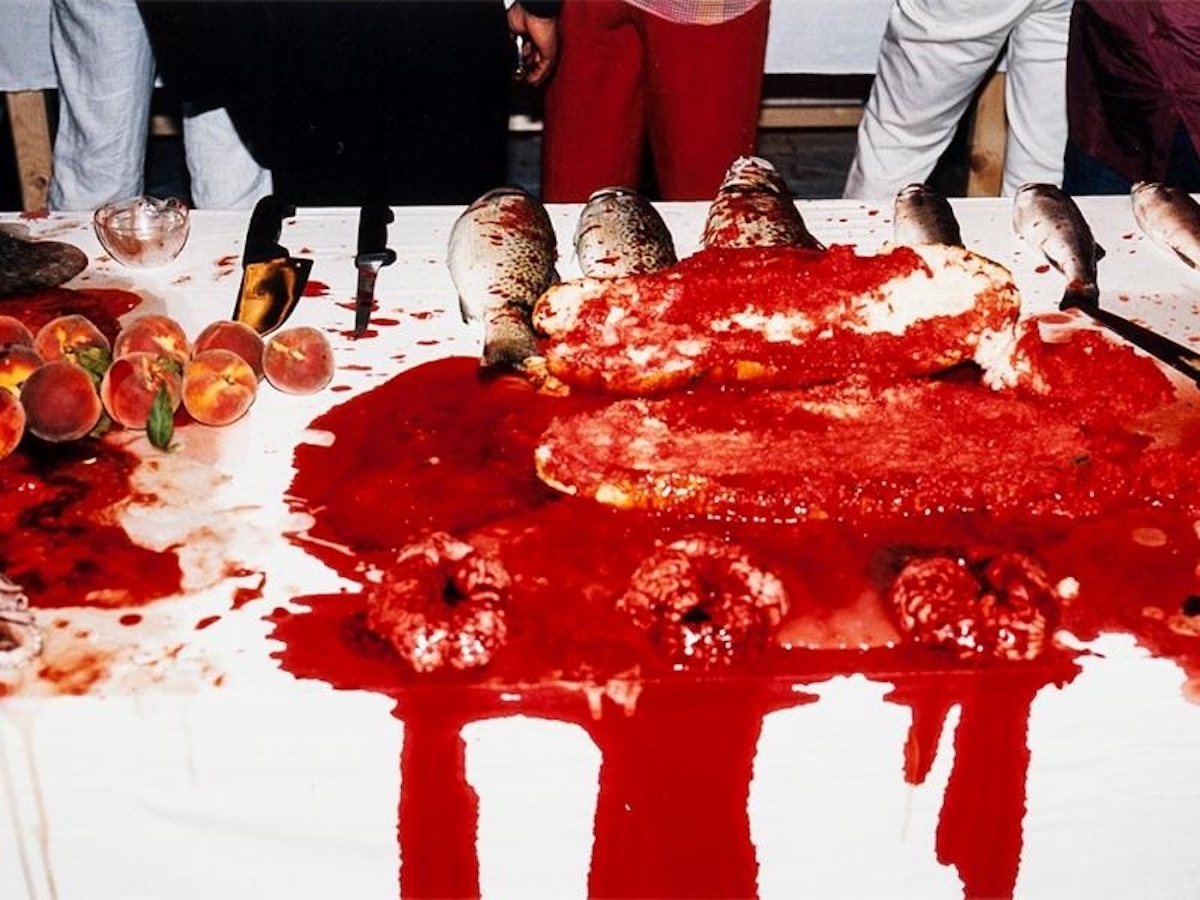
Performance 2003 by Hermann Nitsch is a visceral photographic capture that exemplifies his provocative and challenging approach to art. Known for his association with the Viennese Actionism movement, Nitsch's work often confronts themes of life, death, sacrifice, and ritual. This photograph, part of a series documenting his performances, depicts a table covered in raw, visceral materials—fish, organs, and a profusion of red fluids resembling blood, spilling over the tablecloth. The imagery evokes sacrificial rites and visceral intensity, challenging viewers to confront primal and uncomfortable aspects of human existence. Nitsch's work invites contemplation on ritual, corporeality, and the boundaries of art.
Performance 2003, 2003
Form
Medium
Size
- Inches
- Centimeters
Edition
Price
- USD
- EUR
- GBP
- CHF
- Authenticity Guaranteed
- Insured Shipping
- Online Since 2005
C-print on Kodak Professional paper - signed and numbered on the back
Performance 2003 by Hermann Nitsch is a visceral photographic capture that exemplifies his provocative and challenging approach to art. Known for his association with the Viennese Actionism movement, Nitsch's work often confronts themes of life, death, sacrifice, and ritual. This photograph, part of a series documenting his performances, depicts a table covered in raw, visceral materials—fish, organs, and a profusion of red fluids resembling blood, spilling over the tablecloth. The imagery evokes sacrificial rites and visceral intensity, challenging viewers to confront primal and uncomfortable aspects of human existence. Nitsch's work invites contemplation on ritual, corporeality, and the boundaries of art.
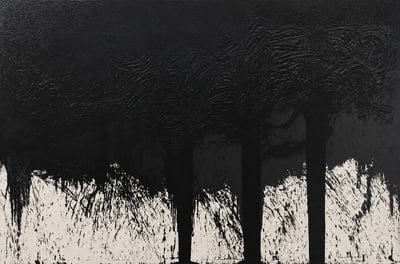
Hermann Nitsch
Untitled, 1996
Limited Edition Print
Screen-print
EUR 4,800
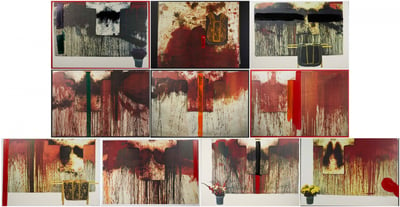
Hermann Nitsch
Domus Jani (10), 1991
Limited Edition Print
Mixed Media
EUR 22,950
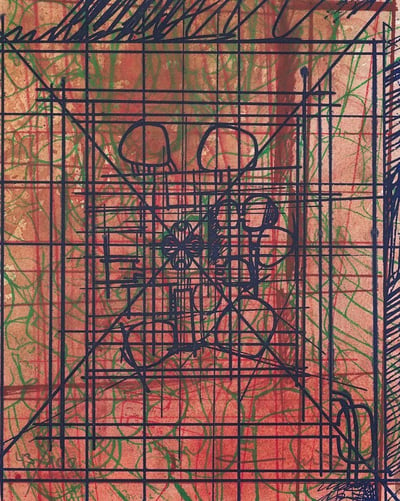
Hermann Nitsch
Das Sechstagespiel des Orgien Mysterien Theaters, 1998
Limited Edition Print
Etching
EUR 1,750
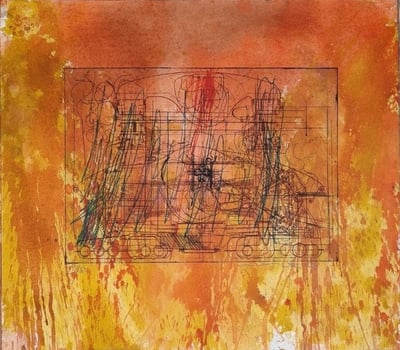
Hermann Nitsch
Untitled (Fiery Resonance), 2006
Limited Edition Print
Lithograph
EUR 3,440
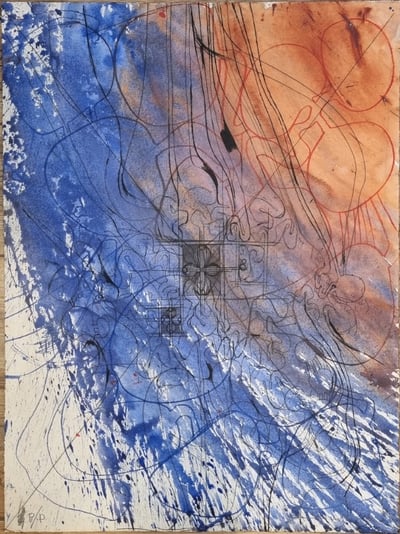
Hermann Nitsch
Untitled (Dual Forces), 2006
Limited Edition Print
Lithograph
EUR 3,900
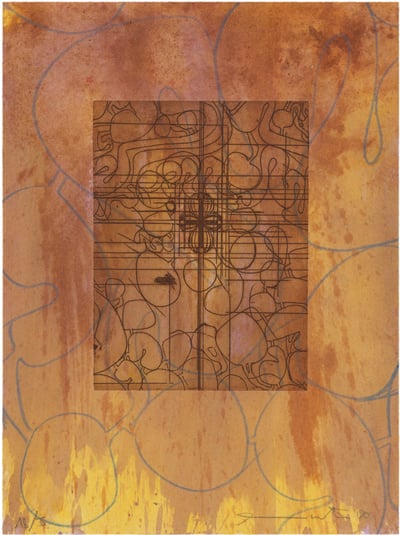
Hermann Nitsch
Untitled (Organic Maze), 2006
Limited Edition Print
Mixed Media
EUR 3,200
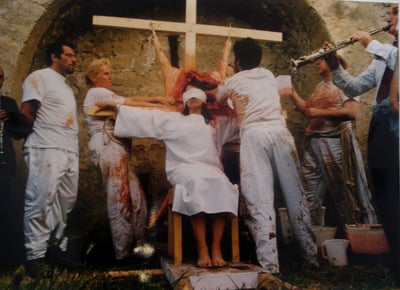
Hermann Nitsch
96 Aktion – Giardini San Martino, Napoli, T, 1996
Photography
Photograph
EUR 1,830
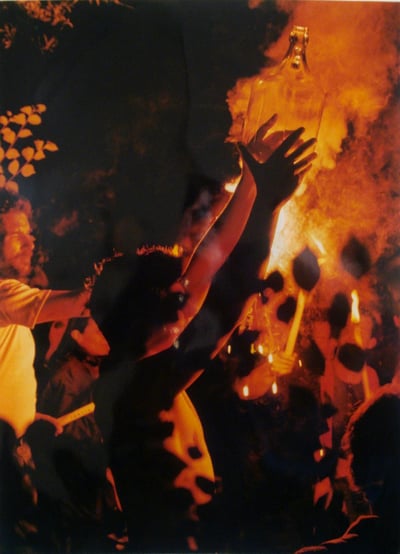
Hermann Nitsch
96 Aktion – Giardini San Martino, Napoli, R, 1996
Photography
Photograph
EUR 1,830
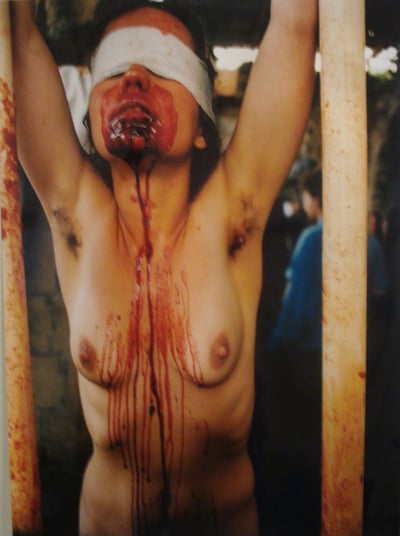
Hermann Nitsch
96 Aktion – Giardini San Martino, Napoli, P, 1996
Photography
Photograph
EUR 1,830
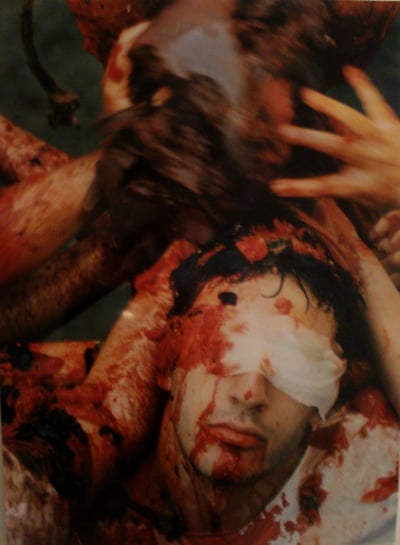
Hermann Nitsch
96 Aktion – Giardini San Martino, Napoli, M, 1996
Photography
Photograph
EUR 1,830
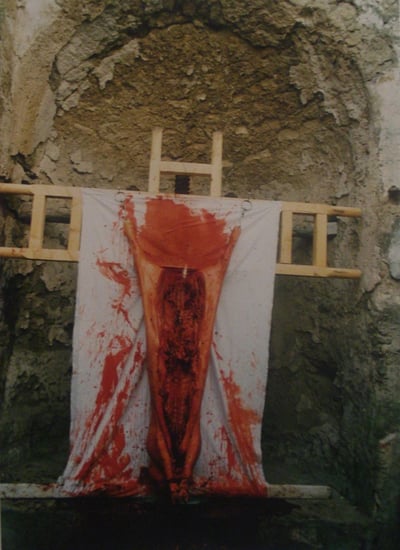
Hermann Nitsch
96 Aktion – Giardini San Martino, Napoli, I, 1996
Photography
Photograph
EUR 1,830
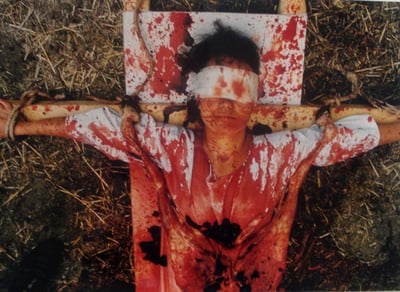
Hermann Nitsch
96 Aktion – Giardini San Martino, Napoli, C, 1996
Photography
Photograph
EUR 1,830
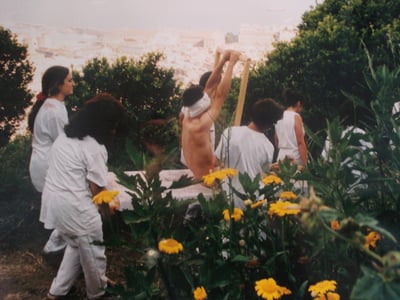
Hermann Nitsch
96 Aktion – Giardini San Martino, Napoli, A, 1996
Photography
Photograph
EUR 1,830
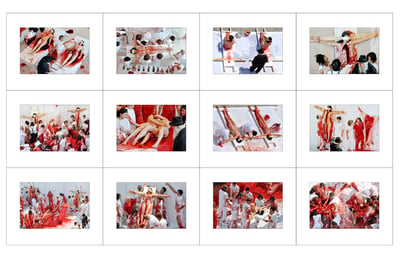
Hermann Nitsch
Under My Skin (12), 2010
Photography
Photograph
EUR 3,600
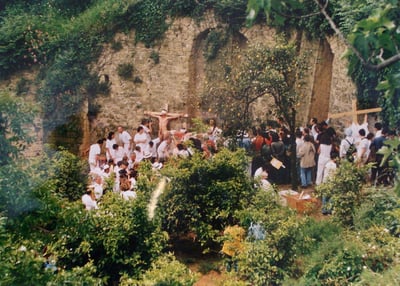
Hermann Nitsch
96 Aktion – Giardini San Martino, Napoli, N, 1996
Photography
Photograph
EUR 1,830
Hermann Nitsch
Performance 2003, 2003
Photography
Photograph
EUR 650
Hermann Nitsch
Ubermalte Bild - Lithographien, Domus Jani, 1991
Limited Edition Print
Lithograph
Currently Not Available
Related Artists
Related Articles
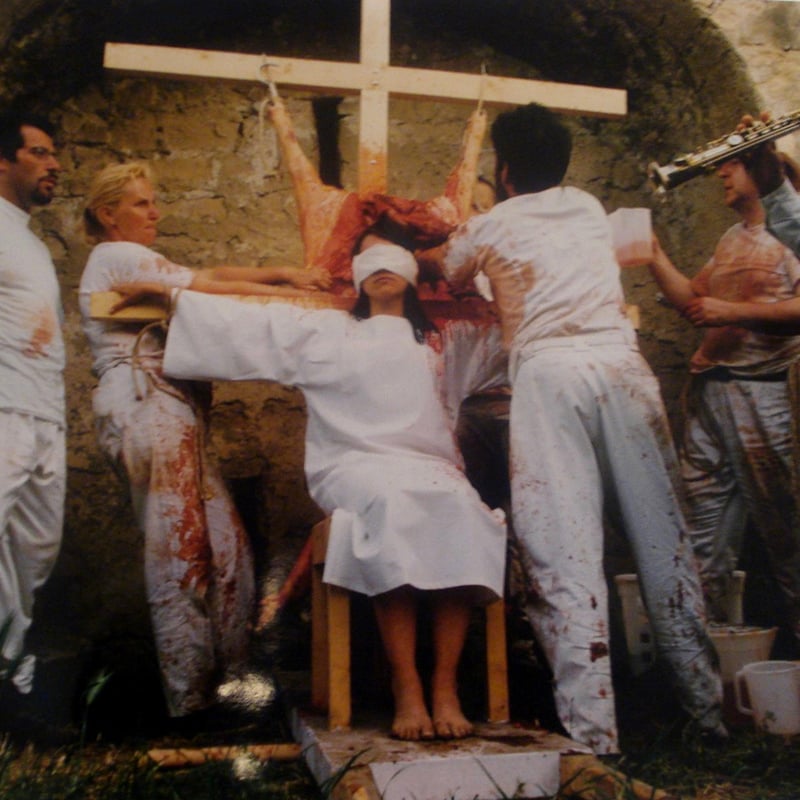
Art Movements - November 4, 2022
Shock Art: the Violence of Recognisability and Hyperrealism on a Loop
Explore Shock Art and its unsettling realism, pushing artistic boundaries. Discover how it mirrors modern anxieties with hyperrealistic depictions.Read More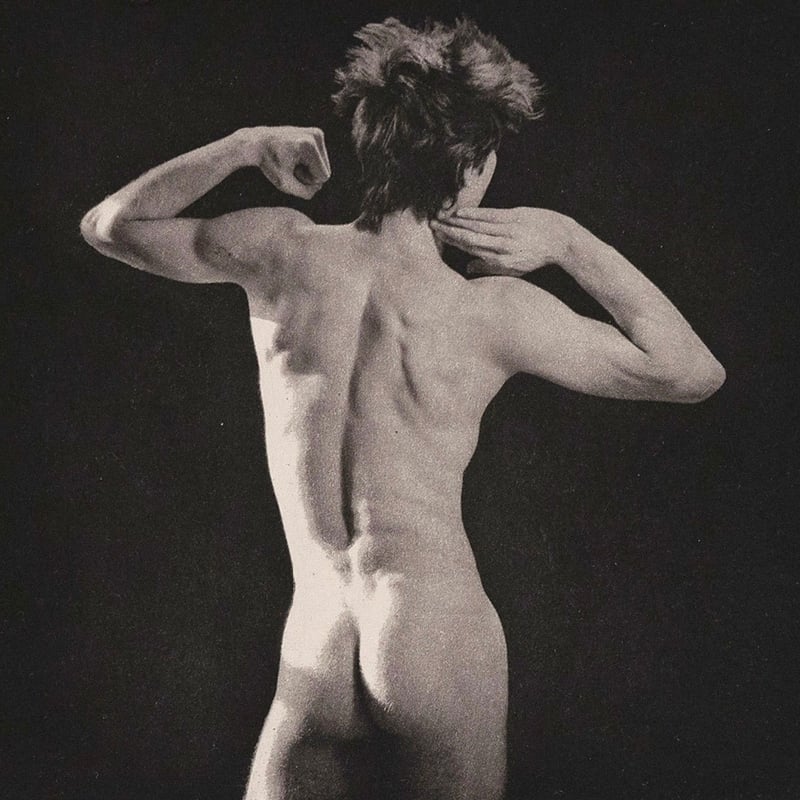

What is actionism?
Viennese Actionism was a short-lived but intense art movement in the 20th century, emerging as part of the broader action art efforts of the 1960s. Known for its violent and provocative performances, the movement sought to break traditional art boundaries. Key figures in this movement included Arnulf Rainer and Hermann Nitsch.

Hermann Nitsch
Performance 2003, 2003
20.5 x 30.5 cm


