
Details
Artist
Styles
Etching, aquatint, and drypoint in colors on Magnani paper - Hand-signed by artist // Helen Frankenthaler's Broome Street at Night (1987) showcases her signature abstract expressionist approach through the use of etching, aquatint, and drypoint on Magnani paper. The print features dark, moody tones, evoking the depth and quietude of nighttime. Streaks of vibrant green contrast against the deep black and brown hues, while a bold blue circular form hovers, suggesting a mysterious and celestial element. The work captures the atmospheric essence of an urban landscape, rendered in Frankenthaler’s fluid and gestural style, blending abstraction with a hint of narrative.
Broome Street at Night, 1987
form
Medium
Size
99.4 x 99.4 cm
- Inches
- Centimeters
Edition
Price
Details
Artist
Styles
Etching, aquatint, and drypoint in colors on Magnani paper - Hand-signed by artist // Helen Frankenthaler's Broome Street at Night (1987) showcases her signature abstract expressionist approach through the use of etching, aquatint, and drypoint on Magnani paper. The print features dark, moody tones, evoking the depth and quietude of nighttime. Streaks of vibrant green contrast against the deep black and brown hues, while a bold blue circular form hovers, suggesting a mysterious and celestial element. The work captures the atmospheric essence of an urban landscape, rendered in Frankenthaler’s fluid and gestural style, blending abstraction with a hint of narrative.
- Recently Added
- Price (low-high )
- Price (high-low )
- Year (low-high )
- Year (high-low )

Helen Frankenthaler
Untitled (What Red Lines Can Do), 1970
Limited Edition Print
Serigraph
USD 6,700

Helen Frankenthaler
Aerie, 2009
Limited Edition Print
Silkscreen
USD 25,900

Helen Frankenthaler
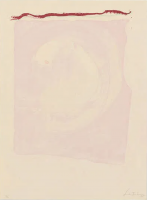
Lot's Wife, 1971
Limited Edition Print
Lithograph
USD 50,000 - 60,000
Helen Frankenthaler
Reflections IX, 1995
Limited Edition Print
Lithograph
USD 7,150

Helen Frankenthaler
Venice II, 1969-1972
Limited Edition Print
Lithograph
USD 6,300

Helen Frankenthaler
Orange Hoop, 1965
Limited Edition Print
Lithograph
USD 9,125

Helen Frankenthaler
Parets, 1987
Limited Edition Print
Etching
EUR 11,900
Helen Frankenthaler
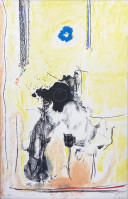
Madame De Pompadour, 1985
Limited Edition Print
Lithograph
USD 14,250

Helen Frankenthaler
Valentine For Mr. Wonderful (book), 1995
Limited Edition Print
Intaglio
USD 15,700

Helen Frankenthaler
Private Listing
Limited Edition Print
Monotype
Request Info

Helen Frankenthaler
Earth Slice, 1978
Limited Edition Print
Etching And Aquatint
USD 11,500

Helen Frankenthaler
Ramblas, 1987-1988
Limited Edition Print
Mixed Media
USD 9,600

Helen Frankenthaler
Solar Imp, 2001
Limited Edition Print
Screen-print
Currently Not Available

Helen Frankenthaler
Pompeii Forte, 1976-82
Limited Edition Print
Etching And Aquatint
Currently Not Available

Helen Frankenthaler
Japanese Maple, 2005
Limited Edition Print
Mixed Media
Currently Not Available
Helen Frankenthaler
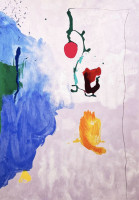
Eve, 1995
Limited Edition Print
Screen-print
Currently Not Available
Related Artists


Related Articles
Art Movements - September 03, 2025
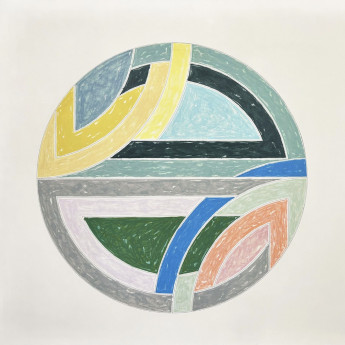
Decoding Abstract Art: How to Approach and Appreciate Non-Representational Works
Explore iconic abstract art through works by Chillida, Calder, Frankenthaler & more. Discover how form, color, and rhythm shape our experience. Read More
Who are the American Abstract Artists (AAA) ?
American Abstract Artists (AAA) is an organization founded in New York City in 1936 to promote abstract art and its appreciation in the United States. At a time when abstract art faced strong opposition from critics, the AAA provided crucial exhibition opportunities for abstract artists, helping to foster the growth and acceptance of the movement.