Details
Artist
Styles
Screen print, printed on 490 gram smooth custom paper // Feng Zhengjie’s Chinese Portrait (b) continues his exploration of contemporary Chinese identity through vivid, surreal portraiture. This screen-print features a stylized female figure with intense red hair and lips, set against a contrasting background with a neon glow effect. The figure’s pale face and unfocused, almost ethereal eyes lend an air of mystery and detachment, challenging conventional depictions of beauty. The bold color palette and smooth, exaggerated forms invoke a pop-art aesthetic, critiquing societal ideals and exploring themes of identity and superficiality in modern culture. Limited to an edition of 200, this work exemplifies Feng’s signature style, merging traditional elements with a critical view of contemporary standards.
Chinese Portrait (b), 2008
form
Medium
Size
81 x 81 cm
- Inches
- Centimeters
Edition
Price
- USD
- EUR
- GBP
Details
Artist
Styles
Screen print, printed on 490 gram smooth custom paper // Feng Zhengjie’s Chinese Portrait (b) continues his exploration of contemporary Chinese identity through vivid, surreal portraiture. This screen-print features a stylized female figure with intense red hair and lips, set against a contrasting background with a neon glow effect. The figure’s pale face and unfocused, almost ethereal eyes lend an air of mystery and detachment, challenging conventional depictions of beauty. The bold color palette and smooth, exaggerated forms invoke a pop-art aesthetic, critiquing societal ideals and exploring themes of identity and superficiality in modern culture. Limited to an edition of 200, this work exemplifies Feng’s signature style, merging traditional elements with a critical view of contemporary standards.
- Recently Added
- Price (low-high )
- Price (high-low )
- Year (low-high )
- Year (high-low )

Feng Zhengjie
Chinese Portrait (c), 2008
Limited Edition Print
Screen-print
USD 1,250

Feng Zhengjie
Chinese Portrait (b), 2008
Limited Edition Print
Screen-print
USD 1,250

Feng Zhengjie
Chinese Portrait (a), 2008
Limited Edition Print
Screen-print
USD 1,250
Related Artists


Related Articles
Popular, Collecting - November 06, 2025
Developing Your Eye: A Practical Guide to Refining Taste in Art
Learn how to develop an eye for art. Discover practical ways to refine your taste, deepen appreciation, and connect more meaningfully with artworks. Read More
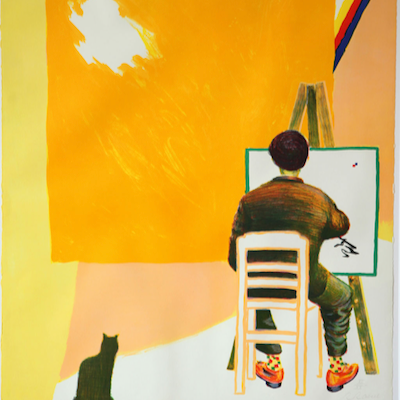
Artwork by Roger Raveel
What is new figuration?
Neo-Figurative Art is a collective term that refers to the revival of figurative art in America and Europe during the 1960s, following a period dominated by abstraction. Michel Ragon, a French art critic, argued that this resurgence of figuration occurred during a critical time of social and political upheaval in both regions.
RECENTLY VIEWED
-->