
Details
Artist
Styles
Squeezed two light bulbs and glue in a plastic bag - Signed and dated lower right on label // Two Pears by Dieter Roth, created in 1969, is a mixed media piece that challenges conventional ideas of art through experimental materials and techniques. Roth used unconventional elements, squeezing two light bulbs and glue inside a plastic bag, to create an organic, textured surface on a mostly white background. The bulbs and glue have settled into a complex formation, with faint traces of color and translucent layering, evoking both fragility and decay. Roth's work often incorporates ephemeral materials, questioning the permanence and boundaries of art. This piece, signed and dated on a label in the lower right, reflects his avant-garde approach and fascination with material transformation.
Details
Artist
Styles
Squeezed two light bulbs and glue in a plastic bag - Signed and dated lower right on label // Two Pears by Dieter Roth, created in 1969, is a mixed media piece that challenges conventional ideas of art through experimental materials and techniques. Roth used unconventional elements, squeezing two light bulbs and glue inside a plastic bag, to create an organic, textured surface on a mostly white background. The bulbs and glue have settled into a complex formation, with faint traces of color and translucent layering, evoking both fragility and decay. Roth's work often incorporates ephemeral materials, questioning the permanence and boundaries of art. This piece, signed and dated on a label in the lower right, reflects his avant-garde approach and fascination with material transformation.
- Recently Added
- Price (low-high )
- Price (high-low )
- Year (low-high )
- Year (high-low )
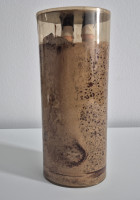
Dieter Roth
Untitled (Puppe In Schokolade), 1969
Sculpture / Object
Mixed Media
EUR 3,600
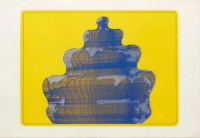
Dieter Roth
Torte In Der Sonne (Fancy-Cake In The Sun), 1970
Limited Edition Print
Screen-print
GBP 4,200

Dieter Roth
Self-portrait, 1969
Limited Edition Print
Mixed Media
EUR 3,000

Dieter Roth
Selbstbildnis Als Loch, 1972
Limited Edition Print
Screen-print
EUR 3,100

Dieter Roth
Middle Sunset
Limited Edition Print
Mixed Media
EUR 5,400

Dieter Roth
Stamp Images, 1968
Limited Edition Print
Mixed Media
EUR 1,350

Dieter Roth
Lauf Der Welt, 1970
Limited Edition Print
Mixed Media
EUR 3,000

Dieter Roth
Steep Potplant, 1975
Limited Edition Print
Drypoint
USD 2,200
Related Artists


Related Articles

Popular, News, Artists - February 27, 2026
The Sovereign Self: Tracey Emin’s A Second Life at Tate Modern (2026) and the Evolution of a Global Market
Tracey Emin’s A Second Life at Tate Modern (2026) redefines her legacy, signaling institutional canonisation and a maturing global market. Read More


What is concrete art?
Concrete Art is an art movement founded by the Dutch artist Theo van Doesburg in the 1930s. The movement emphasizes pure abstraction, focusing on geometric shapes and colors without any reference to the natural world or symbolic meaning. Unlike other forms of abstract art, Concrete Art is entirely non-representational and is based on mathematical principles and precise execution. It aims to create universal, timeless works by using simple, clear forms that emphasize objectivity and clarity.