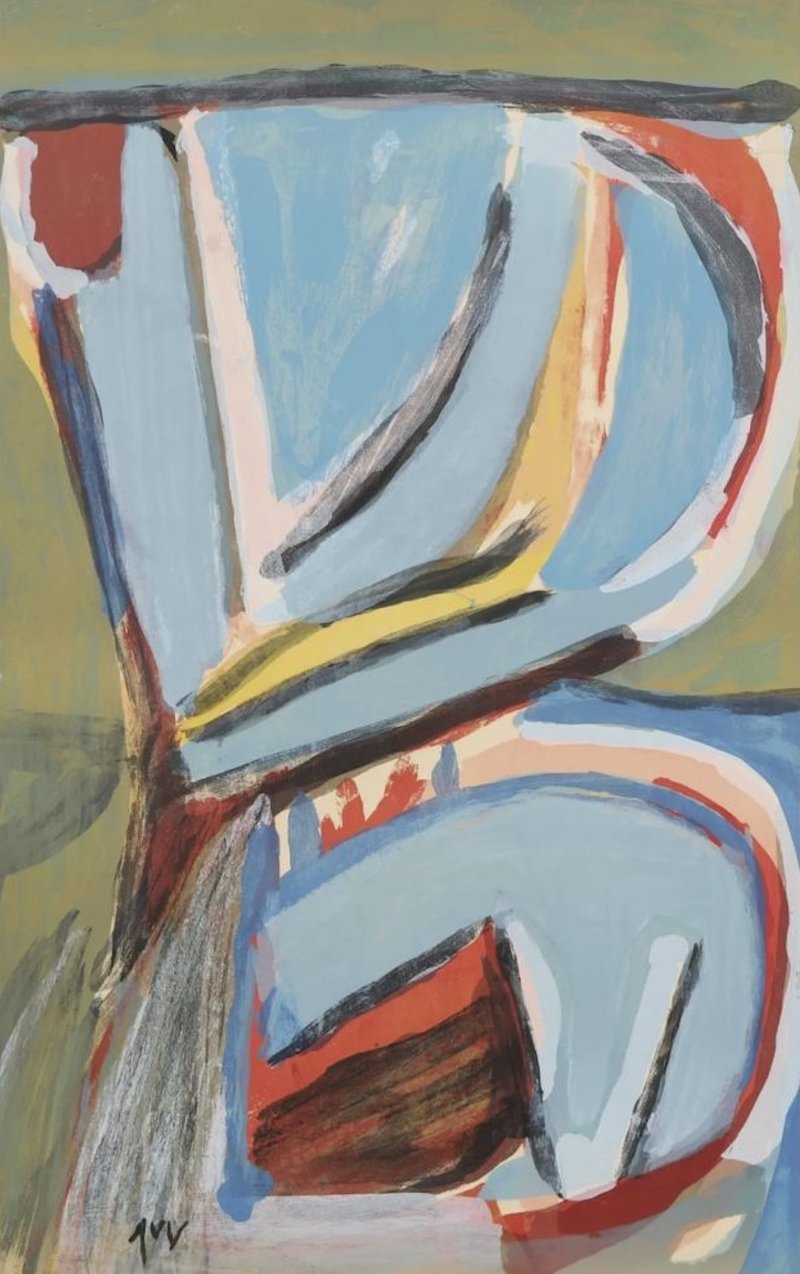
Signed in brush and annotated EA lower left. From the edition of 100 + EA.
Published by Jacques Putman. Printed by Pierre Badey.
Reference: Mason Putman 167.
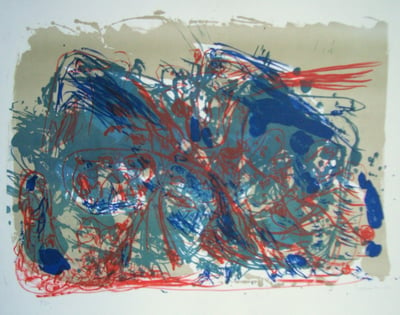
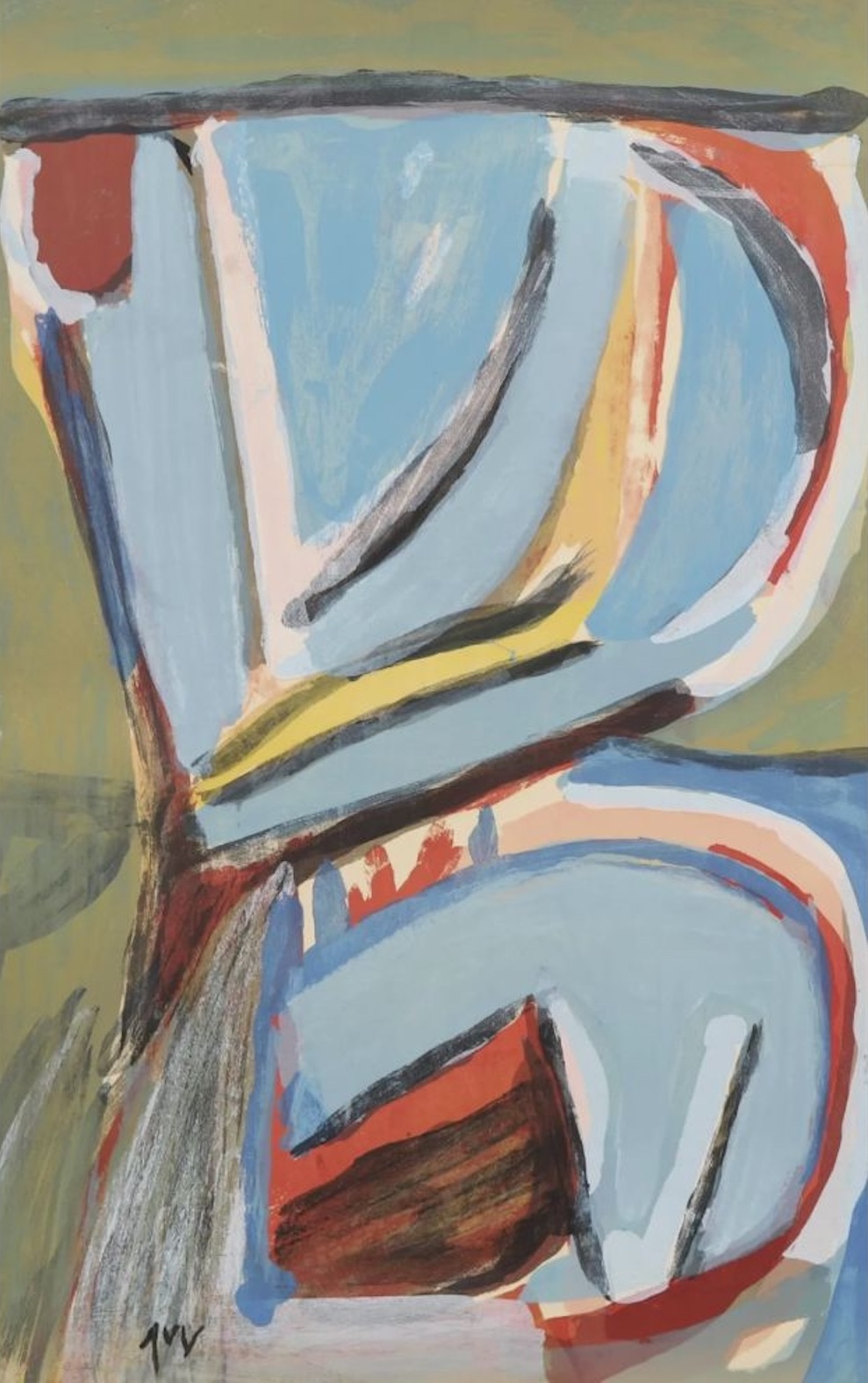
Bram Van Velde’s MP 167 (1975) is a lithograph on paper that exemplifies his distinctive approach to abstraction, where form emerges through tension rather than clear delineation. Broad, gestural brushstrokes in muted blues, reds, and ochres create an ambiguous, almost figure-like structure that resists stable interpretation. The layered application of color and the visible traces of the artist’s hand suggest both construction and erosion, a hallmark of Van Velde’s late work. Published by Jacques Putman and printed by Pierre Badey, the print reflects the artist’s exploration of inner states rather than external reality, aligning with post-war European abstraction and its emphasis on existential expression.
Artwork Copyright © Bram Van VeldeBram van Velde (Netherlands, 1895–1981) was a key figure in abstract expressionism, known for his bold color contrasts and emotionally charged compositions. Influenced by existentialism, his works explore themes of isolation and introspection. Van Velde’s unique style left a significant impact on post-war European art.
Artwork Copyright © Bram Van VeldeMP 167, 1975
Form
Medium
Size
- Inches
- Centimeters
Edition
Price
- USD
- EUR
- GBP
- CHF
- Authenticity Guaranteed
- Insured Shipping
- Online Since 2005
●Inventory 16780
●Signed
●Comes with gallery invoice and certificate
●Sell Us a Similar Artwork. Learn more.
Signed in brush and annotated EA lower left. From the edition of 100 + EA.
Published by Jacques Putman. Printed by Pierre Badey.
Reference: Mason Putman 167.
Bram Van Velde’s MP 167 (1975) is a lithograph on paper that exemplifies his distinctive approach to abstraction, where form emerges through tension rather than clear delineation. Broad, gestural brushstrokes in muted blues, reds, and ochres create an ambiguous, almost figure-like structure that resists stable interpretation. The layered application of color and the visible traces of the artist’s hand suggest both construction and erosion, a hallmark of Van Velde’s late work. Published by Jacques Putman and printed by Pierre Badey, the print reflects the artist’s exploration of inner states rather than external reality, aligning with post-war European abstraction and its emphasis on existential expression.
Artwork Copyright © Bram Van VeldeBram van Velde (Netherlands, 1895–1981) was a key figure in abstract expressionism, known for his bold color contrasts and emotionally charged compositions. Influenced by existentialism, his works explore themes of isolation and introspection. Van Velde’s unique style left a significant impact on post-war European art.
Artwork Copyright © Bram Van Velde- Recently Added
- Price (Low-High)
- Price (High-Low)
- Year (Low-High)
- Year (High-Low)
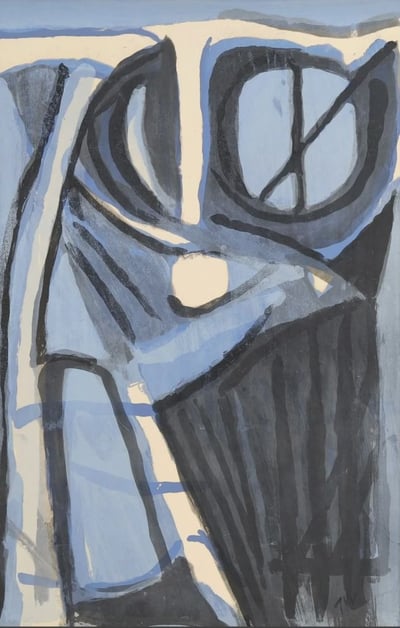
Bram Van Velde
MP 166, 1975
Limited Edition Print
Lithograph
EUR 2,350
Bram Van Velde
MP 167, 1975
Limited Edition Print
Lithograph
EUR 2,350
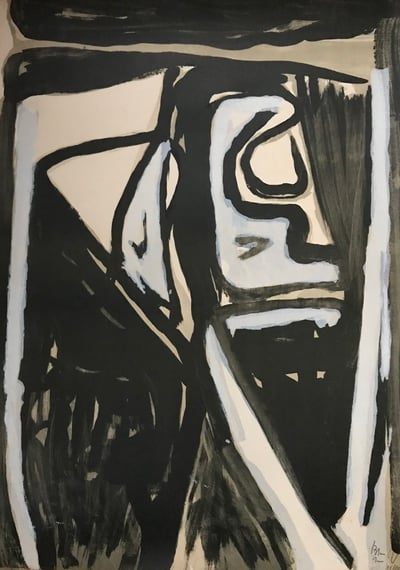
Bram Van Velde
Déchirure, 1977
Limited Edition Print
Lithograph
EUR 1,875
Related Artists
Related Articles
Popular, Art Movements - November 20, 2024
Understanding Abstract Expressionism: Emotion and Gesture
Explore the emotional depth of Abstract Expressionism! Discover how artists like Pollock and Rothko used gesture and color to convey human complexity.Read More

Artwork by Francois Morellet
What is geometric abstract art?
Geometric abstraction is a form of abstract art that uses geometric shapes arranged in a non-illusionistic space (though not always) and combined into non-representational (non-objective) compositions. Based on years of artistic research, some artists have proposed that geometric abstraction offers a solution to modern challenges by rejecting traditional illusionistic practices in favor of clarity and simplicity.
Bram Van Velde
MP 167, 1975
99 x 62.5 cm


