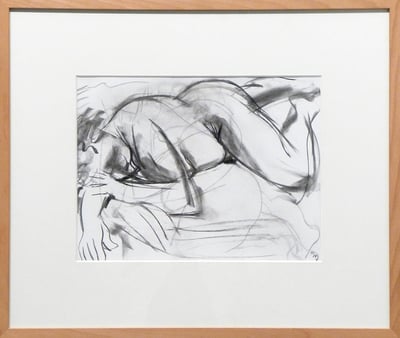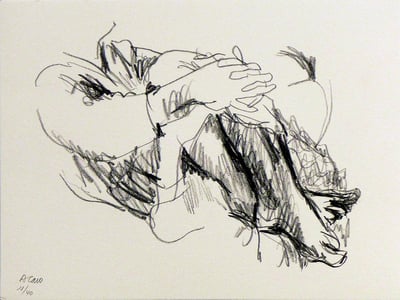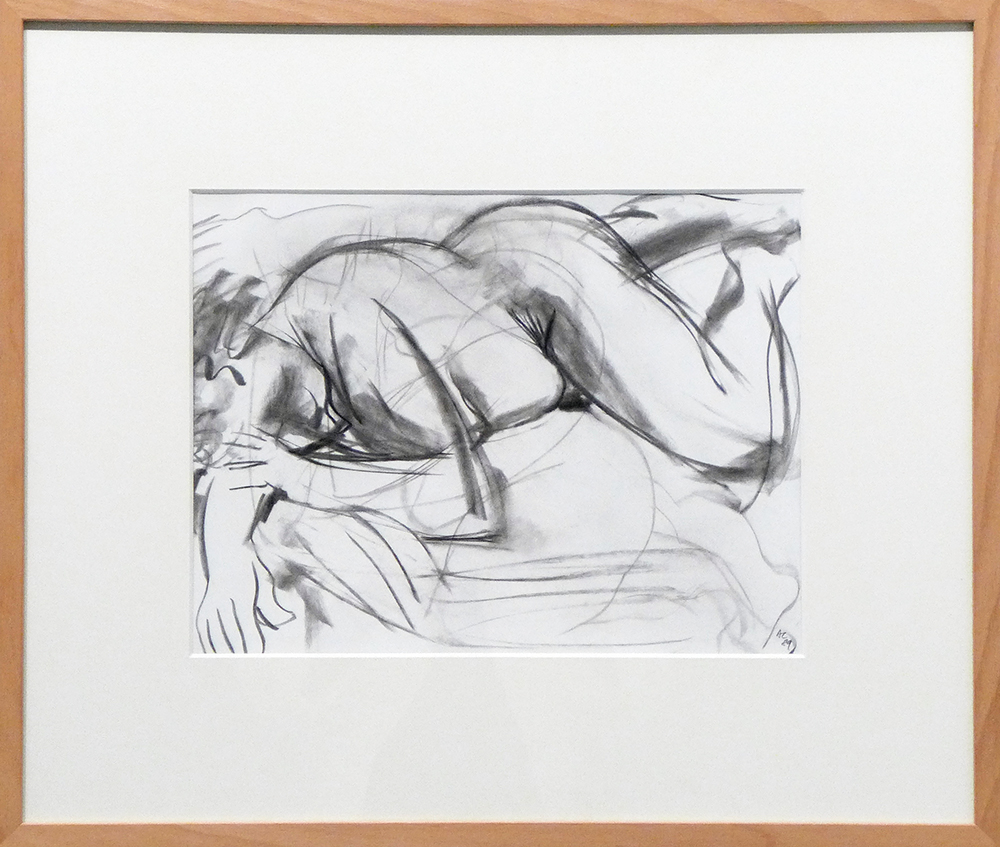
Anthony Caro's Sin título (1984) is a dynamic pencil drawing on paper, measuring 32 x 43.7 cm. The artwork captures a figure in motion, outlined with expressive, fluid lines that convey both energy and a sense of intimacy. The sketch-like quality and spontaneity in the strokes emphasize movement and form, inviting viewers into a moment of vulnerability and contemplation. Caro's approach, typically associated with his mastery in sculpture, translates into this drawing, showcasing his ability to create depth and presence using minimal means. The composition has a raw, emotive quality that reflects the artist's intuitive engagement with human expression.
Anthony Caro (UK, 1924–2013) was a pioneering modernist sculptor known for his abstract, large-scale works in steel. Rejecting traditional pedestals, he placed sculptures directly on the ground, inviting viewer interaction. Influenced by Constructivism and American Abstract Expressionism, Caro transformed post-war sculpture, leaving a lasting legacy in contemporary art.
PencilA pencil is a writing and drawing tool with a core of solid pigment, typically graphite or colored, encased in a protective layer of wood or composite material. Pencils make marks on paper by transferring part of the core pigment onto the surface.
Size
Inches
Centimeters
32 X 43.7 cm
Edition
Unique work
Price
5,000 – 7,000 EUR
Authenticity Guaranteed
Insured Shipping
Online Since 2005
Share
●Inventory 11529
●Signed
●Comes with gallery invoice and certificate
●Any questions?
Pencil on paper
Anthony Caro's Sin título (1984) is a dynamic pencil drawing on paper, measuring 32 x 43.7 cm. The artwork captures a figure in motion, outlined with expressive, fluid lines that convey both energy and a sense of intimacy. The sketch-like quality and spontaneity in the strokes emphasize movement and form, inviting viewers into a moment of vulnerability and contemplation. Caro's approach, typically associated with his mastery in sculpture, translates into this drawing, showcasing his ability to create depth and presence using minimal means. The composition has a raw, emotive quality that reflects the artist's intuitive engagement with human expression.
Anthony Caro (UK, 1924–2013) was a pioneering modernist sculptor known for his abstract, large-scale works in steel. Rejecting traditional pedestals, he placed sculptures directly on the ground, inviting viewer interaction. Influenced by Constructivism and American Abstract Expressionism, Caro transformed post-war sculpture, leaving a lasting legacy in contemporary art.
I don't think that sculpture belongs in everyday life like a table does, or like a chair.
- Anthony Caro
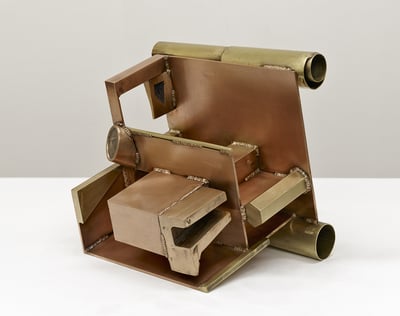
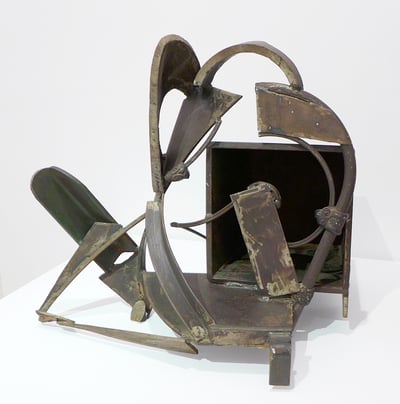
Sir Anthony Caro was an English sculptor who created abstract, geometrical metal pieces during his illustrious career. Anthony Caro’s style was derived from the modernist school after having being inspired and taught by Henry Moore early on. The artists experimented with abstract metal sculptors that were constructed from aluminum tubing, and steel beams, along with metal plates and rods. Often times, he referred to the materials as found industrial objects. Anthony Caro either welded or bolted these prefabricated pieces and materials together in order to form suggestive shapes. Anthony Caro would then paint the sculpture with a uniform color. Anthony Caro’s sculptures were typically large in size, linear in shape, and limitless in character. Some of his pieces stuck to far more uncompromising angles; for example Sailing Tonight, (1971-74) however the majority of his signature pieces suggest more flow and movement. Some even appear to suggest the feeling and sense of weightlessness. For example Anthony Caro’s Ledge Piece (1978) appears to pour over its high balance due to the pull of gravity.Later in his career, Anthony Caro returned to a far more traditional style. He sculpted semi abstract figures out bronze materials. Anthony Caro is considered to be one of the most important English sculptors ever born, and a tremendous influence on young sculptors to this day. (Artist website)
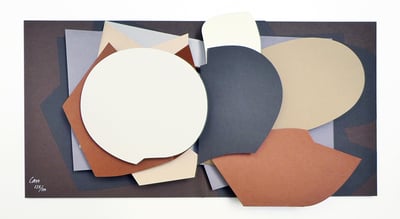
Geometric abstraction is a form of abstract art that uses geometric shapes arranged in a non-illusionistic space (though not always) and combined into non-representational (non-objective) compositions. Based on years of artistic research, some artists have proposed that geometric abstraction offers a solution to modern challenges by rejecting traditional illusionistic practices in favor of clarity and simplicity.