Details
Artist
Styles
Bronze and Brass // House Pitch by Anthony Caro, created in 2011, is a sculptural object made of bronze and brass. This work features a geometric, industrial aesthetic, characterized by its intersecting planes and tubular elements. The sculpture combines rigid, angular shapes with smooth, cylindrical components, showcasing a balance between solidity and openness. The metallic surfaces highlight the artist’s use of both bronze and brass, materials traditionally associated with strength and durability, yet arranged here in a way that suggests architectural forms or abstract structures. Caro’s work often explores spatial relationships, and this piece evokes a sense of dynamic balance and structural integrity.
House Pitch, 2011
form
Medium
Size
39.5 x 39.5 X 33 cm
- Inches
- Centimeters
Edition
Price
Details
Artist
Styles
Bronze and Brass // House Pitch by Anthony Caro, created in 2011, is a sculptural object made of bronze and brass. This work features a geometric, industrial aesthetic, characterized by its intersecting planes and tubular elements. The sculpture combines rigid, angular shapes with smooth, cylindrical components, showcasing a balance between solidity and openness. The metallic surfaces highlight the artist’s use of both bronze and brass, materials traditionally associated with strength and durability, yet arranged here in a way that suggests architectural forms or abstract structures. Caro’s work often explores spatial relationships, and this piece evokes a sense of dynamic balance and structural integrity.
- Recently Added
- Price (low-high )
- Price (high-low )
- Year (low-high )
- Year (high-low )

Anthony Caro
House Pitch, 2011
Sculpture / Object
Object
Inquire For Price

Anthony Caro
Sin Título, 1984
Drawing / Watercolor
Pencil
EUR 5,000 - 7,000

Anthony Caro
Table Piece Y-30, 1984
Sculpture / Object
Object
Inquire For Price

Anthony Caro
Table Piece Z-39, 1981
Sculpture / Object
Object
Inquire For Price

Anthony Caro
Table Piece S-13, 1994
Sculpture / Object
Object
Inquire For Price

Anthony Caro
Low Table Piece CCCCXXXI, 1977
Sculpture / Object
Object
Inquire For Price

Anthony Caro
Leaf Pool, 1996 - 2000
Limited Edition Print
Assemblage
EUR 2,500 - 4,000

Anthony Caro
Untitled (Human Figure), 2003
Limited Edition Print
Lithograph
EUR 1,600
Related Artists


Related Articles
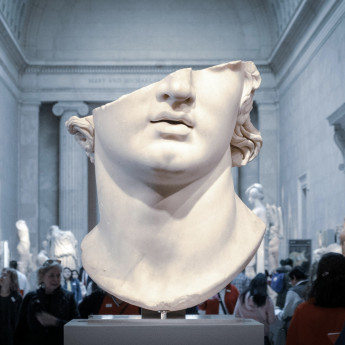
Popular, Collecting - July 23, 2025
Sculpture Care and Display: From Plinths to Pedestals in Your Home
Learn how to display and care for sculpture at home—from lighting tips to material care—so your art can truly shine in any space. Read More


What is minimalism?
Minimalism is a style in music and visual arts characterized by pared-down designs and simplicity. It began in Western art after World War II, gaining prominence particularly in American visual arts. Minimalism draws heavily on aspects of modernism and is often viewed as a reaction against Abstract Expressionism, as well as a precursor to post-minimal art practices. Prominent minimalist artists include Agnes Martin, Donald Judd, Robert Morris, Frank Stella, and Dan Flavin.