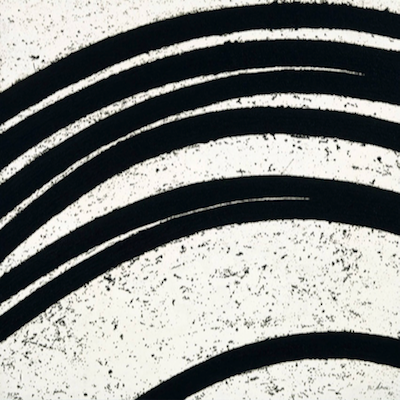
What is Postminimalism?
Postminimalism refers to a range of art styles that emerged in the 1960s, following the Minimalism movement. While Minimalism focused on simplicity and impersonality, Postminimalist artists retained some elements of Minimalism but also explored greater expressiveness, experimenting with new materials and techniques. This movement includes various forms of art such as conceptual art, body art, performance art, process art, and site-specific works. Postminimalism represents a shift toward more personal, tactile, and process-oriented approaches to art-making.
- Show All
- Established
- Discoveries
ARTWORKS RELATED TO POSTMINIMALISM

Ann Veronica Janssens
Untitled(Tentoonstelling tussenin / in-between), 1998
Sculpture / Object
Installation
EUR 1,750

Sean Scully
Liliane 8, 2010
Limited Edition Print
Etching and Aquatint
EUR 5,750

Sean Scully
Liliane 7, 2010
Limited Edition Print
Etching and Aquatint
EUR 5,750

Sean Scully
Liliane 6, 2010
Limited Edition Print
Etching and Aquatint
EUR 5,750

Sean Scully
Liliane 5, 2010
Limited Edition Print
Etching and Aquatint
EUR 5,750

Sean Scully
Liliane 4, 2010
Limited Edition Print
Etching and Aquatint
EUR 5,750

Sean Scully
Liliane 3, 2010
Limited Edition Print
Etching and Aquatint
EUR 5,750

Sean Scully
Liliane 2, 2010
Limited Edition Print
Etching and Aquatint
EUR 5,750

Sean Scully
Liliane 1, 2010
Limited Edition Print
Etching and Aquatint
EUR 5,750

Sean Scully
Paris Black, 2004
Limited Edition Print
Lithograph
GBP 10,000 - 14,000

Richard Serra
Untitled from The New York Collection for Stockholm, 1973
Limited Edition Print
Lithograph
GBP 7,500 - 9,750

Sean Scully
Conversation, 1986
Limited Edition Print
Woodcut
EUR 14,400

Mel Bochner
Kick Against the Pricks, 2018
Limited Edition Print
Silkscreen
Inquire For Price

Mel Bochner
Private Listing
Limited Edition Print
Monoprint
Request Info
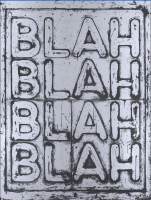
Mel Bochner
Blah Blah Blah (Inverse), 2022
Limited Edition Print
Silkscreen
Currently Not Available

Lynda Benglis
Anchor, 2010
Limited Edition Print
Etching
EUR 6,500
Related Articles

Popular, Art Movements - November 20, 2024
Understanding Abstract Expressionism: Emotion and Gesture
Explore the emotional depth of Abstract Expressionism! Discover how artists like Pollock and Rothko used gesture and color to convey human complexity. Read More

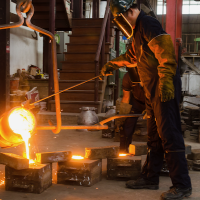
Bronze is a metal alloy made primarily of copper and tin, with a typical modern composition of 88% copper and 12% tin. Over time, bronze develops a patina, a surface color that often turns deep green due to oxidation. Large bronze objects, such as sculptures, are typically made in foundries. Bronze is valued for its durability and has been widely used throughout history for art, tools, and weapons.

Mezzotint is a printmaking technique in which a copper or steel plate is roughened to produce a solid black print. The artist smooths specific areas of the plate to create a range of tones, from deep blacks to delicate grays and whites. By varying the degree of smoothing, the artist can achieve detailed gradations of light and shadow, resulting in prints with rich, velvety textures and subtle transitions between light and dark.