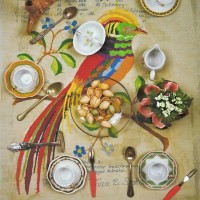
What is Oil on Board?
Oil on board is a painting technique where oil paint is applied to either wood panels that have been sanded and primed or high-density cardboard covered with canvas. These surfaces offer the advantage of being more compact for storage compared to traditional stretched canvas on frames, while still providing a stable surface for painting.
Show All
- Show All
- Established
- Discoveries
Show All
ARTWORKS RELATED TO OIL ON BOARD

Alex Katz
Study for black brook IV, 1989
Painting
Oil on board
Inquire For Price
Related Articles

Collecting - April 19, 2024
A Collector's Guide to Oil, Acrylic, and Watercolor
Navigate the art of collecting with this guide to oil, acrylic, and watercolor! Explore their unique qualities and how they shape aesthetic and investment value. Read More


Animation is the process of displaying a sequence of static images in rapid succession to create the illusion of movement. Each image, or frame, is slightly altered from the previous one, particularly in the moving parts, so when shown together, they form a continuous motion. Traditionally, illustrators drew each frame by hand to produce this effect.

Viennese Actionism was a short-lived but intense art movement in the 20th century, emerging as part of the broader action art efforts of the 1960s. Known for its violent and provocative performances, the movement sought to break traditional art boundaries. Key figures in this movement included Arnulf Rainer and Hermann Nitsch.