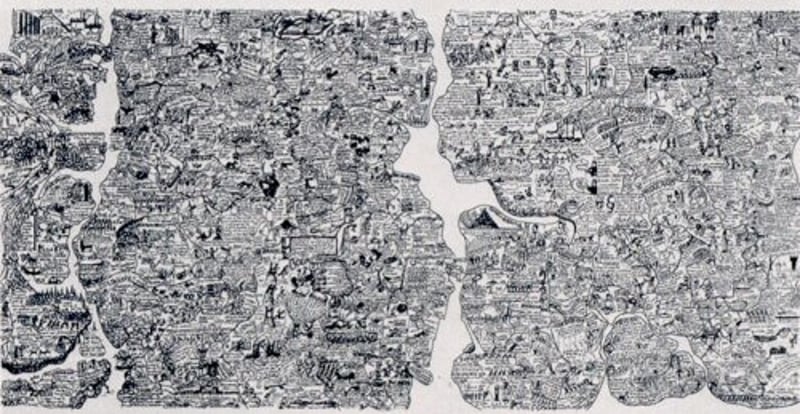
Öyvind Fahlström’s World Map from 1973 is a complex, densely illustrated silkscreen print that offers a unique, interpretative vision of global geography and socio-political commentary. This limited-edition piece intricately combines fragmented, cartoon-like figures, text, and symbolic imagery that represent various global issues, cultures, and historical references. Fahlström’s style, rich in detail and satire, invites the viewer to explore and decode the relationships between different regions, icons, and themes presented on this unconventional “map.” His work challenges traditional cartography by using visual metaphors to address the complexities of political and cultural dynamics worldwide, making each exploration a layered, thought-provoking experience.
Artwork Copyright © Oyvind FahlstromÖyvind Fahlström (Sweden/Brazil, 1928–1976) was a pioneering multimedia artist blending painting, performance, and interactive installations. Known for his playful yet political works, he explored themes of capitalism, media, and social systems, often using comic-inspired visuals and dynamic compositions.
Artwork Copyright © Oyvind FahlstromWorld map, 1973
Form
Medium
Size
- Inches
- Centimeters
Edition
Price
Available works →
- Authenticity Guaranteed
- Insured Shipping
- Online Since 2005
●
●Inventory 2968
●Signed
●Comes with gallery invoice and certificate
●Sell Us a Similar Artwork. Learn more.
Öyvind Fahlström’s World Map from 1973 is a complex, densely illustrated silkscreen print that offers a unique, interpretative vision of global geography and socio-political commentary. This limited-edition piece intricately combines fragmented, cartoon-like figures, text, and symbolic imagery that represent various global issues, cultures, and historical references. Fahlström’s style, rich in detail and satire, invites the viewer to explore and decode the relationships between different regions, icons, and themes presented on this unconventional “map.” His work challenges traditional cartography by using visual metaphors to address the complexities of political and cultural dynamics worldwide, making each exploration a layered, thought-provoking experience.
Artwork Copyright © Oyvind FahlstromÖyvind Fahlström (Sweden/Brazil, 1928–1976) was a pioneering multimedia artist blending painting, performance, and interactive installations. Known for his playful yet political works, he explored themes of capitalism, media, and social systems, often using comic-inspired visuals and dynamic compositions.
Artwork Copyright © Oyvind Fahlstrom- Recently Added
- Price (Low-High)
- Price (High-Low)
- Year (Low-High)
- Year (High-Low)
Oyvind Fahlstrom
World map, 1973
Limited Edition Print
Silkscreen
Currently Not Available
Related Artists
Related Articles
Popular, Artists, Art Movements, Collecting - August 23, 2026
The ZERO Movement: Collecting Günther Uecker and the Art of a New Beginning
Explore the ZERO Movement and learn how to collect Günther Uecker editions, from embossed prints and sand works to multiples, provenance and condition.Read More

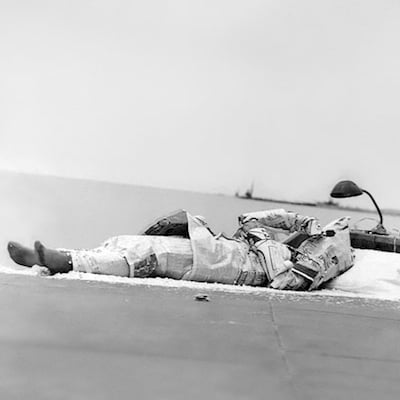
Artwork © Allan Kaprow’s “Happenings”
What is Happening?
A Happening is a term used to describe artistic and theatrical events held by artists in the 1950s and 60s. These events were typically staged in gallery installations or planned environments and often involved audience participation, along with elements like lighting, sounds, and slide projections. Happenings were a precursor to performance art, which later included the active participation of the artists themselves.

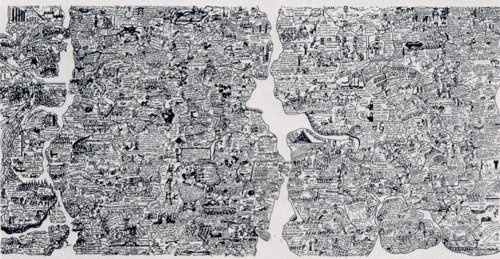
Oyvind Fahlstrom
World map, 1973
56 x 107 cm


