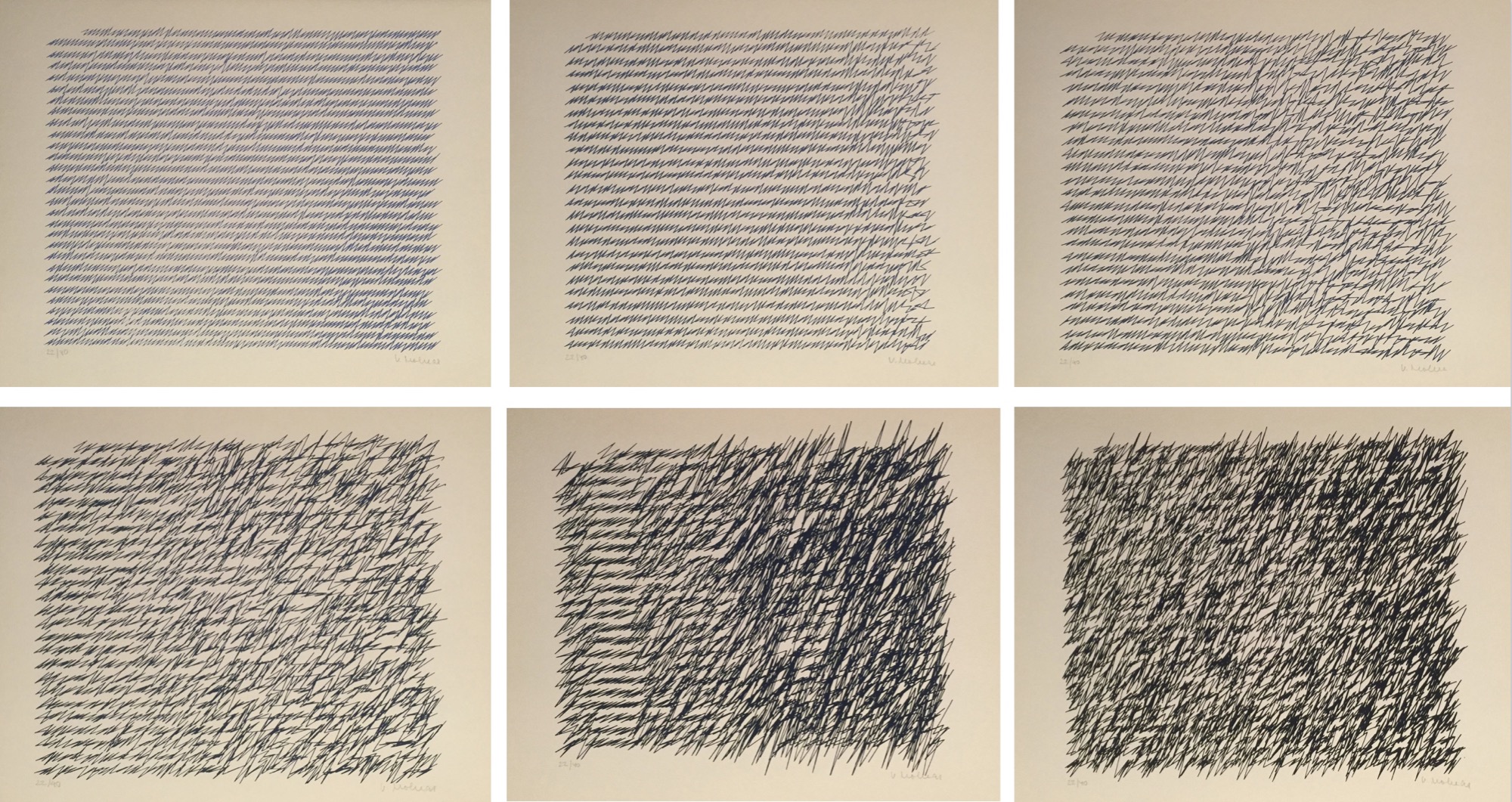
Serigraphy after plotter drawing.
- Portfolio of 6 prints.
- The prints have been professionally laminated.
- Edition: Museum Vasarely Budapest, 1990.
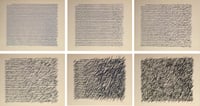
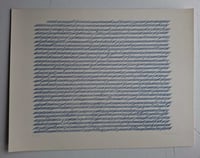
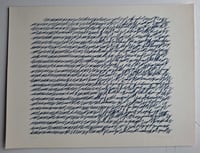
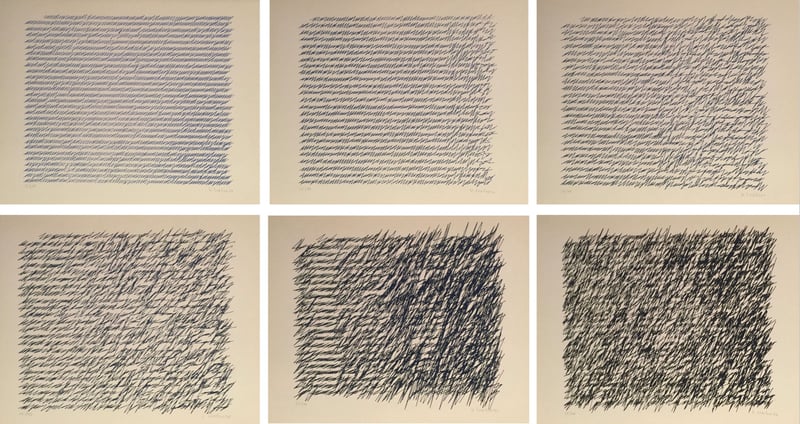
Lettres de ma mère (6) by Vera Molnar is a limited edition portfolio of six serigraphs created in 1990, drawing from her background in algorithmic and computer-generated art. Each print features densely layered, abstract forms that resemble handwritten letters, arranged in a grid that gradually intensifies from sparse to heavily filled spaces. The work appears to echo the visual rhythms of handwriting, creating a textured landscape of marks that both hint at and obscure language. Molnar, a pioneer in digital and algorithmic art, often explores the tension between systematic repetition and organic variation, inviting viewers to reflect on the nature of communication, memory, and the abstraction of personal connections. Produced by the Vasarely Museum in Budapest, this portfolio exemplifies Molnar’s unique approach to merging art with mathematics.
Artwork Copyright © Vera MolnarVera Molnar (Hungary/France, 1924–2023) was a trailblazer in generative and digital art, celebrated for her algorithmic approach to abstraction. Combining art and technology, she created geometric compositions exploring order, randomness, and aesthetic balance. As one of the first artists to use computers in art, Molnar profoundly shaped modern computational creativity.
Artwork Copyright © Vera MolnarLettres de ma mère (6), 1990
Form
Medium
Size
- Inches
- Centimeters
Edition
Price
- USD
- EUR
- GBP
- CHF
- Authenticity Guaranteed
- Insured Shipping
- Online Since 2005
●Inventory 6147
●Signed
●Comes with gallery invoice and certificate
●Sell Us a Similar Artwork. Learn more.
Serigraphy after plotter drawing.
- Portfolio of 6 prints.
- The prints have been professionally laminated.
- Edition: Museum Vasarely Budapest, 1990.
Lettres de ma mère (6) by Vera Molnar is a limited edition portfolio of six serigraphs created in 1990, drawing from her background in algorithmic and computer-generated art. Each print features densely layered, abstract forms that resemble handwritten letters, arranged in a grid that gradually intensifies from sparse to heavily filled spaces. The work appears to echo the visual rhythms of handwriting, creating a textured landscape of marks that both hint at and obscure language. Molnar, a pioneer in digital and algorithmic art, often explores the tension between systematic repetition and organic variation, inviting viewers to reflect on the nature of communication, memory, and the abstraction of personal connections. Produced by the Vasarely Museum in Budapest, this portfolio exemplifies Molnar’s unique approach to merging art with mathematics.
Artwork Copyright © Vera MolnarVera Molnar (Hungary/France, 1924–2023) was a trailblazer in generative and digital art, celebrated for her algorithmic approach to abstraction. Combining art and technology, she created geometric compositions exploring order, randomness, and aesthetic balance. As one of the first artists to use computers in art, Molnar profoundly shaped modern computational creativity.
Artwork Copyright © Vera Molnar- Recently Added
- Price (Low-High)
- Price (High-Low)
- Year (Low-High)
- Year (High-Low)

Vera Molnar
Lettres de ma mère (6), 1990
Limited Edition Print
Serigraph
EUR 4,950
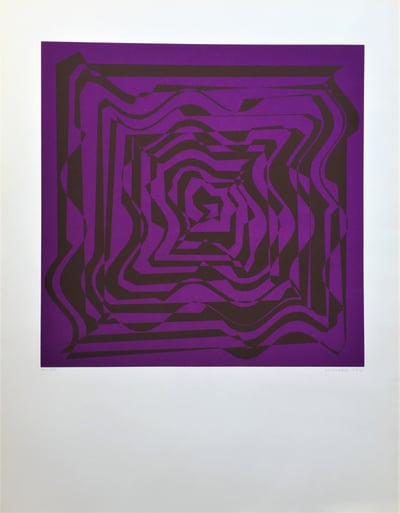
Vera Molnar
Hyper transformation, 1974
Limited Edition Print
Screen-print
Currently Not Available
Related Artists
Related Articles

News, Art Movements - July 28, 2023
The Conundrum of Technology's Experiment with Contemporary Art: A Mercurial Maiden Voyage
Discover how technology transforms contemporary art, blending innovation with creativity. Explore challenges of authenticity, access, and digital expression.Read More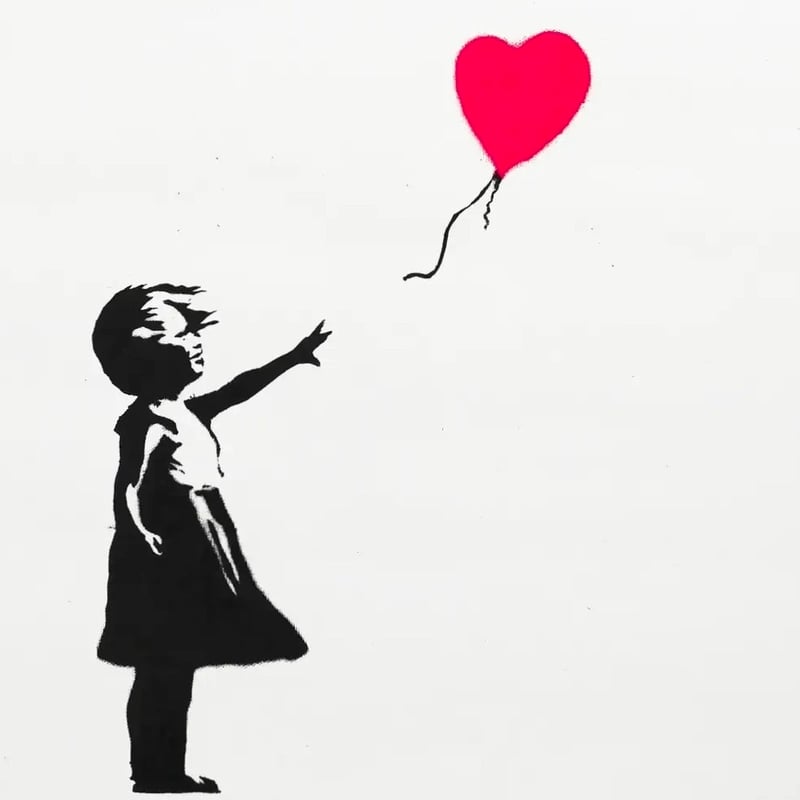

Artwork by Francois Morellet
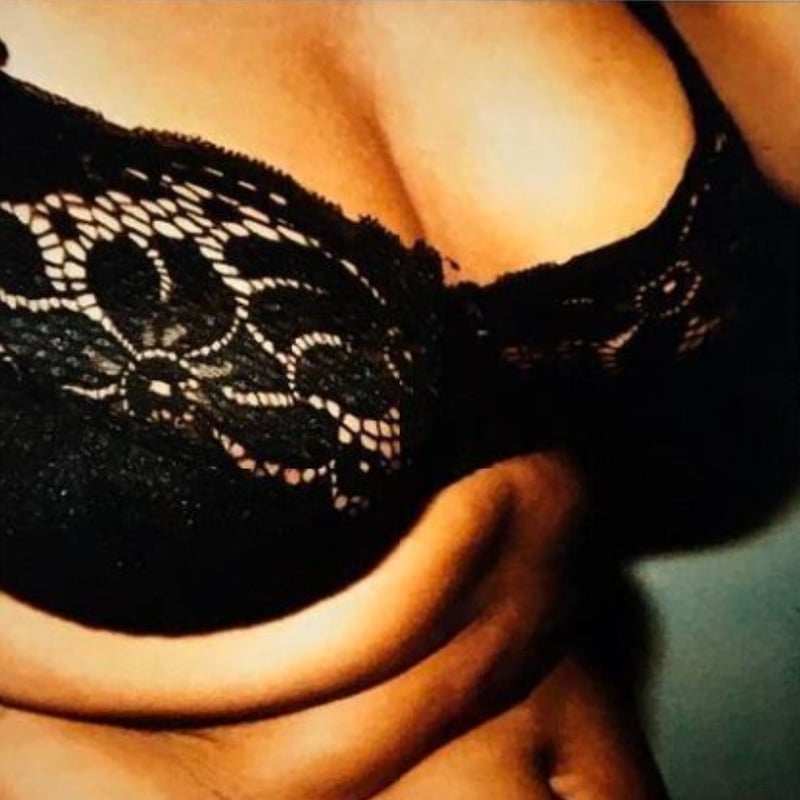
What is geometric abstract art?
Geometric abstraction is a form of abstract art that uses geometric shapes arranged in a non-illusionistic space (though not always) and combined into non-representational (non-objective) compositions. Based on years of artistic research, some artists have proposed that geometric abstraction offers a solution to modern challenges by rejecting traditional illusionistic practices in favor of clarity and simplicity.
Vera Molnar
Lettres de ma mère (6), 1990
32 x 42 cm


