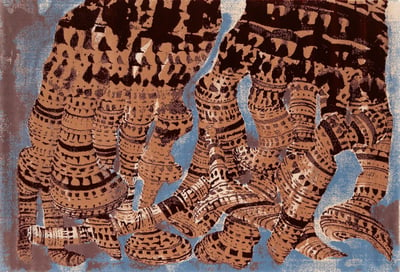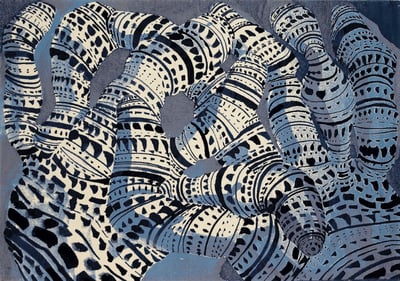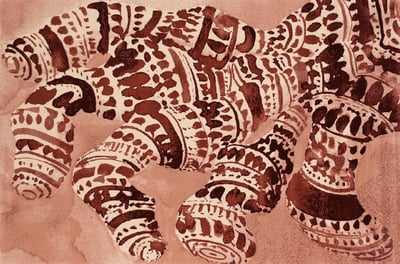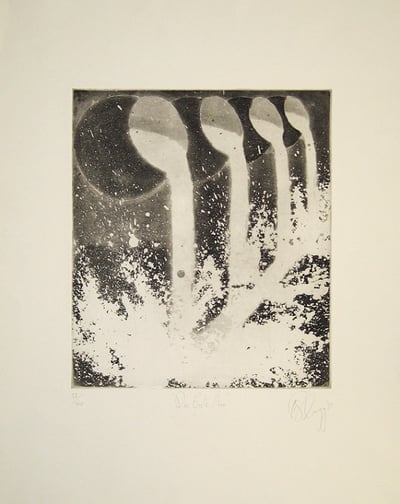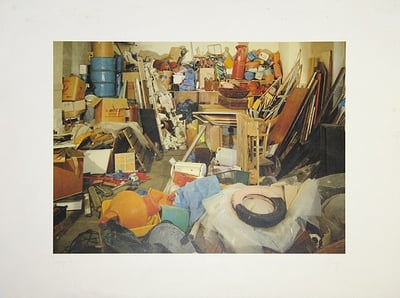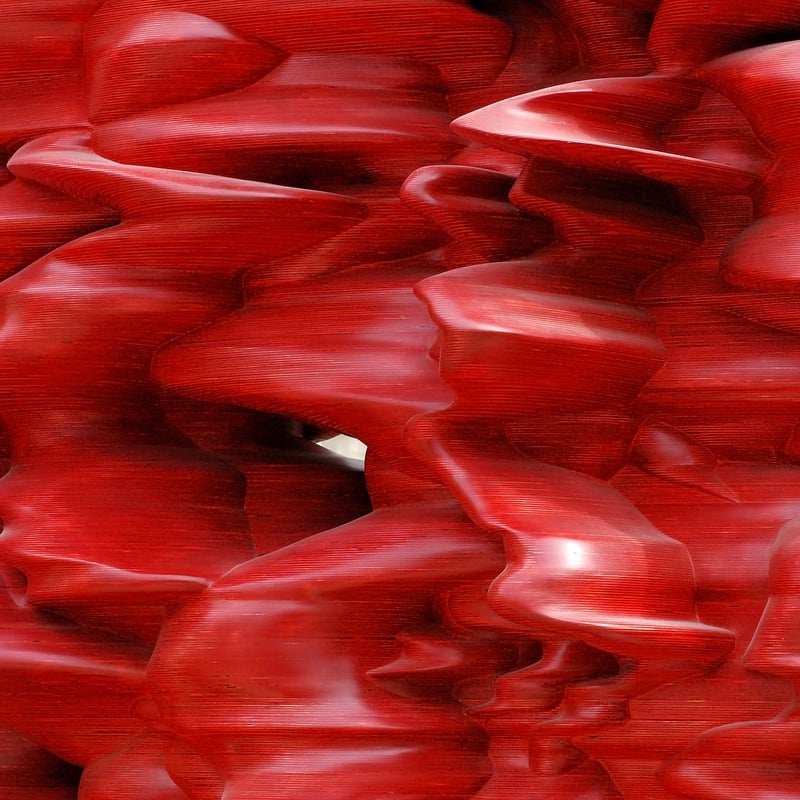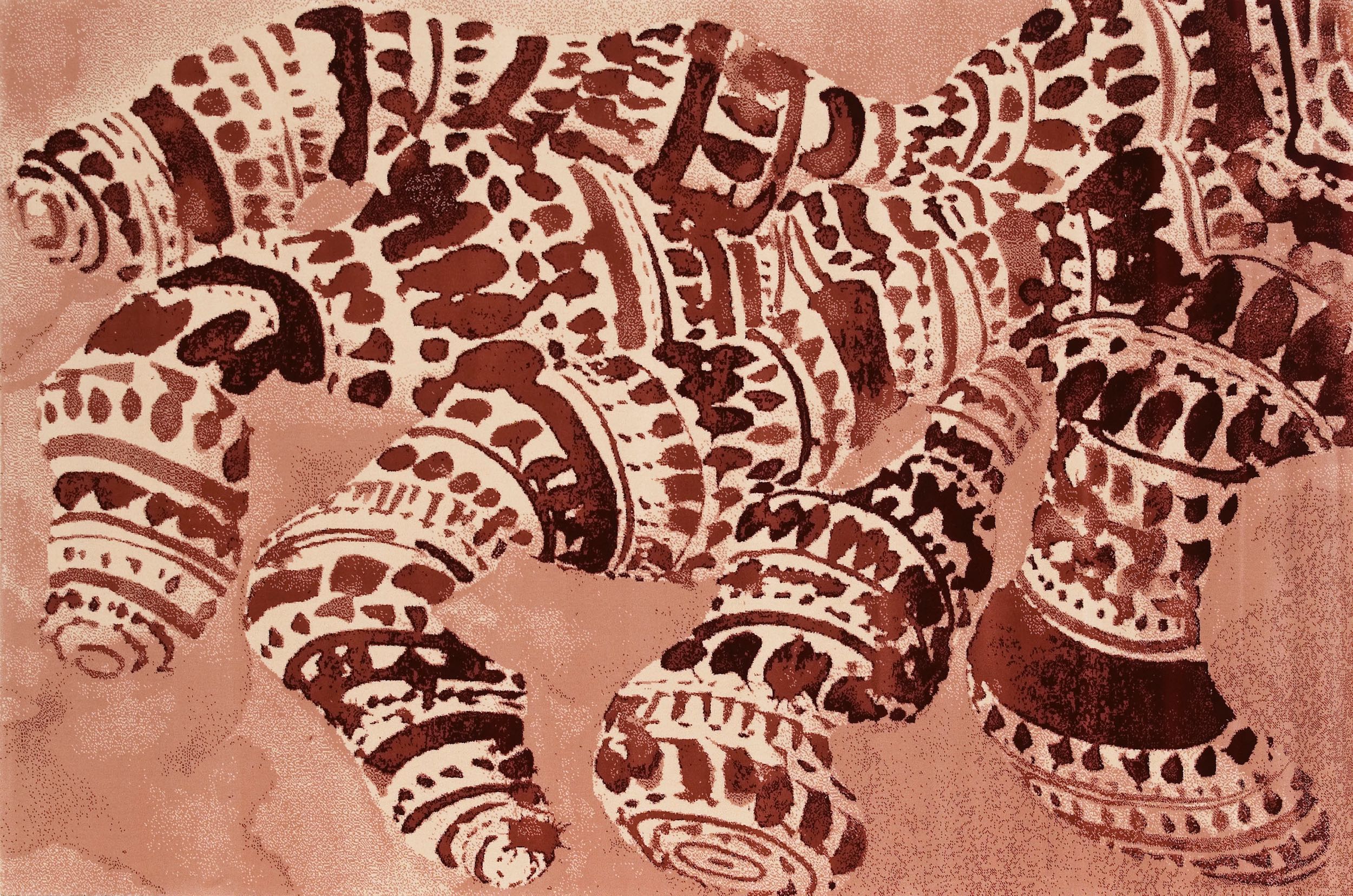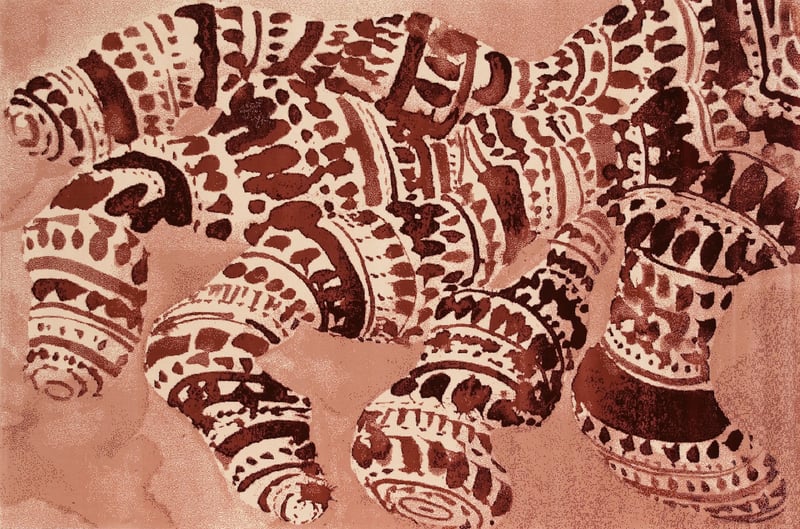
Form Code (Red) by Tony Cragg, created in 2006, is a tapestry that explores organic patterns through an abstract and intricate design in warm red and earthy tones. The composition features tubular forms that twist and coil, adorned with repetitive, tribal-like patterns that evoke textures found in natural objects like coral, shells, or even ancient artifacts. The deep reds and subtle gradients create a sense of depth and movement, making the shapes appear almost three-dimensional as they seem to flow across the tapestry. Cragg’s fascination with the complexity of organic forms and their structural intricacies is evident, encouraging viewers to interpret the piece as a representation of life’s interconnectedness and growth.
Tony Cragg (UK, 1949) is an influential sculptor known for his innovative use of materials, including wood, metal, plastic, and glass. His abstract, dynamic forms explore the relationship between nature, man-made objects, and space. A Turner Prize winner, Cragg’s work has been exhibited globally, cementing his legacy in contemporary sculpture.
TapestryTapestry is a heavy, handwoven textile featuring intricate designs or images woven directly into the fabric. Created by skilled weavers using materials like wool, linen, cotton, silk, and sometimes silver and gold threads, tapestries have historically served as art pieces, decorations, insulation, and symbols of authority.
Size
Inches
Centimeters
200 X 300 cm
Edition
Edition of 36
Price
USD
EUR
GBP
CHF
7,500EUR
?
+ VAT/import Duties (if applicable)
Authenticity Guaranteed
Insured Shipping
Online Since 2005
Share
●Inventory 3475
●Signed
●Comes with gallery invoice and certificate
●Any questions?
With certificate signed by the artist
Form Code (Red) by Tony Cragg, created in 2006, is a tapestry that explores organic patterns through an abstract and intricate design in warm red and earthy tones. The composition features tubular forms that twist and coil, adorned with repetitive, tribal-like patterns that evoke textures found in natural objects like coral, shells, or even ancient artifacts. The deep reds and subtle gradients create a sense of depth and movement, making the shapes appear almost three-dimensional as they seem to flow across the tapestry. Cragg’s fascination with the complexity of organic forms and their structural intricacies is evident, encouraging viewers to interpret the piece as a representation of life’s interconnectedness and growth.
Tony Cragg (UK, 1949) is an influential sculptor known for his innovative use of materials, including wood, metal, plastic, and glass. His abstract, dynamic forms explore the relationship between nature, man-made objects, and space. A Turner Prize winner, Cragg’s work has been exhibited globally, cementing his legacy in contemporary sculpture.
I am most interested in the emotional qualities of things.
- Tony Cragg
One of the most prominent sculptors in the world, Tony Cragg is renowned for his liberal use of a wide range of materials throughout his art. Cragg's works can vary from swirling abstractions - as seen in his Point of View piece - to political statements; Britain Seen From the North is one of his earliest outputs and is comprised of various scrap materials - the piece outlines the island of Britain and depicts a figure observing it – this figure is said to represent Cragg viewing his nation as an outsider, a theme that relates to Britain under Thatcher’s reign as Prime Minister. Materials used in Cragg’s sculptures range from wood to Kevlar to plastic – his work is designed with the idea of challenging pre-existing notions regarding certain materials; Early Forms makes use of various different containers, all of which are manipulated and assembled to take on a new form and present the viewer with a different perspective. (Artist website)
A found object is a term used to describe a man-made or natural object, or a fragment of one, that an artist discovers or purchases and keeps for inspiration or as a work of art. The artist may also modify the object or incorporate it into a collage or assemblage, transforming it into a new piece of art.