Details
Artist
Styles
Woodcut and emboss - 1 plate of 70 x 150 cm. - Printed on Somerset Satin, 410 gr. of 69,5 x 146 cm. Edition of 5 // Blueprint by Rita McBride is a limited edition woodcut created in 2011, showcasing a minimalist architectural layout rendered in white lines on a deep blue background. This large-scale piece (70 x 150 cm) captures a schematic view, evoking the aesthetic of technical drawings and architectural blueprints. The composition features an array of geometric forms and line work that represent various structural elements, with a striking diagonal line breaking the horizontal flow. Printed on high-quality Somerset Satin paper, the piece combines precision with artistic expression, blurring the lines between art and architecture. With only five prints in existence, Blueprint stands as a rare exploration of structure and design through the traditional medium of woodcut.
Details
Artist
Styles
Woodcut and emboss - 1 plate of 70 x 150 cm. - Printed on Somerset Satin, 410 gr. of 69,5 x 146 cm. Edition of 5 // Blueprint by Rita McBride is a limited edition woodcut created in 2011, showcasing a minimalist architectural layout rendered in white lines on a deep blue background. This large-scale piece (70 x 150 cm) captures a schematic view, evoking the aesthetic of technical drawings and architectural blueprints. The composition features an array of geometric forms and line work that represent various structural elements, with a striking diagonal line breaking the horizontal flow. Printed on high-quality Somerset Satin paper, the piece combines precision with artistic expression, blurring the lines between art and architecture. With only five prints in existence, Blueprint stands as a rare exploration of structure and design through the traditional medium of woodcut.
- Recently Added
- Price (low-high )
- Price (high-low )
- Year (low-high )
- Year (high-low )

Rita McBride
Mae West, 2010
Limited Edition Print
Woodcut
EUR 15,000

Rita McBride
Untitled (Rulers II), 2011
Photography
Photogravure
EUR 900

Rita McBride
Untitled (Rulers III), 2011
Photography
Photogravure
EUR 900

Rita McBride
Untitled (Rulers IV), 2011
Photography
Photogravure
EUR 900

Rita McBride
BINGO, 2014
Limited Edition Print
Offset Print
EUR 7,000

Rita McBride
Blueprint, 2011
Limited Edition Print
Woodcut
Currently Not Available
Related Artists


Related Articles

Collecting - March 27, 2025
Collecting Photography: A Beginner’s Guide to Fine Art Photos
Learn how to collect fine art photography—from print types and editioning to care tips and top photographers like Adams, Sherman, and Gursky. Read More

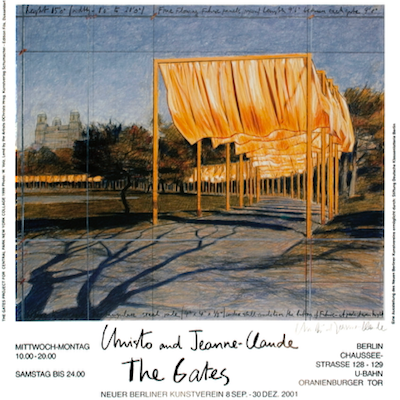
What is site specific art?
Site-Specific Art is a form of artwork created to exist in a particular location, with the artist considering the site as an integral part of the creative process. Robert Irwin was a key figure in promoting this art form in California. Site-Specific Art emerged as a reaction against modernist objects, which were often portable, commodified, and confined to museum spaces. In contrast, Site-Specific Art is inherently tied to its location, challenging the traditional notions of art as a transportable and marketable commodity.