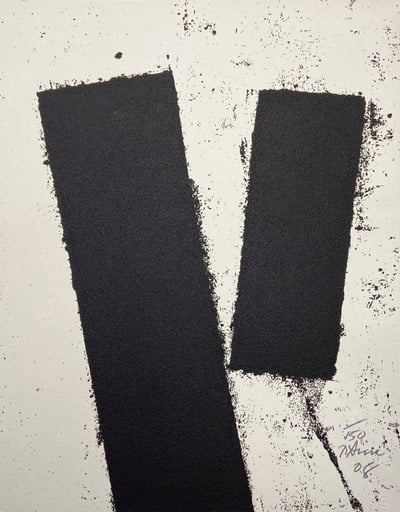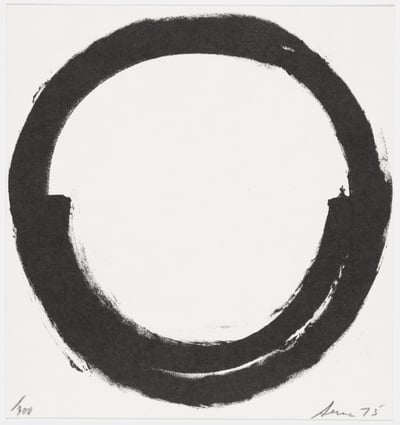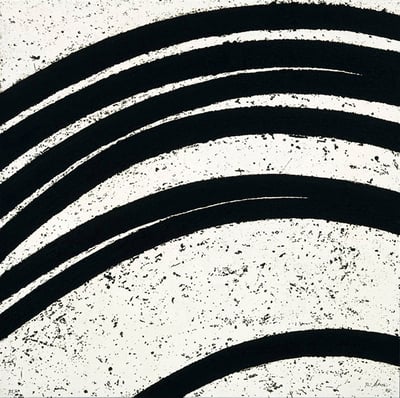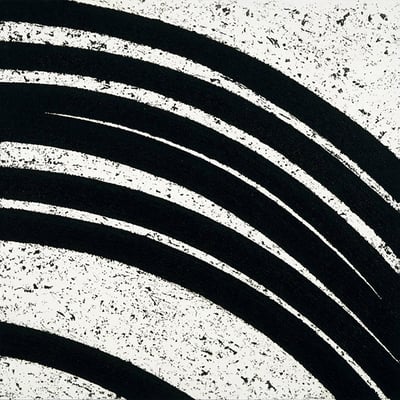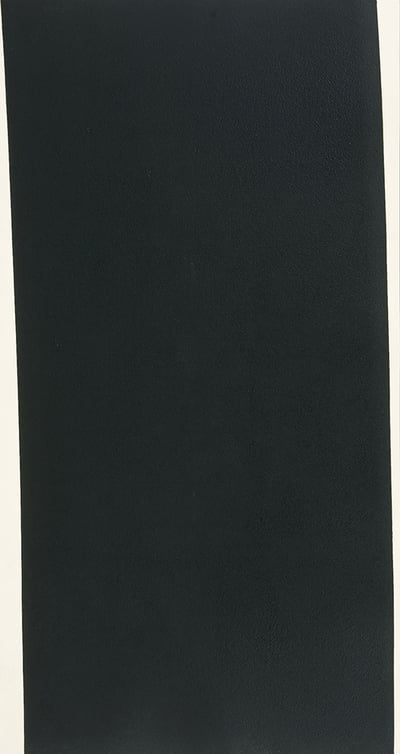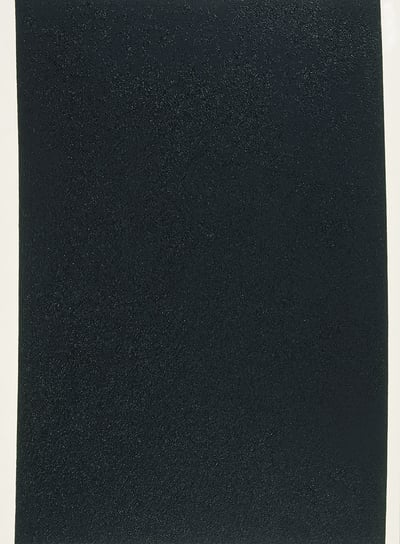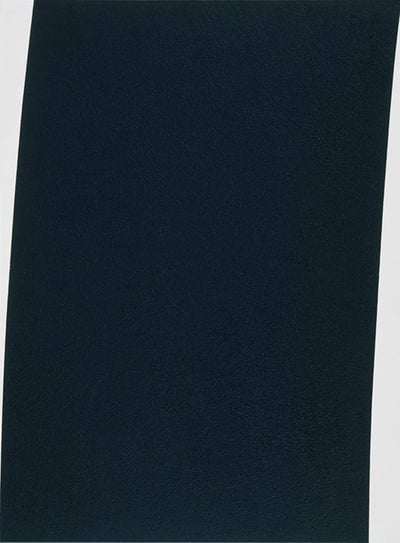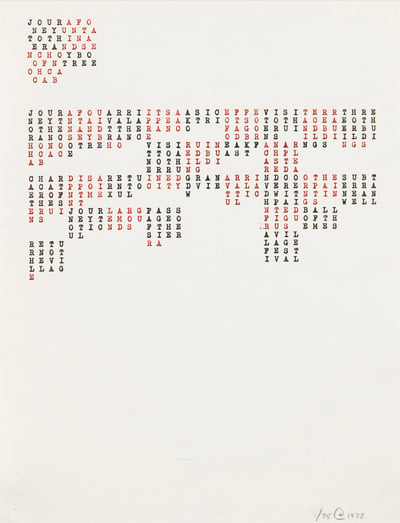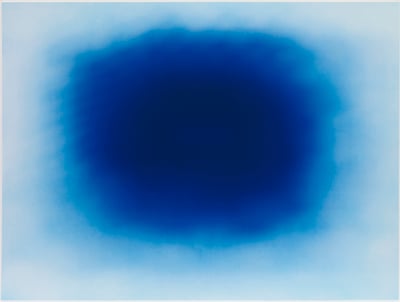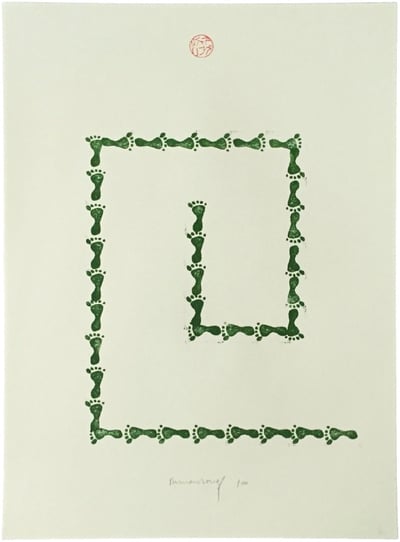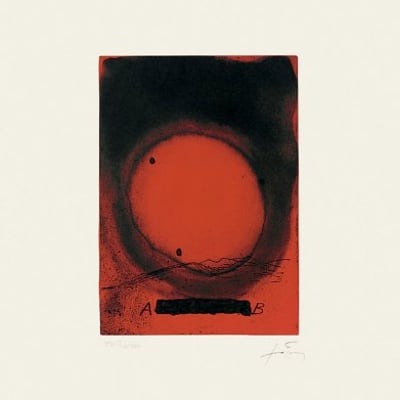
This one-color intaglio on Hahnemühle German etching paper was created by the artist in 1991. Hand-signed by the artist in pencil, dated and numbered, from the edition of 75 measuring 10 ½ x 12 in. (26.7 x 30.5 cm.) (with publisher’s blindstamp).
Literature: Richard Serra: Werkverzeichnis: Druckgrafik, 1972-2007. 2nd ed. S. Von Berswordt-Wallrabe, ed. 2008. #69.
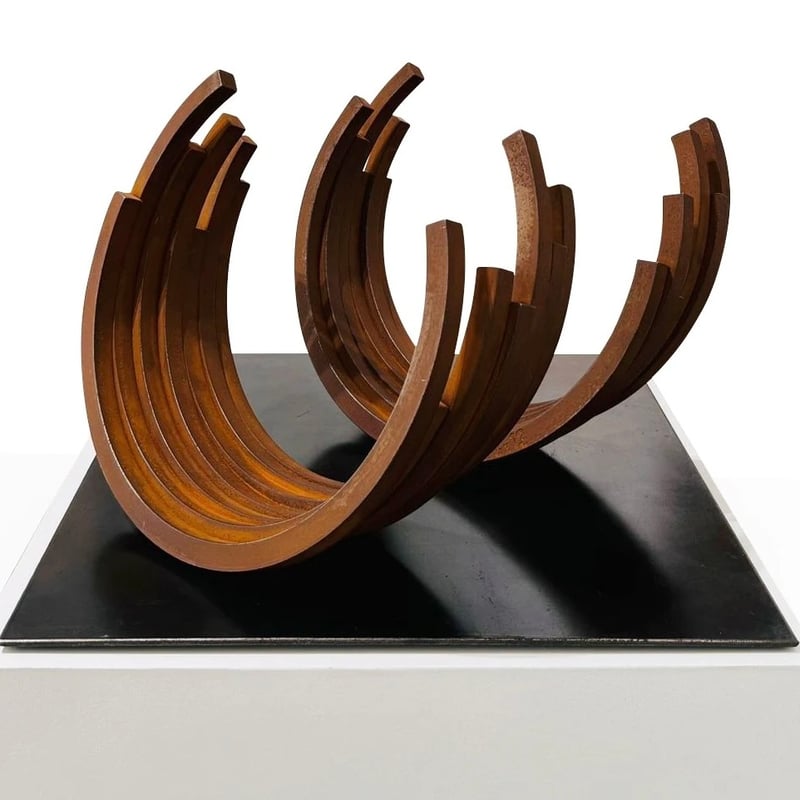
Richard Serra (USA, 1938) is a renowned sculptor and minimalist artist, celebrated for his monumental steel installations. His work explores industrial materials, scale, and spatial interaction, creating immersive environments. Serra's sculptures are housed in leading institutions worldwide, including MoMA and the Guggenheim, defining modern public art.
IntaglioIntaglio is a printmaking technique where a design is incised below the surface of a metal or stone plate. Ink is applied to the plate, filling the incised lines or depressions, while the surface is wiped clean. The ink in the depressions is then transferred to paper using an etching press. Common intaglio techniques include engraving, etching, and drypoint.
This one-color intaglio on Hahnemühle German etching paper was created by the artist in 1991. Hand-signed by the artist in pencil, dated and numbered, from the edition of 75 measuring 10 ½ x 12 in. (26.7 x 30.5 cm.) (with publisher’s blindstamp).
Literature: Richard Serra: Werkverzeichnis: Druckgrafik, 1972-2007. 2nd ed. S. Von Berswordt-Wallrabe, ed. 2008. #69.
Richard Serra (USA, 1938) is a renowned sculptor and minimalist artist, celebrated for his monumental steel installations. His work explores industrial materials, scale, and spatial interaction, creating immersive environments. Serra's sculptures are housed in leading institutions worldwide, including MoMA and the Guggenheim, defining modern public art.
Richard Serra was an American artist known primarily for his large-scale outdoor sculptures made of sheet metal and for his avant garde video work. His work is in the permanent collections of such institutions as the Guggenheim Museum in Bilbao, Spain, and the Museum of Modern Art (MoMA). He has been the recipient of many awards and fellowships, including France's prestigious Légion d’honneur, awarded to him in 2015. Although Richard Serra studied painting at Yale University, his choice of sheet metal as a medium may have had its genesis in his having worked in steel mills to support himself while doing his undergraduate work at UC Berkeley and UC Santa Barbara. Richard Serra also cites his father's having worked in a shipyard as an early influence. He initially worked with molten lead, hurling or rolling it to create various effects. This was classified as "process-based" artwork, hence his association with the Process Art movement, which prioritized the process of creating artwork over the product of the finished piece. He eventually moved on to his preferred medium of steel sheet metal, usually in staggeringly large proportions (indeed, a worker was accidentally killed in 1971 while installing the piece Sculpture No, 3 in Minneapolis, Minnesota, when a steel plate weighing two tons fell and crushed him). Richard Serra's style is minimalist, using simple but bold shapes to indicate concepts in a broad and symbolic way; the viewer's mind can fill in the details to find a personal interpretation of the message. The large scale of Richard Serra’s work ensures that the impression made is powerful and timeless, and his installations, which tend to be site-specific, often allow and encourage the viewer to walk around or through the piece, gaining a unique perspective by contemplating its immensity from close range and even from within.
A movement and style in art that originated in Italy during the 1960s. It integrates elements of minimalism, performance art, and conceptual art by using everyday or seemingly worthless materials, such as newspapers, stones, or rags. The goal was to challenge and subvert the commercialization of art.