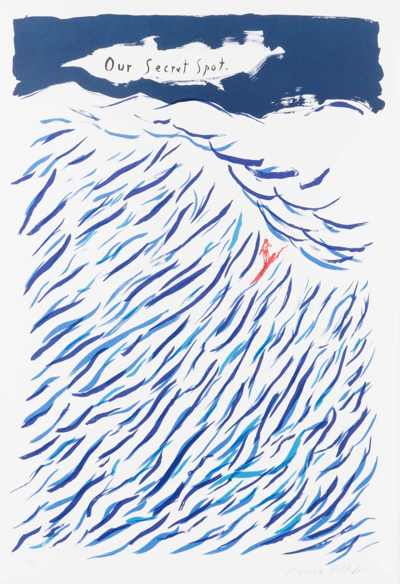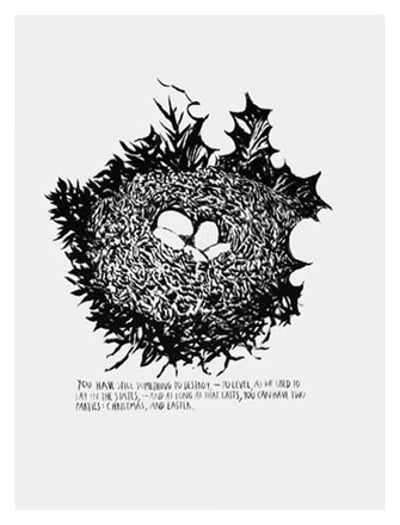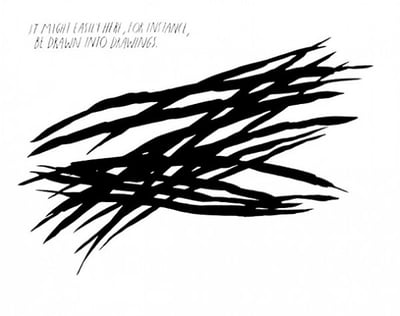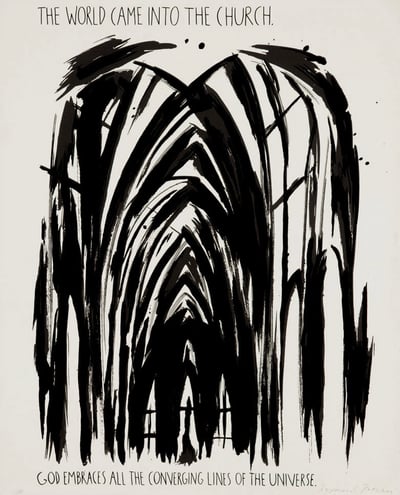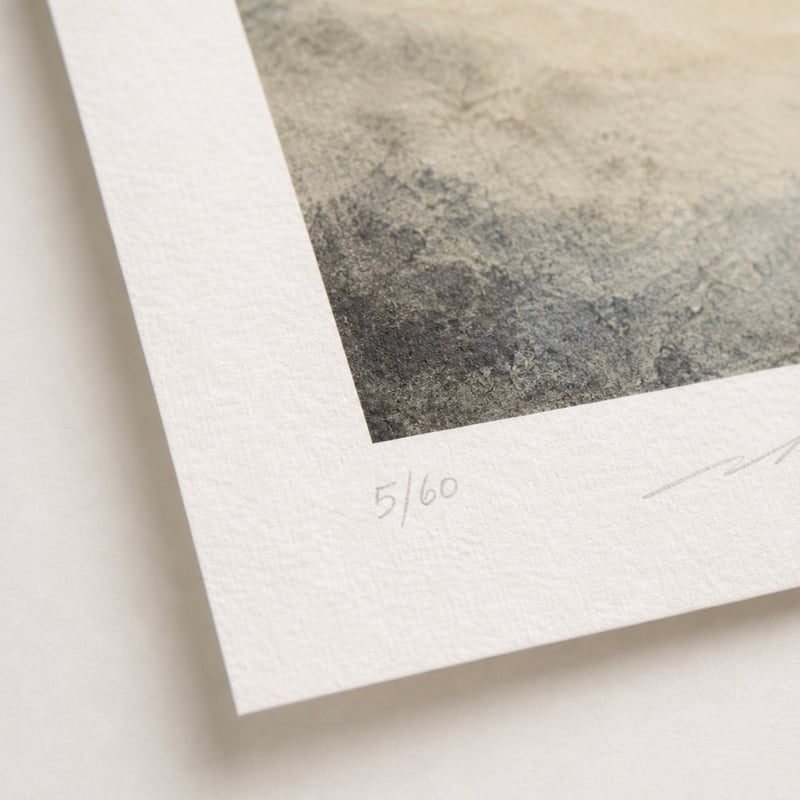
Fine screenprint, signed and dated lower right; numbered lower left in pencil by the artist.
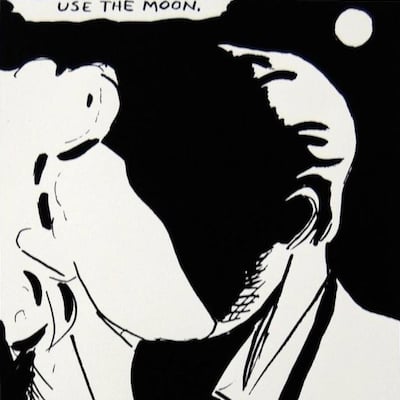
At Least I Got To See Vegas by Raymond Pettibon, a fine screenprint created in 1989, is a stark, monochromatic piece measuring 88.9 x 68.5 cm. This work encapsulates Pettibon's unique narrative style, blending dark humor with a sense of raw, gritty realism. The composition features a man lying on the ground, his face bloodied, with a solitary shoe ominously poised above him, possibly suggesting violence or a dramatic aftermath. The caption beneath, At least I got to see Vegas, injects a sardonic twist, juxtaposing the glamour of Las Vegas with the bleakness of the scene. Pettibon’s bold use of black and white and his hand-drawn lines emphasize the intensity and tension, making the image simultaneously provocative and reflective. Signed, dated, and numbered by the artist, this screenprint exemplifies Pettibon’s commentary on the darker aspects of American culture and human experience.
Raymond Pettibon (USA, 1957) is a contemporary artist known for his graphic, text-laden drawings that merge pop culture, literature, and politics. Emerging from the punk rock scene, including designing for Black Flag, Pettibon’s works explore dark humor and subversion. His distinctive style is widely exhibited in galleries and museums worldwide.
Screen-printScreen printing is a technique where ink is transferred through a mesh onto a substrate, with areas blocked by a stencil to prevent ink from passing through. This method, also known as serigraphy or silkscreen printing, is commonly used to produce prints on posters, T-shirts, vinyl, stickers, wood, and other materials. The process is a type of stencil printing, allowing for vibrant, detailed designs on various surfaces.
Fine screenprint, signed and dated lower right; numbered lower left in pencil by the artist.
At Least I Got To See Vegas by Raymond Pettibon, a fine screenprint created in 1989, is a stark, monochromatic piece measuring 88.9 x 68.5 cm. This work encapsulates Pettibon's unique narrative style, blending dark humor with a sense of raw, gritty realism. The composition features a man lying on the ground, his face bloodied, with a solitary shoe ominously poised above him, possibly suggesting violence or a dramatic aftermath. The caption beneath, At least I got to see Vegas, injects a sardonic twist, juxtaposing the glamour of Las Vegas with the bleakness of the scene. Pettibon’s bold use of black and white and his hand-drawn lines emphasize the intensity and tension, making the image simultaneously provocative and reflective. Signed, dated, and numbered by the artist, this screenprint exemplifies Pettibon’s commentary on the darker aspects of American culture and human experience.
Raymond Pettibon (USA, 1957) is a contemporary artist known for his graphic, text-laden drawings that merge pop culture, literature, and politics. Emerging from the punk rock scene, including designing for Black Flag, Pettibon’s works explore dark humor and subversion. His distinctive style is widely exhibited in galleries and museums worldwide.
Art comes after the fact, as a witness to certain things that have happened.
- Raymond Pettibon
Raymond Pettibon is a prolific contemporary American artist who is known for his drawings, which combine image and text and are often violent, ironic, and/or anti-authoritarian. Much of his illustration is political in nature, and uses black humor to critique contemporary culture. His primary medium is India ink on paper, and many of his works are black and white, although some are colored with watercolors, acrylics, pencils, gouache, or collage. His style is reminiscent of editorial cartoons, and is influenced by William Blake, Edward Hopper, and Francisco Goya. Raymond Pettibon got his start in the punk rock scene in the 1970s, and has created album covers, posters and other ephemera for bands such as Black Flag and Sonic Youth. Since 1978, he has produced limited edition photocopy booklets of his work, which he calls "Superflux Pubs," and from 1981 to 1986 he published his illustrations as an independent magazine,Tripping Corpse. Raymond Pettibon has been the recipient of a number of awards, including the Bucksbaum Award in 2004 and the University of Vienna's Oscar Kokoschka Prize in 2010. (Artist website)
Comic strip art refers to artwork that utilizes the subject matter and commercial printing techniques found in comic strips. In the 1960s, a group of artists began creating paintings that incorporated Ben-Day dots—commonly used in comics and advertising—to produce highly graphic designs in bright colors, using traditional art media.