Details
Artist
Styles
Etching and aquatint on copper plate - Printed in 2 colors - Fabriano Rosaspina paper // Presenza grafica by Pol Bury, created in 1973, is a limited-edition etching and aquatint print that plays with geometric abstraction and tonal contrast. Rendered on Fabriano Rosaspina paper, the work is characterized by overlapping rectangles, circles, and triangular forms that create a dynamic sense of movement and balance. The composition is executed in rich brown and earthy tones, which give the piece warmth and depth. Bury’s careful use of light and shadow within the shapes suggests a three-dimensionality, turning flat forms into a visually engaging, almost sculptural space. Known for his work in kinetic art and geometric abstraction, Bury explores themes of rhythm and tension, inviting viewers to engage with the subtleties of structure and form.
Details
Artist
Styles
Etching and aquatint on copper plate - Printed in 2 colors - Fabriano Rosaspina paper // Presenza grafica by Pol Bury, created in 1973, is a limited-edition etching and aquatint print that plays with geometric abstraction and tonal contrast. Rendered on Fabriano Rosaspina paper, the work is characterized by overlapping rectangles, circles, and triangular forms that create a dynamic sense of movement and balance. The composition is executed in rich brown and earthy tones, which give the piece warmth and depth. Bury’s careful use of light and shadow within the shapes suggests a three-dimensionality, turning flat forms into a visually engaging, almost sculptural space. Known for his work in kinetic art and geometric abstraction, Bury explores themes of rhythm and tension, inviting viewers to engage with the subtleties of structure and form.
- Recently Added
- Price (low-high )
- Price (high-low )
- Year (low-high )
- Year (high-low )

Pol Bury
Des Idées Et Des Ombres 2, 1973
Limited Edition Print
Etching
EUR 1,250

Pol Bury
Senza Titolo, 1980
Limited Edition Print
Screen-print
EUR 1,950

Pol Bury
Tour Montparnasse, 1990
Limited Edition Print
Etching
EUR 650

Pol Bury
Presenza Grafica, 1973
Limited Edition Print
Etching And Aquatint
Currently Not Available

Pol Bury
Des Idées Et Des Ombres 1, 1973
Limited Edition Print
Etching
Currently Not Available
Related Artists



Related Articles
Art Movements - November 21, 2022
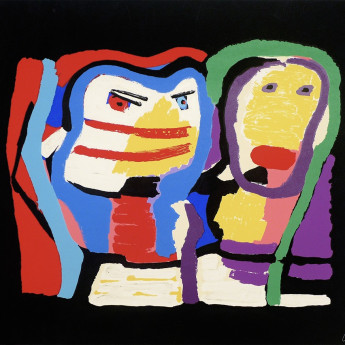
Botch, Blotch and Splotch: The Exuberant Maelstrom of the Cobra Art Movement.
Explore the CoBrA movement’s bold creativity, blending raw expression and experimentation. Discover its impact on post-war art and avant-garde traditions. Read More


Artwork by Rene Magritte
What is Surrealism?
Surrealism began in the 1920s as an art and literary movement with the goal of revealing the unconscious mind and unleashing the imagination by exploring unusual and dream-like imagery. Influenced by Sigmund Freud’s theories of psychoanalysis, Surrealist artists and writers sought to bring the unconscious into rational life, blurring the lines between reality and dreams. The movement aimed to challenge conventional perceptions and express the irrational aspects of the human experience.
RECENTLY VIEWED
-->