
Exploding Cell (Gray Plume), 1994
Form
Medium
Size
- Inches
- Centimeters
Edition
Price
- Authenticity Guaranteed
- Insured Shipping
- Online Since 2005
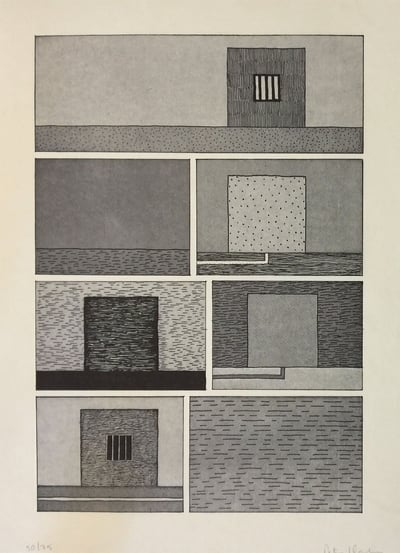
Peter Halley
Untitled (from the BAM III Portfolio), 1991
Limited Edition Print
Lithograph
USD 3,100
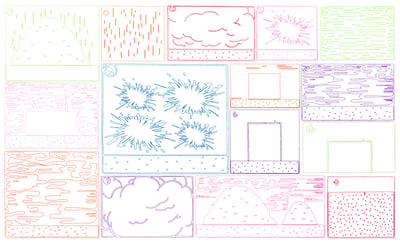
Peter Halley
Cartoon Views, 2020
Limited Edition Print
Etching
EUR 1,750
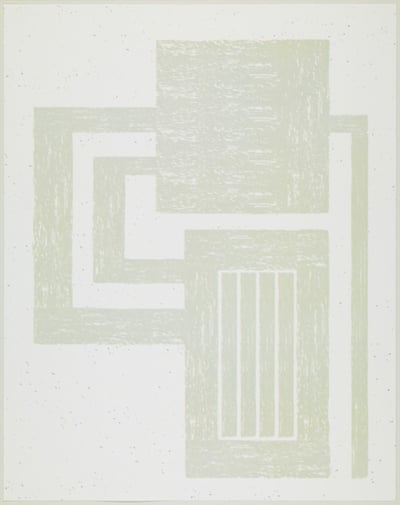
Peter Halley
Stack, 2015
Limited Edition Print
Mixed Media
EUR 3,500
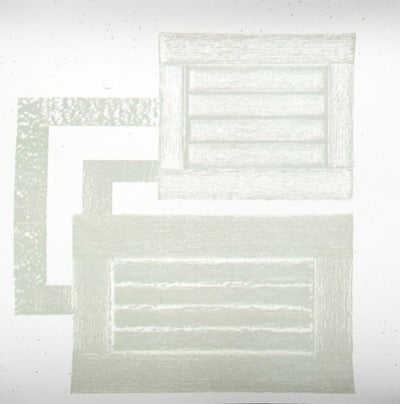
Peter Halley
Pure-Play, 2015
Limited Edition Print
Mixed Media
EUR 3,500
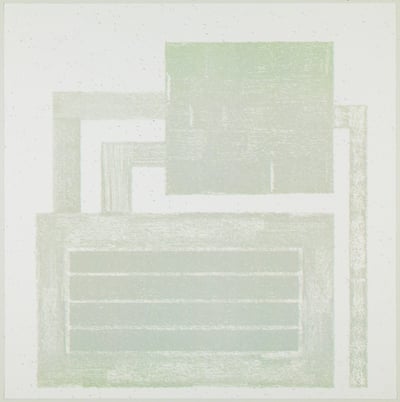
Peter Halley
Stop Word, 2015
Limited Edition Print
Mixed Media
EUR 3,500
Related Artists

Related Articles
Art Movements - April 12, 2024
The Visual Language of Geometric abstraction
Dive into the world of geometric abstraction! Discover how artists use shape, color, and space to create harmony, rhythm, and timeless expression.Read More
What is minimalism?
Minimalism is a style in music and visual arts characterized by pared-down designs and simplicity. It began in Western art after World War II, gaining prominence particularly in American visual arts. Minimalism draws heavily on aspects of modernism and is often viewed as a reaction against Abstract Expressionism, as well as a precursor to post-minimal art practices. Prominent minimalist artists include Agnes Martin, Donald Judd, Robert Morris, Frank Stella, and Dan Flavin.


