Details
Artist
Styles
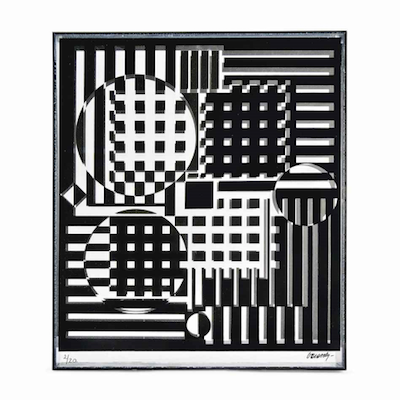
3d construction // SBST 2839 by Ludwig Wilding, created in 2001, is a limited-edition print that embodies the artist’s fascination with optical art and visual perception. This mixed-media piece utilizes precise, parallel lines and contrasting black and white tones to form an intricate, three-dimensional effect. The central circular design appears to shift and pulse, engaging the viewer's eye in a dynamic interplay of depth and motion. Wilding's work, known for its experimental exploration of visual illusions, invites the viewer to experience the artwork as a sensory phenomenon rather than a static image. This piece exemplifies his commitment to pushing the boundaries of two-dimensional media.
SBST 2839, 2001
form
Medium
Size
28 x 28 X 6 cm
- Inches
- Centimeters
Edition
Price
- USD
- EUR
- GBP
Details
Artist
Styles
3d construction // SBST 2839 by Ludwig Wilding, created in 2001, is a limited-edition print that embodies the artist’s fascination with optical art and visual perception. This mixed-media piece utilizes precise, parallel lines and contrasting black and white tones to form an intricate, three-dimensional effect. The central circular design appears to shift and pulse, engaging the viewer's eye in a dynamic interplay of depth and motion. Wilding's work, known for its experimental exploration of visual illusions, invites the viewer to experience the artwork as a sensory phenomenon rather than a static image. This piece exemplifies his commitment to pushing the boundaries of two-dimensional media.
- Recently Added
- Price (low-high )
- Price (high-low )
- Year (low-high )
- Year (high-low )

Ludwig Wilding
SBST 2827, 1993
Sculpture / Object
Object
EUR 1,500

Ludwig Wilding
SBST 2838, 2000
Sculpture / Object
Object
EUR 1,500

Ludwig Wilding
SBST 2823, 1993
Sculpture / Object
Object
EUR 1,500

Ludwig Wilding
SB II, 1986
Sculpture / Object
Object
EUR 1,500

Ludwig Wilding
SBST 2818, 1986
Sculpture / Object
Object
EUR 1,500

Ludwig Wilding
SBT 2835, 1998
Sculpture / Object
Object
EUR 1,500

Ludwig Wilding
SBST 2839, 2001
Limited Edition Print
Mixed Media
EUR 1,500
Related Artists


Related Articles
Popular, Collecting - July 23, 2025
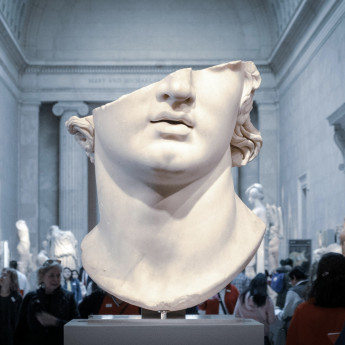
Sculpture Care and Display: From Plinths to Pedestals in Your Home
Learn how to display and care for sculpture at home—from lighting tips to material care—so your art can truly shine in any space. Read More

What is Op Art?
Op Art is a visual art style that uses optical illusions to create the impression of movement, vibrating patterns, flashing, or hidden images. The works are typically abstract, with many well-known pieces in black and white. The roots of Op Art can be traced back to earlier movements like Futurism, Constructivism, Dada, and Neo-Impressionism, particularly in their use of color effects and graphic design.