Details
Artist
Styles
// Étude by John Armleder is a detailed ink drawing from 1966 that immerses viewers in a labyrinthine structure filled with intricate architectural elements. The artwork features a complex arrangement of Gothic-inspired windows, arches, and ornate details, giving it a surreal, cathedral-like atmosphere. Lines converge and diverge, guiding the eye through a fragmented and dynamic space that appears both familiar and otherworldly. The piece reflects Armleder's early exploration of form and structure, emphasizing the meticulous line work that suggests both architectural precision and a dream-like disintegration. This study in black ink combines meticulous detail with abstract spatial layering, inviting contemplation of structure, decay, and transformation.
Details
Artist
Styles
// Étude by John Armleder is a detailed ink drawing from 1966 that immerses viewers in a labyrinthine structure filled with intricate architectural elements. The artwork features a complex arrangement of Gothic-inspired windows, arches, and ornate details, giving it a surreal, cathedral-like atmosphere. Lines converge and diverge, guiding the eye through a fragmented and dynamic space that appears both familiar and otherworldly. The piece reflects Armleder's early exploration of form and structure, emphasizing the meticulous line work that suggests both architectural precision and a dream-like disintegration. This study in black ink combines meticulous detail with abstract spatial layering, inviting contemplation of structure, decay, and transformation.
- Recently Added
- Price (low-high )
- Price (high-low )
- Year (low-high )
- Year (high-low )

John Armleder
Gold Fish, 2016
Tapestry
Tapestry
EUR 1,400

John Armleder
Silver Fish, 2016
Tapestry
Tapestry
EUR 1,400

John Armleder
Étude, 1966
Drawing / Watercolor
Ink
EUR 4,000
Related Artists


Related Articles

Artists - December 26, 2024
Uncharted Expressions: The Resonant Imagery of Arnulf Rainer
Explore Arnulf Rainer’s transformative art, blending abstraction with visceral portraiture. Discover layered works that challenge beauty and redefine identity. Read More

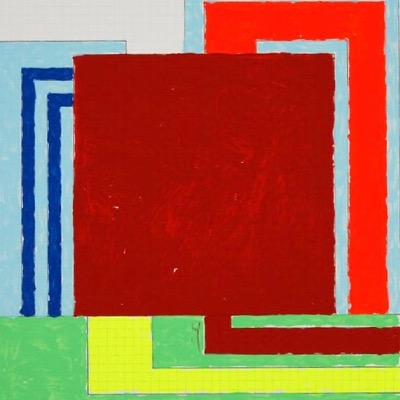
Artwork by Peter Halley
What is Neo-Geo?
Known as Neo-Geo for short, this movement uses geometric objects and shapes to create abstract artwork as a metaphor for society. Inspired by various 20th-century art styles, including minimalism and pop art, Neo-Geo emerged in the 1980s as a response to the industrialization and commercialization of the modern world. The movement reflects on the impact of mass production, consumerism, and technology, often critiquing the superficiality of contemporary culture through its abstract, geometric compositions.
RECENTLY VIEWED
-->